
Jack Denton: Compassion, loyalty and tenacity define career protecting the country
Early in his life, Jack Denton had a run-in with police.

“The Huntingburg Police Department was making kids take their bikes to the police station to get little tags put on them, almost like little license plates,” the 47-year-old explained. “I can still see the police officers today. They were such a model of authority and respectability; I was fascinated by it.”
As any kid would after such a meeting, when asked what he wanted to be when he grew up, young Jack began saying he wanted to be a police officer.
But in high school, the 1989 Southridge graduate was never a guy that knew his exact path in life. He wasn’t a good student and he wasn’t sure what he wanted to do, much less whether he was going to go to college.
One day he overheard his father, Jack Sr., talking to his brother.
“My dad told my brother he would be really proud one day to see his son walk through the front door with a badge on,” Jack explained.
Jack loved his dad — he passed away in 2009 — but at that time, he didn’t have a great relationship with him. He didn’t like to do the things his dad liked to do. But when he heard what his dad said, it resonated with him and he spoke up.
“I told him, ‘dad, you might see me walk through that door with a badge on,'” Jack said.
Jack enrolled at Vincennes University Jasper to study law enforcement. He almost completed his degree but again, he didn’t like school. “I also didn’t like the debt I was accumulating,” he explained.
He didn’t finish but in a happenstance meeting, his career was kickstarted. David Meyer, who was a year ahead of Jack in high school, had joined the Border Patrol and was serving in California. Jack ran into David’s mom and during the conversation, mentioned he was looking to get into federal law enforcement as well.
“A few days later David called me and told me they were hiring,” Jack said. “He gave me the number off the bottom of his check stub. Three months later, I am in the academy at Charleston, South Carolina.”
The first thing he learned when he landed was that two Border Patrol agents at the station had been killed that day. “And then shit just hit the fan.”
His dad was there when Jack graduated from the Border Patrol Academy on July 6, 1998. “My dad was super proud of me and it made me feel good about myself,” he said.
The next day, Jack was flying to his first duty station in McAllen Texas. The first thing he learned when he landed was that two Border Patrol agents at the station had been killed that day. “And then shit just hit the fan,” he said.
After arriving, Jack was put on night shift with a journeyman agent — one with a lot of experience — patrolling the river. They would drive and stop to perform foot patrols of different sections watching for illegal entries as well as drug activity. At the time, the service was spread thin — some nights only four agents were assigned to cover the 72-mile section of the Rio Grande River border.
When Jack was there, McAllen had about 50 to 60 agents, now there are about 500 in that same area.
At the end of one of his first nights on patrol, with the sun just rising over them, Jack and his journeyman, Bob Guerra, watched as a group came out of the river. The group of about 10 to 12 people saw the agents and jumped back into the water to get away.
“But they didn’t have any of the innertubes and stuff they had used to get across and they were drowning,” he said.
Jack and Guerra, now joined by a couple of other agents, dropped their gunbelts, took off their boots and waded in to save them. “They weren’t combative or anything,” he said. “They were super grateful because half of them couldn’t swim. It was a surreal experience.”
It wasn’t necessarily an everyday occurrence but the death of the two agents and then his experiences his first week on the job set the tone for his continued service.
The Huntingburg native remembers being a wide-eyed young man. “I couldn’t even believe what was going on around me,” Jack said about those first nights on patrol. “It was frightening. I felt like I was on the edge of the world, honestly.”
And it was a common encounter to either deal with violence through drug-related cases or through dealings with individuals crossing to commit crimes or prey on other aliens. “There are such things as border bandits,” Jack explained. “They prey on other people coming to our country and they are very violent. It wasn’t a big surprise if you dealt with a drug case or these guys at least once in a two-week shift.”
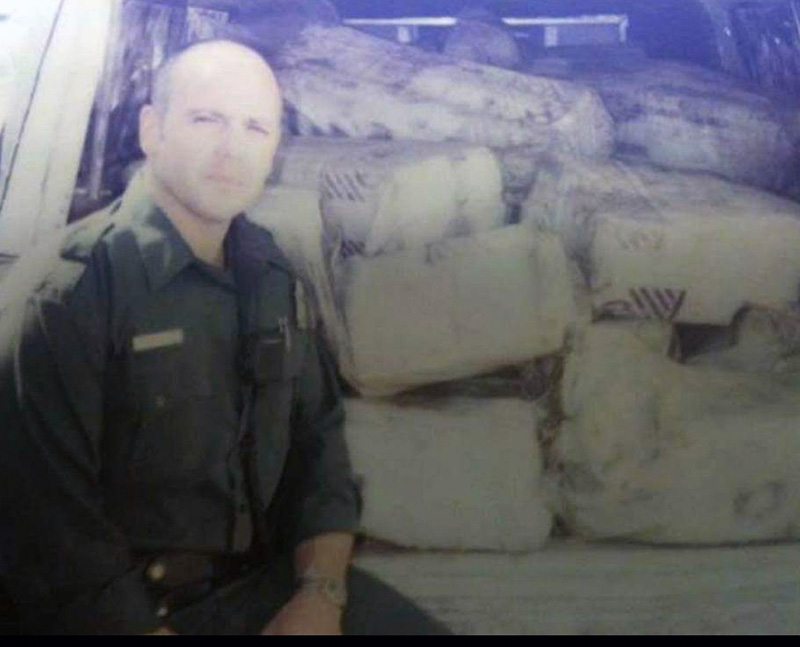
Jack stayed in McAllen for five years with the group of agents that he went through the academy with. When 9/11 occurred, many of his friends joined the Air Marshals when it opened up its ranks to bolster the number of agents on commercial flights.
“I knew I would not be happy flying around on a plane all the time,” he explained.
So he didn’t apply, but during his time in Texas he had become a Defensive Tactics and Arrest Techniques Instructor for the Border Patrol. When an instructor position opened up at the Federal Law Enforcement Training Center in Georgia, he applied. They hired him and he spent the next four years teaching officers and agents from almost every federal law enforcement agency — the FBI and DEA have their own training — arrest techniques and defensive tactics.
“I have spent six years of my 21-year career teaching,” Jack said. “I love teaching because when I teach, I learn.”
He also loves it because he knows he’s impacting his students’ lives on the job. “I still get three or four emails a year from former students — I don’t remember them usually — but they email me saying, ‘Hey Mr. Denton, I just want to let you know that something happened the other night and I got into a confrontation and I heard your voice telling me to never quit,'” he said. “I love that I have had that impact and I have been able to pass on something that was passed to me from my instructors. Heck, when I am in the shit, I still hear my instructors’ voices.”
In 2006, Immigrations and Customs Enforcement (ICE) announced they were hiring and if an applicant had gone through the Border Patrol Academy, they would not have to attend the ICE Academy. Jack threw his name in to go to Charlotte. “The boss of the office there was an old Border Patrol agent and he hired me as a Fugitive Operations Officer,” he said.
A Fugitive Operations Officer hunts down criminal fugitive aliens that have absconded. He was part of a five-person team; four of the members where former Border Patrol agents Jack had worked with before. It was a great team. “We worked extremely hard and well together to accomplish the mission,” he said.
While he was a Fugitive Operations Officer, Jack was also deputized as a U.S. Marshal. “I got the little star (badge). It was actually pretty cool,” he said.
The Marshals needed someone with Jack’s skills — Spanish-speaking with experience in gang investigations as well as his tactical training — and his jurisdictional powers regarding illegal aliens.
It was an intense two years as Jack and the task force hunted down violent offenders. “The people we were going after were illegal aliens that had committed violent crimes like kidnapping, murder and more,” he said.
To describe the intensity of the operations, Jack paints this picture. “I’m standing outside a hotel door somewhere in North Carolina at 2 a.m. I’ve got a ballistic shield in my hand and I’m standing at the door protecting my team because the guy on the other side of the door has kidnapped his ex-wife and he’s armed,” he said. “I’m the first guy through the door.”
The stress of those two years probably cost Jack five years of his life.
He continued working as a Fugitive Operations Officer after completing his time in the Marshals until 2017 when he got back into teaching.
He transferred to the ICE Academy of Advanced Training where he taught the Criminal Alien and Fugitive Operations programs. The programs basically cover all the administrative and law side of investigations and then the tactical side of apprehending fugitives (e.g. breaching doors, clearing houses).
This past January, he headed to a Washington D.C. office as a supervisor of a 24-hour command center that responds to local calls for criminal aliens. “We don’t investigate the guy that mows the lawn and has never been in trouble,” Jack said.
Overall, Jack has loved his career in law enforcement. There have been long hours and moments of terror but each day is different.
“My boss says the arrest is the easy part. Finding
the person is the hard part.”
The investigations are long and arduous. They sometimes culminate when the smallest piece of circumstantial evidence like a signature on a piece of paper connects to the larger part of the trail and they can determine the person’s identity. Then, they have to find the person or maybe they have an idea of where they may be so they set up a stakeout. It’s not like the TV shows or movies where two guys are sitting in a car laughing and talking. “You are sitting in a car for 18 hours, peeing in a Gatorade bottle, eating out of a cooler and your butt is sore,” Jack laughed.
But, it’s a puzzle that he loves to solve.
“My mom (Dixie Denton) has always said I’m like a dog with a bone,” he said. “Whenever I get fixated on something, I’m going to stick with it until I figure it out.”
That’s what’s made him a good agent. A tendency that set him on the path he’s been on for 21 years in service to the country.
It happened when he and Guerra were chasing down a group carrying cocaine. Jack split off to catch a guy who had run away from the group. He returned to Guerra empty-handed and Guerr didn’t pull any punches. “These old journeymen treated us (new guys) like dogshit,” Jack said.
Guerra looked at him and told him, “He got away from you because you are a little bit
Jack was so upset that he ramped up his physical training and in a short time he was leading the physical training in the unit. That doggedness carried over into his job performance. “I decided there wasn’t going to be a single person in South Texas that would be able to outrun me,” he said.
In 2000, he earned an outstanding rating as a Border Patrol agent. According to Jack, officers
“I caught over 10,000 pounds of marijuana and 3,000 pounds of cocaine,” he said. “It was a good year.”
“I’ve seen guys give the money out of their wallets to people, feed them from their lunch cooler,” Jack explained. “To be a good officer, you have to be compassionate because these are real lives and real people you are dealing with.”
The job has cost him in terms of scars caused by seeing the worst of humanity. “Unfortunately, the best doesn’t stick with you; the worst does,” he said. “The woman from Guatemala that has just been raped before she crosses the border that comes up to my truck to ask for help. Then the decisions you have to make when you and your buddies’ lives are on the line. You make decisions and you have to live with them. Those are the things that stick with you.”
But the good officers he’s partnered with over the years have helped. “I’ve seen guys give the money out of their wallets to people, feed them from their lunch cooler,” he explained. “To be a good officer, you have to be compassionate because these are real lives and real people you are dealing with.”
“This career has been a calling,”
It’s the successful moments in his career that have kept him going. Solving the case, capturing
While the national news sometimes paints a certain picture of ICE and the Border Patrol in these current times, he disagrees with the broad stroke being taken to demean the service.
“This career has been a calling,” he said. “It’s a calling for the guys I work with and we are compassionate and loyal. We aren’t out there violating people’s civil rights. That’s asinine. I can take care of any situation you get me into as long as it’s not immoral or illegal. That what I teach at the academy.”
He also attributes his success to his mother’s support throughout his life. “My mom has always been my rock,” Jack said. “For as long as I can remember, my mom has always had my back. There’s not a day that she didn’t. I don’t think she expected me to end up where I ended up, so she’s over the moon.”
Jack and his wife, Cindy, have two dogs, Livy and Willow, and live near Washington. In their off time, the pair enjoy volunteering at animal shelters.
He plans on doing another five years or so before retiring.
“It’s been a good career,” Jack said.
Discover more from Dubois County Free Press, Inc.
Subscribe to get the latest posts sent to your email.

Is it just me, or does the photo look more like a special ops than a police officer? I don’t think I want help from someone that looks like they are going to battle.
Well, I’d take help from him in a heartbeat. Jack Denton, you are awesome, my friend! Thanks for all you do!!
True heroes among us, aren’t hard to find.
A life well lived.