
Utility Service Board meeting: exploring compressed natural gas, new dam, and Beaver Lake problems
The Jasper Utility Service Board agreed to explore options for a compressed natural gas (CNG) station in the city.
Jasper Clean Energy plans on creating a compressed natural gas station to power vehicles used in conjunction with the operation of the biomass power plant. The corporation has offered access to the station to the City of Jasper but does not plan on providing the public access to the station.
The plans to convert the coal-fired power plant to biomass includes burning a ratio of 85 percent natural gas to 15 percent biomass (miscanthus grass) to produce electricity. A major gas pipeline is included in that plan.
According to the gas commissioner Keith Masterson, Meyer Distributing has already shown interest in using CNG for some aspects of their business. Meyer is a nationwide logistics company that distributes aftermarket vehicle accessories and parts.
Board chairman Wayne Schuetter added that according to online map-based resources, there were no CNG filling stations nearby and that made Jasper appear to be a good location for one.
CNG can be used to power converted vehicles and burning the gas is cleaner than gasoline. The benefits include less air pollution and a cleaner running vehicle resulting in less maintenance costs.
The utility service board would like to explore the possibility of a public private partnership to create a CNG filling station for the general use of the public. They gave utilities manager Bud Hauersperger approval to conduct a feasibility study that included information about public support for the project to determine if the filling station would be used.[hr]
In regards to the lack of water at Beaver Lake, the study conducted by Morley and Associates determined the likely cause of the difference in the lake level is due to the new spillway.
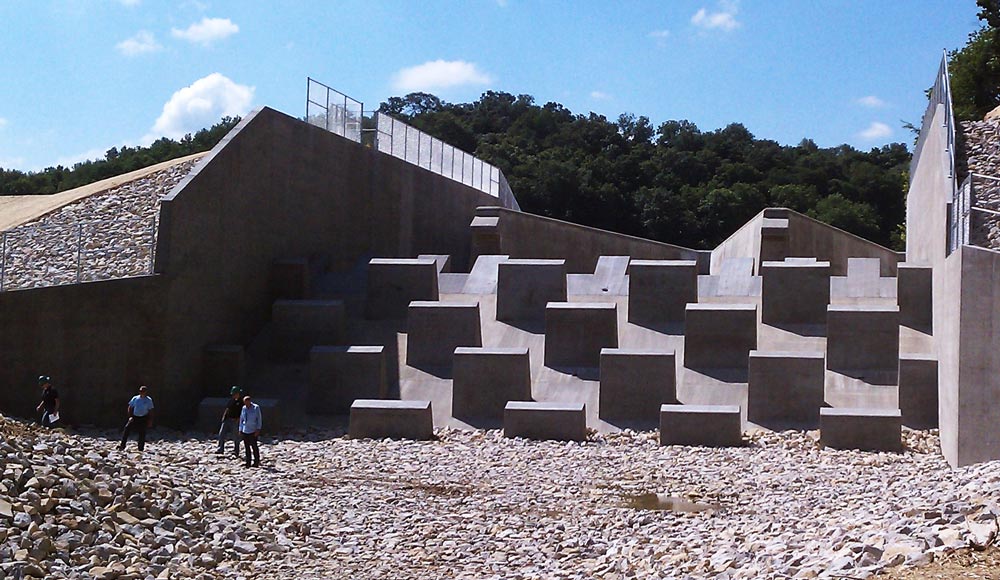
The old spillway created a higher water level due to it being congested and much smaller than the new spillway. The dam renovation project replaced the original spillway, which was about 25 feet wide, with a spillway 85 feet wide. The new spillway is designed to accommodate 26 inches of rain over eight hours — stopping water from rushing over the dam itself under what the Indiana Department of Natural Resources considers the area’s maximum possible precipitation.
The lower levels of the have caused problems with residents around the lake. Boats are no longer able to pull up to docks and construction projects that were designed around the previous water level are now adversely affected by the estimated 9 inch difference. Other problems include the exposure of previously submerged trees and debris creating safety hazards for recreation on the popular lake.
Beaver Lake is also considered the city’s backup water supply in cases of drought. The lower level of the lake reduces the volume of the water supply by about 60 million gallons according to some estimates.
No options for fixing the lake level were discussed but the board did discuss landowners around the lake providing monetary support for any improvements that are done to raise the lake level.
Another issue discussed was the city’s need to potentially create a great water pool for the city’s water supply. The city pulls all of its water from a pool created by the dam near the Jasper City Mill. This pool was created when the dam was built in the late 1800s and according to chairman Schuetter, since the city has changed drastically in the time between, the utility service board should examine alternatives to support the city in case of another water crisis.
The board approved Hauersperger exploring options to add to the city’s water supply including the construction of another dam downstream from the Third Avenue dam to create another pool of water. He will put the projects out for requests for proposals for firms to bid on planning any projects or conducting feasibility studies.
The board also took the following actions:
-Approved bids for the sewer relining project. Insituform Technologies USA LLC, of Chesterfield, MO was the low bidder at $204 per linear feet of 129 feet of pipe that need relined.
-Heard that Jasper Clean Energy Center had no changes in its status including power purchase agreements. Schuetter stated a pending U.S. Supreme Court ruling could create activity in regards to those power purchase agreements in the near future.
-Heard the Third Avenue water main project should start November 1.
-Approved seeking request for proposals to complete an electric rate study, the last rate study was completed in 2008 according to Hauersperger.
-Recognized two gas department employees, Mike Cravener and Steve Wampler, who responded to a resident’s complaint of the smell of gas and quickly ascertained the problem and repaired it.
