Three Sheriff candidates vying for Republican nomination in Primary
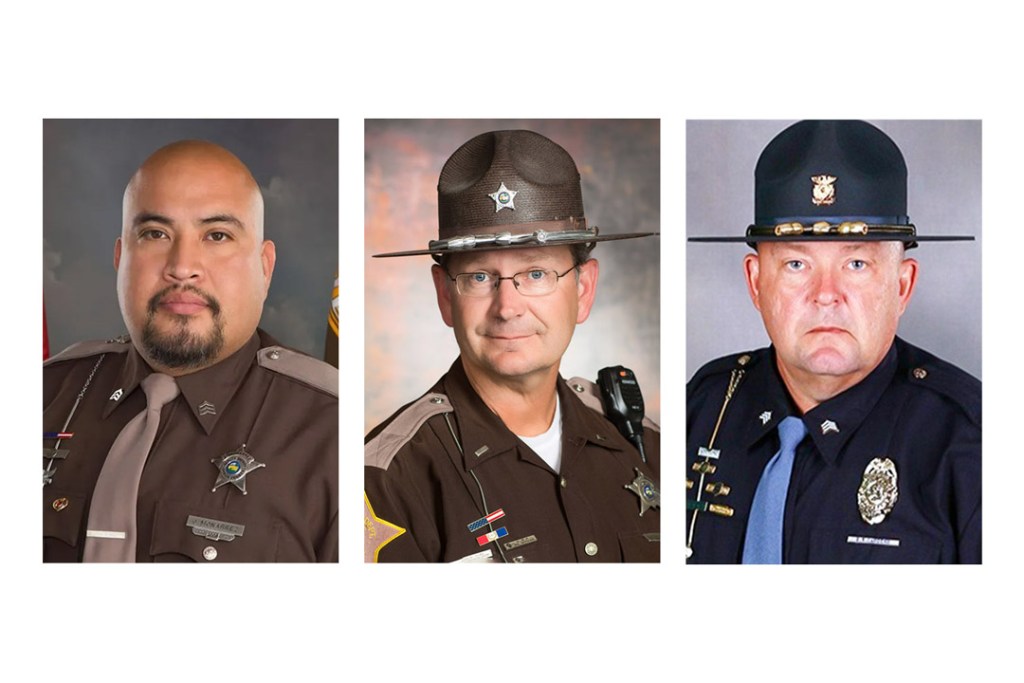
With early voting in the primary election underway, Dubois County voters have three candidates to choose from to run for sheriff on the Republican ticket in the November election.
Tim Lampert, Jesus Monarrez, and Brian LaRoche are each seeking the nomination for one of the county’s most visible law enforcement positions.
To help voters better understand where the candidates stand, we reached out to all three with a series of questions covering their backgrounds, priorities, and vision for the Dubois County Sheriff’s Office.
Their responses are presented below in alphabetical order and with minor grammatical edits.
Q1. Why are you running for sheriff now, and what do you believe is missing from the department’s current direction or leadership?
Lampert
I am the most trusted and qualified candidate for Sheriff. I was born and raised in Dubois County and bring over 35 years of experience with the Sheriff’s Department. I started my career as a jail officer, was promoted to road deputy, and later served as Chief Deputy from 2011 to 2018. As Chief Deputy, I passed every State Board of Accounts audit, along with NCIC, IDACS, and federal audits. I am also a certified firearms instructor and have trained local officers and officers at the Indiana Law Enforcement Academy.
I have served as a Critical Incident Stress Debriefing officer, helping our first responders after difficult calls so they can continue doing what they love, protecting and saving lives in the community we call home. I hold a Career and Technical Education teaching license through the Indiana Department of Education, where I teach students about criminal justice and public safety. I also provide presentations to our youth on drugs, alcohol, tobacco, and online safety to help keep them safe.
In addition, I am an ALICE instructor, training school staff, students, and county employees on how to respond during critical incidents through classroom instruction, tabletop exercises, and mock drills. Throughout my career, I have served on numerous community boards and strongly believe that we must work together as community leaders to best serve Dubois County. These experiences have shaped my leadership and prepared me to lead effectively.
At the end of the day, I hold myself to the higher standard our community expects in a leader. Integrity is extremely important to me. This race is about proven leadership, honesty, and integrity, and having someone ready to lead from day one. I have a proven record of accountability and am ready to restore trust in the Sheriff’s Department. Right now, what is missing is public trust and unity within the department, and I am committed to rebuilding both.
The Sheriff’s Department deserves a leader who has their back, and Dubois County deserves leadership it can trust. This county matters to me. We have a great county, and I want to keep it that way so our children and grandchildren will want to come back and live here and be proud to call this place home like I have for my whole life. I am ready to lead, ready to serve, and ready to deliver for Dubois County on day one.
LaRoche
Serving as sheriff has always been a professional goal of mine, but the position is not merely another job. My desire to become Dubois County Sheriff is rooted in the need for leadership and accountability within the department. With the current sheriff unable to run for another term, the timing is ideal for a new leader from outside the department to bring a fresh perspective.
Monarrez
I believe that I have proven myself as a leader, and life has led me to this path. When I was 17, I felt it in my heart that I wanted to test myself and see what I was made of. I wanted to protect my country and community. What better way than to join the United States Army National Guard? In 2001, after the tragic attack on the Twin Towers, I was put to the test. I was deployed to Iraq in 2003. I made the sign of the cross and asked our Lord for his protection, and for 365 days, I protected my country, Constitution and community. I learned something about myself, I like protecting. I sought out a career in law enforcement.
In 2006, I applied and became a Huntingburg Police officer.
I wasn’t doing enough. With my past experience, it was only fitting that I would apply and become a member of the ERT (SWAT) team.
I wasn’t doing enough; I wanted to help my whole county, so in 2011, I applied and was hired as a deputy sheriff.
I wasn’t doing enough. I saw how narcotics were affecting my community; I was able to secure grants and private donations to pay for a drug-sniffing K9. Karma and I seized a lot of narcotics and assisted a lot of officers in seizing drugs.
I wasn’t doing enough, so I applied and became a Detective Sergeant. During my tenure as a detective, I investigated serious crimes like crimes against children, rapes and assaults.
I wasn’t doing enough; I didn’t only want to fight crime, I wanted to fight fires. I joined the Dubois Fire Department.
I wasn’t doing enough. I was appointed Chief Deputy, and now I help deputies by securing grants and making sure vehicles are in working condition. With my vast knowledge and experience of the job, I also help mentor and guide my fellow coworkers.
I wasn’t doing enough. After a long conversation with my wife and kids, we decided to run for Sheriff of Dubois County. When I say “we” it’s because it’s been a family adventure.
So when you see my sign, it’s not just a campaign slogan, it’s my resume. Dedication, integrity and courage. For over 27 years, I have fought to protect my country, Constitution and community. I promise to continue doing what I have been doing and to keep fighting for my community.
When it comes to my community, I will never do enough. I’ve devoted my career to public service because I believe Dubois County truly is a gem worth protecting.
Q2. What do you see as the top two or three public safety challenges facing Dubois County, and how would you specifically address them?
Lampert
First, drugs and mental health continue to be a lot of what we are seeing in our community. Offenders must be held accountable, and there have to be consequences. At the same time, if we want to reduce repeat offenses, we also have to address the root causes. That means providing treatment opportunities while individuals are in jail and ensuring they have access to resources when they are released.
We are fortunate in Dubois County that JRAC and other organizations like the Community Foundation have improved the resources we have and brought additional resources into our community. We need to make sure individuals are connected to those services immediately upon release, not days or weeks later. This will help reduce recidivism, which will make our county safer.
Second, we have to take crimes involving victims very seriously. Victims deserve to feel heard, supported, and protected. That means thorough investigations, strong collaboration with prosecutors, and making sure victims have access to the resources they need throughout the process.
Third, crimes against children are especially concerning. As a School Resource Officer, this is something that hits close to home for me and matters deeply. Protecting our children requires proactive enforcement, strong partnerships with schools and community organizations, and ongoing education for both youth and parents. Prevention and awareness are critical.
This is about holding offenders accountable while also using the right resources to make our community safer. When we address drugs and mental health, support victims, and protect our children, we strengthen the safety and future for everyone in Dubois County.
LaRoche
A few of the public safety challenges for Dubois County include drug use and dealing, mental health, and crimes against children, including physical and sexual abuse, as well as the use of social media to extort and coerce behavior.
Keeping up with drug enforcement training and learning new advanced methods of drug detection, along with the use of canines, are a few ways to curb the drug situation.
While being sympathetic to each person’s mental health, the number one priority is the safety of the officers and the community. Increased de-escalation training is beneficial; however, police officers are not psychologists or mental health providers and cannot be used in place of professional services.
The department currently has a couple of deputies who are working with other agencies to reduce child sexual abuse material and crimes in our community. This is a great start to removing child predators. Increased incarceration time and mental health services are also needed to deter these heinous crimes.
Monarrez
Mental Health is one of the biggest challenges/crises facing Dubois County. We have started combating it by educating ourselves on the dynamics of mental health. We have launched the first Social Worker Deputy in Indiana. She might be the first in the nation. Through her, we are educating our deputies and deploying new teams, such as the CIT Team (Crisis Intervention Team). Our laws are changing, helping us help people in desperate need of mental health. For example, if a patient is having a crisis due to them not taking their medication, the law has changed to where we are able to transport them to the hospital so they can administer their medication, instead of us taking them to jail. That’s a big step in the right direction.
Drugs will always be a challenge in our community. We must continually be on guard and maintain them to a minimum. We have different methods we have deployed to combat drugs. One method is our K9 program. I would like to see a second team in the future. It serves as a deterrent. The other method is our narcotics team that is continuously out there doing controlled buys, surveillance and other narcotic investigations.
But it all starts with our patrol deputies. The patrol deputies are the heartbeat of our department. Without them being out there on a daily basis, making traffic stops and responding to calls, we wouldn’t be able to operate as a department.
Q3. Recidivism Studies consistently show that education, job training, and substance abuse treatment programs reduce the likelihood of reoffending. What programs, if any, would you seek to implement or expand in the Dubois County Jail to reduce recidivism?
Q4. What responsibility, if any, does the Sheriff’s Department have in helping inmates successfully reenter the community after release — and what specific steps would you take to reduce the revolving door of repeat incarceration?
We combined the candidates’ answers to both questions.
Lampert
In Dubois County, we already have a strong foundation to build on. I would continue to research proven programs and look to expand substance abuse programming, including evidence-based classes and treatment options, and ensure continuity of care when individuals are released. It is not enough to start something in jail. We have to connect individuals to services in the community so they can continue that progress.
I would also support expanding programs like the RISE program in the jail, which focuses on personal responsibility, behavior change, and helping individuals make better decisions moving forward. Programs like that are critical in addressing the root causes of criminal behavior.
We are fortunate to have strong partnerships in Dubois County through JRAC and other community organizations. I would continue to build on those partnerships to bring more programming into the jail and, just as importantly, ensure a smooth transition to community-based services upon release.
Reducing recidivism is about accountability and opportunity, holding individuals responsible while also giving them the tools they need to succeed. When we do that, we reduce crime and make our community safer.
We know that when individuals are released without a plan, they are more likely to reoffend. That is what creates the revolving door. We need to continue and expand evidence-based programming like substance abuse treatment, education, and programs that focus on accountability and behavior change.
I would prioritize stronger coordination with Community Corrections, Probation, and our JRAC partners to make sure individuals are connected to services immediately, whether that is treatment, supervision, or structured programs like work release or home detention. That transition period is critical.
We also need to make sure basic barriers are addressed, things like identification, appointments set up, and clear expectations, so individuals are not walking out with nothing in place.
When we prepare individuals to succeed and connect them to the right resources, we reduce recidivism, lower costs, and most importantly, make our community safer.
LaRoche
Because my current position as an Indiana State Trooper is outside the department, my familiarity with the programs at the detention center is limited. Each program needs to be evaluated to determine which promotes behavior change and which, if any, should be eliminated.
A step-down program that transitions individuals from the detention center to community corrections is one approach to support reentry. Ultimately, successful reintegration into the community depends largely on the individual. While the Sheriff’s Department can promote and provide programs during incarceration, forced participation often leads to limited success. Offenders must take ownership of their recovery and accept accountability for their actions.
Monarrez
We have the RISE Peers program going on right now at the jail. It’s designed for accountability and education. It has started to teach them self-accountability. It is run by people who have been in their situations. People who have been in the trenches where they have been. They are teaching them that there is another way if they choose to stick with it. I believe the first program is 15 weeks and the continued program is 25 weeks. We have had several inmates who have graduated from both programs.
For a lot of them, it is the first time they have started and finished something. Their certificate might be the first they have ever earned, and most of them, if not all, are very proud of it. I have been to their classes and heard them stand up, take accountability and admit their faults. Most of them are tired of living life the way they have. They all share their stories and find that theirs are similar to those of their fellow inmates, and knowing they are not alone can start the healing process. Once they have graduated and are here for a short stay, RISE helps them find jobs and complete housing applications. They have even helped several inmates get their driving permits. They help them with real-life, everyday things we take for granted, like opening a checking account.
As Sheriff, I would like to explore Trade Schools. I would like to team up with VUJC or other organizations to develop a way for inmates to learn trades like welding, plumbing or electrical work. Something that even when they leave here, they can continue learning on the outside. A trade is very valuable, which can be learned through hands-on experience. It might be a big ask, but we must start somewhere.
Q5. How would you build and maintain morale within the department, and what tone would you set for day-to-day operations?
Lampert
First and foremost, I want every deputy and jail officer to know that I have their back. Law enforcement is a tough job, and they deserve a leader who supports them, listens to them, and stands with them. At the same time, I expect an honest day’s work. We are here to protect and serve this community, and that responsibility comes with high standards.
That means ongoing training in areas like CIT, officer safety, leadership development, and cross training to ensure our team is ready and prepared to perform at a high level in any situation.
Right now, I know morale has been impacted by negative publicity. One of my top priorities will be restoring trust, both within the department and with the community. That starts internally by being present, communicating openly, and leading by example. When people feel respected, informed, and supported, morale improves.
Day to day, I will lead with consistency and fairness. Clear expectations, open communication, and accountability across the board. When you combine that with strong leadership and support, you build a department that people are proud to be part of. A strong department leads to better performance, better service, and a safer community.
LaRoche
Treating each person with respect, while still holding each other accountable, is essential for building positive relationships among staff. Clear expectations must be established and consistently communicated. In addition, the work environment should promote trust and collaboration, much like a family.
Monarrez
Morale starts with leadership that shows up, listens, and supports its people. I believe the department’s culture comes directly from the tone set at the top, and my goal would be to create an environment where deputies and staff feel respected, valued, and proud to serve. I believe we have accomplished that, but there is always room for improvement. Communication would be a priority. I want deputies to know they have a voice and that their concerns, ideas, and feedback matter. That means being visible, approachable, and transparent about decisions and challenges facing the department. My door is always open. I would focus on trust and support. Our deputies work long hours, face difficult situations, and carry a lot of responsibility. They deserve leadership that backs them up, provides proper training and equipment, and recognizes the job they do every day. When deputies know their leadership has their back, morale naturally improves. Training is a big investment for our department.
I also believe recognition goes a long way. Celebrating achievements, highlighting great work, and simply saying “thank you” can make a real difference. People want to know their efforts matter. Some of the proudest awards I wear on my uniform are my lifesaving awards. I have three that I carry close to me. Every one of those represents a life saved, a family kept whole, and a moment where training and teamwork mattered. Saving a life is the greatest success I feel I’ve accomplished in my career, and it reminds me how important this job truly is.
For day-to-day operations, the tone would be professional, respectful, and team-focused. I expect accountability and high standards, but I also believe in fairness and consistency. We can hold people accountable while still treating them with dignity and respect. A positive department culture leads to better service for the community. When deputies feel supported and motivated, the entire county benefits.
Q6. What is your philosophy on community policing, and how would you put it into practice?
Lampert
I believe community policing is important. I have been committed to that approach throughout my career. I was proud to play an instrumental role in partnering with our county schools to place School Resource Officers in our schools. That effort strengthened safety, built relationships with students, and created a more secure learning environment for our community. It starts with our kids. They are our future. When officers are present, approachable, and engaged early on, it builds trust that lasts a lifetime.
I would like to add another School Resource Officer, or at a minimum, cross-train additional officers to ensure there is always coverage in our schools.
Community policing also means being visible and accessible outside of calls for service. I would continue and expand efforts like Coffee with a Cop, but not just with leadership. I want deputies at every level involved and building relationships across the county.
I also support deputies being present in the community, attending sporting events, community events, and even church functions when appropriate. Those informal interactions are where real relationships are built.
This approach not only strengthens trust, but it also helps us do our job better. When the community knows us and trusts us, they are more likely to communicate with us, work with us, and support us.
Community policing is not a program. It is a mindset. It is about being present, being approachable, and being invested in the people we serve.
LaRoche
Community policing is a good concept, but it is difficult to maintain due to the level of resources needed for an effective program. Building relationships with the community through personal interactions at public events can encourage cooperation between law enforcement and the public.
Monarrez
Community policing isn’t a program you turn on and off; it has to be part of our department’s daily culture. That’s why we got into law enforcement in the first place. Because we care.
To me, community policing means being out in the community, being seen, involved, and approachable. Our deputies do school walkthroughs, read to kids as special guests, and stay actively involved in local events and organizations.
We listen to concerns, share information, and remain transparent about what we’re doing and why. When people feel heard, they’re more willing to work with us and support our efforts. Sometimes things can get lost in translation, and that’s why it’s important that our deputies take the time to talk with citizens and explain why we do things a certain way. They may not always like the answer, but they understand the process.
I take pride in our deputies being humble, approachable, and down-to-earth. We will continue to build on that foundation and make sure we’re listening to what our community needs.
The following questions are based on Sheriff Kleinhelter’s alleged misuse of jail commissary funds, with investigators recommending felony charges — though none were filed. (After these questions were sent to the candidates, Kleinhelter was officially charged with one count of official misconduct, a Level 6 felony, and three counts of false informing, all Class B misdemeanors.)
Q7. How would you work to restore public trust in the Sheriff’s Department, and what tone would you set from day one regarding ethical conduct?
Lampert
When I served as Chief Deputy, that was my expectation every day. We did things the right way, and we were held accountable. That is one of the reasons many deputies are supporting me. They want leadership that is grounded in integrity, fairness, and respect.
For me, integrity is not just a word. It is how I have built my career. I believe in saying what I mean and meaning what I say. People deserve honesty and transparency, even when it is difficult. I will always do what is right, even when it is hard or when there may be pushback as a result.
Rebuilding trust also means being visible and engaged, both within the department and out in the community. It is about listening, communicating openly, and following through on commitments. Trust is built over time through actions, not just words.
Internally, I will hold everyone, including myself, to a high standard. Externally, I will work to rebuild relationships by being consistent, fair, and transparent in how the department operates.
This will not happen overnight, but it will start on day one. With strong leadership, clear expectations, and a commitment to doing things the right way, we can restore trust and move the department forward.
LaRoche
Expectations of conduct are already established through laws and professional standards. Trust is built by following those expectations and being transparent when ethical standards are not met. Accountability is essential in maintaining credibility.
Monarrez
Trust isn’t about words, it’s about what you do. From day one, I’ll keep it simple, do the right thing, even when nobody is watching. We will be honest with the public, talk more, and be open about what’s going on. If we mess up, we’ll admit it and fix it. We’ll be out in the community, listening to people and treating everyone with respect. Within the department, everyone will be held to the same high standard and accountable for their actions. We earn trust back by showing it every day. I believe I’ve earned that trust over my years of service, and I’ll keep showing up every day to prove I still deserve it.
Q8. If a deputy or staff member witnessed misconduct, what would you want them to do — and what protections would you guarantee them for coming forward?
Lampert
I also understand how difficult that can be. I’ve personally experienced situations that I would never want any deputy or staff member to go through. That’s why creating a culture where people feel safe to speak up is so important to me.
As Sheriff, I will make it clear that retaliation will not be tolerated. Anyone who comes forward in good faith will be protected. We will have clear policies, open lines of communication, and multiple avenues to report concerns so individuals feel comfortable bringing issues forward.
Accountability has to go both ways. We have to hold each other to high standards, but we also have to support one another in doing the right thing.
This is also where strong leadership is critical. Having a trusted Chief Deputy is essential, someone deputies feel comfortable going to, even if the concern involves me. That level of trust and transparency is how you build a healthy, ethical department.
At the end of the day, we can’t expect public trust if we don’t hold ourselves accountable first. Creating an environment where people can do the right thing without fear. That’s how we build integrity from the inside out.
LaRoche
Any allegations of misconduct should be immediately reported and thoroughly investigated. Whistleblower laws already protect the department member from retaliation and confidentiality of identity in most cases. Those rights would be enforced.
Monarrez
My policy has always been “see something, say something.” Every complaint will be taken seriously and fully investigated. Depending on the situation, HR will be involved throughout, and any misconduct will be handled in accordance with the Dubois County handbook. I plan on sending my command staff to Internal Affairs training. If it’s a crime that has been committed, it will be forwarded to the Indiana State Police. Indiana has laws that protect whistleblowers from retaliation by employers.
Q9. What is your personal code of conduct when it comes to the use of public resources, and how would you hold yourself and your staff to that standard?
Lampert
Public resources are entrusted to us by the people of Dubois County, and I take that very seriously. Throughout my career, I’ve always believed in doing things the right way, following the law, and being transparent in how resources are used.
As Sheriff, I will hold myself to the highest standard. I will lead by example. Because if I expect accountability from my staff, it has to start with me.
For the department, that means clear policies, proper oversight, and consistent enforcement. There will be no gray areas when it comes to misuse of public funds, equipment, or time. We will follow established guidelines, maintain accurate records, and ensure everything is done in compliance with state requirements. I also believe in transparency. When people know there is accountability and openness, it builds trust both inside the department and with the public.
It comes back to integrity. We are here to serve the public, and that means respecting the resources they have entrusted to us and using them responsibly every single day.
LaRoche
Public funds must be spent efficiently and responsibly. All expenditures should be thoroughly documented and correctly categorized to ensure transparency and accountability. The department will provide quality services while operating within budgets.
Monarrez
My view is pretty simple, public resources don’t belong to any one person. They belong to the people, and we’re trusted to use them the right way. I’m going to hold myself to a high standard first. If I wouldn’t feel comfortable explaining it to the public, then I shouldn’t be doing it.
For my staff, the expectation will be the same. Use what we have for the job, be responsible with it, and be able to stand behind your decisions. If something isn’t right, it gets corrected and handled the right way under policy.
At the end of the day, it’s about respect, respect for the taxpayers, and respect for the trust this job requires.
Early voting in the 2026 Primary is underway now. Here is a list of voting locations and times.