Three candidates seeking Democratic nomination to represent District 63 on November ballot
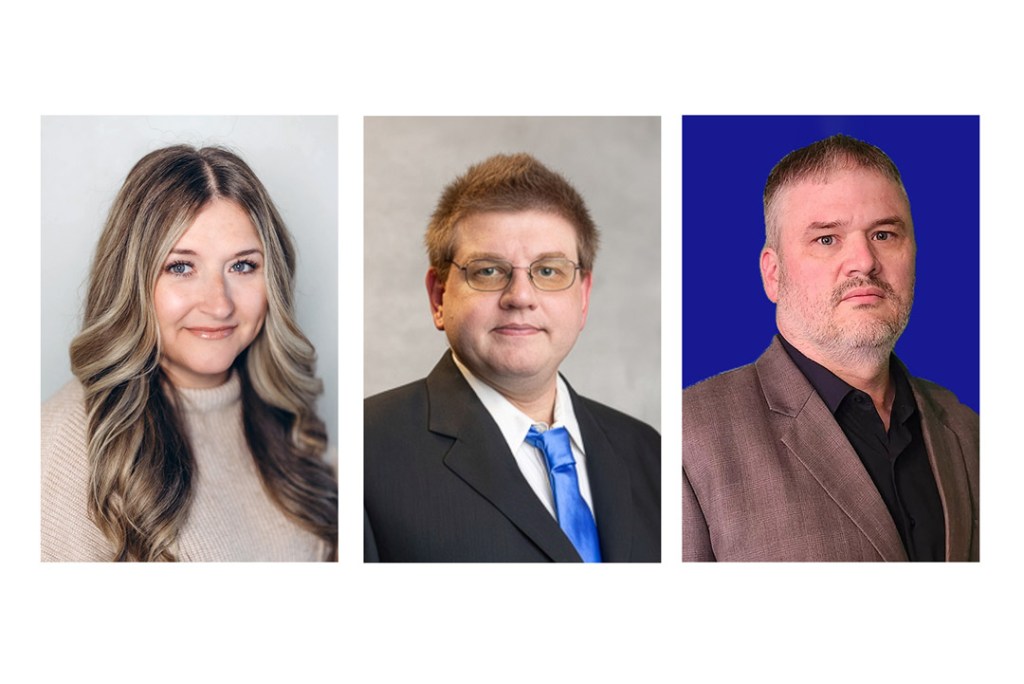
Anthony Bolen, Tiffanie Arthur, and Adam Mann are seeking nomination to represent the Democratic Party in the upcoming General Election for District 63, Indiana State Representative.
House District 63 encompasses all of Martin County, and portions of Daviess, Dubois, and Pike counties in southern Indiana.
The answers are published as provided by each candidate with light editing for grammar and format. Candidates are listed in alphabetical order.
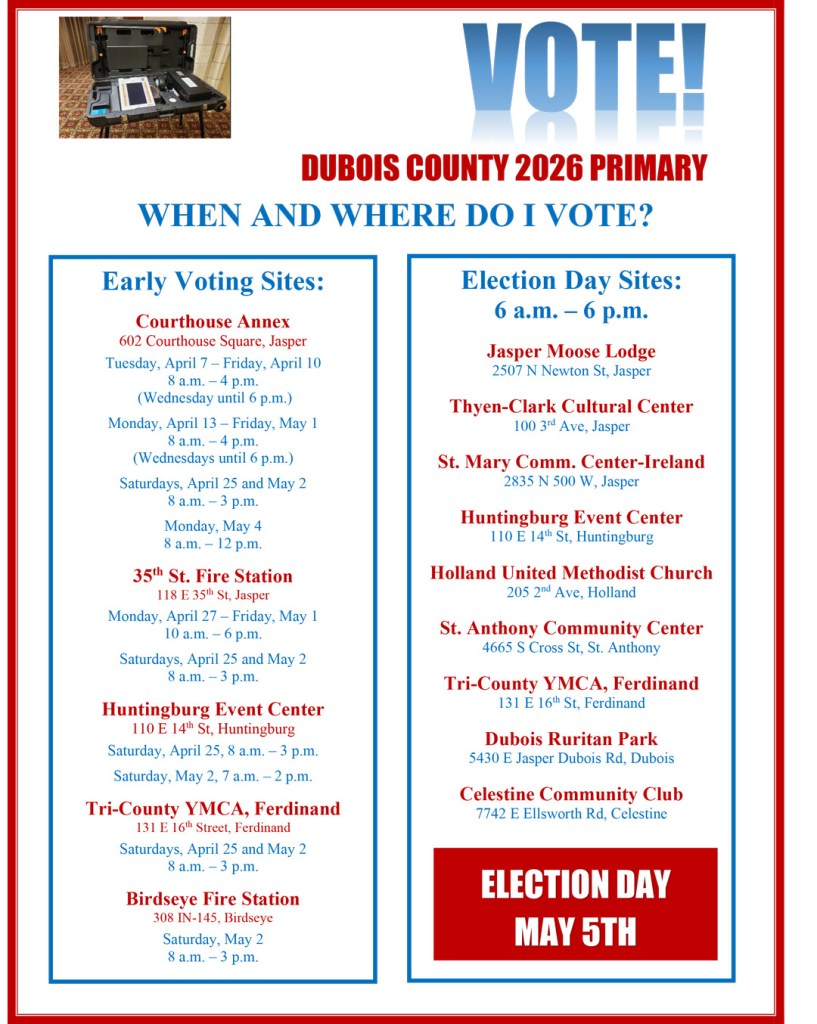
Early voting is ongoing, and we have included information at the end of this article regarding hours and locations.
What motivated you to seek this office, and why are you the right person to represent District 63?
Arthur
I decided to run because too many people in our communities feel like they’re not being heard, and honestly, I’ve seen that firsthand. Decisions are being made that impact our schools, our local economies, and our futures, and people are frustrated because they don’t feel like anyone is truly listening.
I’m a small business owner, a mom, and part of a farm family. I’ve worked in our schools, coached our kids, and spent years involved in the kind of everyday work that keeps communities like ours going. I understand what people are dealing with because I’m living it too.
I’m not coming into this as a politician; I’m coming into it as someone who’s willing to show up, ask hard questions, and push for better. I also believe voters deserve honesty and transparency. They shouldn’t have to guess where I stand or wonder what I believe. I’m clear about my positions, and I’m always willing to have real conversations about them.
I believe I’m the right person to represent District 63 because I’m already doing the work listening, being present, and staying engaged across all four counties. This isn’t about building a political career for me, it’s about service. It’s an extension of the way I’ve lived my life: serving my community. No matter what happens in this election, that work will not stop. District 63 deserves a representative who is grounded in real life and not afraid to put people ahead of politics every time.
Bolen
My motivation to seek the office of district 63 representative comes from a lack of feeling like we have representation at the state level. Our past representatives have only served those that helped put them in office and the agenda of the national party, leaving middle class families behind. The path my life has taken has lead me to be a natural leader in many situations. I ask the tough questions and will fight for what’s right for the people in district 63.
Mann
When I was in grade school, our history classes treated these historical politicians as role models, explaining there is more to being an elected official than just writing legislation and making orders and decisions. As I watched the Presidents and other politicians starting from George H.W. Bush and going forward, the best President I see as a role model was Barack Obama, with Joe Biden, Bill Clinton, and George H.W. Bush at least trying. And then we have Donald Trump, a person who has clearly demonstrated all of the characteristics to define a terrible leader, and terrible business owner. For the decades, I have watched as basic income was able to get by with some gains to today where people in decent jobs are living paycheck to paycheck, and the people who are filling the cheap labor roles can’t afford rent. I am watching the hobby markets are shrinking, which is the earliest warning of a shrinking economy. Hobby markets live on people’s disposable income. And then there is my common performance in my various jobs, I will start out as a new employee, not exactly knowing the tasks and procedures, and then in a month, I am the person most coworkers turn to for guidance, an unofficial leader in the ranks. I have always been the reluctant leader, not wanting to grab the lead position but always willing to fill the blanks to help get the jobs done and fill the demand.
Today, I can clearly see our economy is on the road to a collapse. The Republican party has been willing to sacrifice the foundations of our civilization in order to earn power and abuse it to maintain their power. With the old saying, power corrupts, and absolute power corrupts absolutely, but abusing that power will lose it. In 2024, I decided to take my first step into politics to fill a ballot vacancy for Dubois County Council at Large, to study and understand the campaigning system to see what happens. During 2025, I decided I really need to step up, even if I don’t have any resources to campaign. In November, I was with the Dubois County Democrats, and offered my willingness to fill the ballot. With another Democrat in the county willing to fill the County Council District 1 seat, I chose to offer my name to fill either the House District 63 seat or the Senate District 48 seat. I asked the Democrat County chairs last December that encompassed House District 63 if there were anyone stepping up for candidacy, and they responded with no candidates. My disappointment at this time was everyone was indecisive on filling those ballots, kind of waiting until January, which I find is too late to make that decision. With no one stepping up at the time, I chose to run for House District 63, as it is a smaller territory to campaign than the Senate seat, and I have very little resources of my own to campaign.
Am I the right person, although. That is for the voters to decide. I want to give the voters more options than just the Republican puppets who will follow the orders given by big money and higher party leadership. I will not be swayed by money. I want to raise the bar on what a politician and elected official should be. I am a natural problem solver, developing those critical thinking skills back in grade school. I will quickly learn the landscape, and I will work to find the actual problem and solve it. The Laws of Man are only as good as man is willing to and capable of enforcing them. Some of these acts of legislation are an abuse of lawmaking. Some ethics are best left to nature and people to enforce. I want to ensure education is getting properly funded, establishing new standards for minimum wage to ensure money reaches the foundation of civilization so civilization does not crumble on the weight of superfluous ivory towers that have grow so tall in conceit that they forget the ground exists. As for being the best person, I promise to do the best I can working with 99 other legislators, 50 senators, and every other leadership. The only way we will know if I am the right person for the job is to let me go at it.
If elected, what are your top two or three priorities for your first term, and how do you plan to advance them in the General Assembly?
Arthur
My priorities are focused on the issues I’m hearing about every day from people across District 63.
The cost of living is at the top of that list. Families are feeling it everywhere, property taxes, utilities, groceries, and we need to take a hard look at where we can provide real relief and make sure we’re not shifting more costs onto working people.
Another priority is making sure our communities are protected as we face growing pressure from large-scale developments like data centers. Right now, there are too many unknowns and not enough protections. We need real guardrails, stronger transparency requirements, local input, and protections to make sure these projects don’t negatively impact our water, energy resources, or quality of life.
I’m also focused on education. I’ve worked in our schools, and I’ve seen firsthand how important it is to get this right. I believe school choice has a place, but it needs to be balanced and responsible. We need to make sure public schools remain strong while making sure programs like vouchers are actually helping the families who need them, not expanding without limits. We must make sure our public schools are properly funded and supported. They serve the majority of our students and are the backbones of our communities. That means making sure funding formulas are fair, that resources are reaching classrooms, and that we’re supporting teachers and staff who are being asked to do more with less. Strong public schools and responsible school choice can coexist, but only if we get the balance right.
To move these priorities forward, I’ll show up ready to work, but it starts with listening. Good policy doesn’t happen alone, and the best decisions come from the people who are living the outcomes every day. That means actively seeking out input from community members, educators, small business owners, and local leaders across District 63 before decisions are made, not after. The people closest to the problem should have voice in the solution, and I’ll make sure they do.
I’ll be engaged in committee discussions, collaborating with colleagues on both sides of the aisle, and advocating for practical, commonsense solutions. Just as importantly, I’ll stay accessible and honest with the people I represent. You deserve to know where I stand, how decisions are being made, and how I’m fighting for you. That kind of transparency and accountability shouldn’t be the exception; it should be the standard.
Bolen
My top priorities in office would be relief for middle-class families and environmental protection. We need to stop putting profits before people in this state. Utilities need to be under closer control. Data centers and battery storage facilities need to be stopped until there can be better solutions. It will take working with both sides of the aisle to come up with guidelines that all sides can agree protects Hoosier families while moving the area forward economically.
Mann
My top priorities will be decided once I see the job in late November, if elected. I don’t know all of the problems nor all of the complaints our state has. With what I know at this time, my prioritizes is realigning the budget, reconstructing the tax laws to allow local governments to collect stable taxes, defeating road tolling initiatives, removing unconstitutional restrictions on the education budget, work on redefining property assessment to correct the abuse, remove incentives for constructing data centers and for other businesses that serve to leach from our local communities and state, remove the reckless anti-abortion laws, and legalize recreational drug use. How do I plan to advance these ideas in the General Assembly? I will start by following the processes permitted and work with legislators to collect the data to study the problems and offer constructive criticism for their bills. During this time, I will be studying the legislative process from the inside and determine what corrections are needs and work out means to implement them. In the very least, I will strive to communicate with the public, doing my best to be transparent with the people so that we can all work together.
What does a thriving District 63 look like to you in ten years, and what role should a state representative play in getting there?
Arthur
In ten years, a thriving District 63 is a place where people can stay, build a life, and not feel like they have to leave to find opportunity.
It looks like strong local economies with good-paying jobs, thriving small businesses, and support for our agricultural communities that have long been the backbone of this district. It means investing in infrastructure, roads, broadband, and utilities, so our communities can grow responsibly without putting the burden on the people who already live here. And it means being thoughtful about the kind of development we allow, so we’re protecting our communities, not changing them in ways people never asked for.
It also means strong, supported public schools, where families have options, but our local schools remain a source of pride and stability. And it means protecting the quality of life that makes people want to live here, safe communities, clean water, and thoughtful development that reflects the values of the people who call this district home.
The role of a state representative in getting us there is to be present, informed, and accountable. That starts with listening, making sure the voices of District 63 are part of the conversation before decisions are made, not after. It means being honest, asking tough questions, and advocating for policies that reflect real community needs.
It’s more than about voting on bills, it’s about building relationships, staying engaged and doing the work to ensure our district has a strong voice at the Statehouse. It’s about making sure growth happens in a way that benefits our communities, not at their expense.
Because at the end of the day this isn’t about politics, it’s about people.
Bolen
District 63 historically has a decent unemployment rate. However, not enough focus has been put on the quality of these jobs. Many families have both parents working 60 hours a week in a manufacturing facility just to make ends meet. The quality of life in this area needs to improve so all Hoosiers can enjoy the benefits of their work. This should be done with financial relief for these families while incentivizing work schedules that work better for parents with children in school.
Mann
A thriving District 63 is where people are permitted their freedom by being sufficiently paid for their work, hearing more and more people are able to live better than paycheck to paycheck. A thriving District 63 has better homes being built while also being affordable to even to low wage full-time earners. A thriving District 63 is one that grows with structure, not growing like a balloon that is full of air waiting for something to pop it. And the role of a state representative in obtaining these goals is making sure the money is being invested in our citizens and not in money farms segregated away from resource production. Further, a state representative should also as a local leader, giving guidance to his district’s people, helping the local governments work together, giving something beyond just the legislative powers offer.
Last year, the General Assembly passed Senate Bill 1, which cut property taxes for most homeowners and farmers but gave cities and towns new authority to impose their own local income taxes — a tool they previously did not have, while local units of government stand to lose a projected $1.5 billion over three years, with public schools representing roughly half of that loss. Critics have argued that this effectively shifts the tax burden rather than reduces it. Do you believe Senate Bill 1 struck the right balance between property tax relief and the fiscal health of local governments and schools? What, if anything, would you change?
Arthur
I think most people would agree, property tax relief is needed. Families and farmers are feeling that pressure, and it’s real.
But I don’t think Senate Bill 1 got the balance right. When you cut property taxes on one end but create a situation where local governments and schools are losing significant funding, you’re not fixing the problem, you’re shifting it to someone else.
Allowing local income taxes to make up for the difference might sound like flexibility, but in reality, it just moves the burden onto the same people in a different way. And in some communities, it won’t fully make up the gap, especially for public schools, which are already being asked to do more with less.
I would want to take a closer look at how we can provide real relief without putting local communities in a bind. That means being more targeted in how relief is applied, making sure we’re not disproportionately impacting schools, and ensuring that local governments have stable, reliable funding to provide the services people depend on.
It also means increasing transparency and accountability in how tax dollars are being used. Hoosiers deserve to know where their money is going, how decisions are being made, and that those dollars are being spent responsibly and efficiently. We should be focused on being good stewards of taxpayer dollars, prioritizing core needs like road repairs, schools, and essential services, not spending that doesn’t reflect the priorities of the people paying the bill.
We shouldn’t be forcing communities to choose between income tax increases and cutting essential services. We need solutions that actually reduce the burden, not just move it around.
Bolen
Public schools in Indiana are historically underfunded. Any legislation that further cuts that funding makes no sense for a state boasting a $600 million budget surplus, with an expected $2 billion more by mid 2027. Property tax relief can come from the state level through credits. It shouldn’t be cutting into local school budgets.
Mann
I feel the impact of Senate Bill 1 along with other means to limit taxes on property have only worked to sabotage our local governments. I hear that despite the decrease in tax rates, assessment values have increased, suspiciously in compensation of reduced property tax rates. I do agree that the point was to shift tax burden. I also see the potential for a game here for profiteers to exploit money earning tactics, taking away and creating money without giving anything positive in return, damaging our economy. If the goal for Senate Bill 1 was to give property tax relief, it is merely a road built on good intentions. Unfortunately, governments serve to pool the community’s resources to provide more cost effective solutions to the community as a whole.
Overall, I will have to further study the current fiscal tools and financial situations before I can offer changes. Actions have consequences, and I need to determine what the consequences can be and take the appropriate actions. We have this goal of making the users of the system pay for the system, but we all obscure the definitions of users and usage of the system to not get taxed by the system. We as individuals are being deceived that taxes are the burdens on our income that cause us to live paycheck to paycheck. The real burden is we are not being paid by our employers what we are truly owed. Lowering the taxes only serves to greatly increase the cost of goods and services, making our paychecks even less. Money is relative. If anything, I will work to improve property taxes into a progressive tax system, granting more in fixed amount deductions where people who own the basic amount of property get the greatest benefit.
Solar farms, battery storage systems, and data centers are increasingly being proposed on agricultural land in southern Indiana. The General Assembly recently considered legislation that would have allowed these developments to bypass local zoning and public hearings on certain farmland. What role should the state play in regulating where these projects are sited, and how would you protect local communities’ voice in that process?
Arthur
I do not support allowing large-scale projects like solar farms, battery storage systems, or data centers to bypass local zoning or public input, especially when they’re being proposed on productive agricultural land. The state absolutely has a role in setting standards and making sure there are protections in place for things like water use, energy demand, and environmental impact. But it should not be taking decision-making power away from the people who have to live with these projects.
As part of a farm family, I understand how important that land is, not just as property, but as livelihood, legacy, and a critical part of our local economy. I also respect property owners’ rights to use their land as they see fit. But those decisions don’t just affect one piece of land, they have real impacts on neighbors, infrastructure, and the future of the entire community.
I’ve attended local meetings and hearings across the district, standing alongside concerned residents, and I’ve seen firsthand how important it is that people are heard in these decisions. Local communities deserve a real voice in what happens to their land. That means public hearings, transparent processes, and the ability for local officials to make decisions based on what’s best for their communities, not what’s being pushed from the top down. If a project can’t stand up to local scrutiny, it shouldn’t be fast-tracked through the Statehouse.
I also believe we need to take a step back and seriously study the long-term impacts of these projects. That’s why I support a temporary moratorium on large-scale data center developments until we have clearer answers and stronger protections in place. That pause gives us the opportunity to put responsible policies in place instead of reacting after the fact.
Ultimately, this is about priorities. Growth should benefit our communities, not come at their expense. We have a responsibility to protect our farmland, our resources, and the people who call this district home. I will always choose people and communities over corporate profit.
Bolen
Hoosiers have been dealing with the effects of some of the worst air quality in the country. Until something better comes along, we need solar to help offset some of the coal fired power plants destroying the air we breath. The battery storage needs to be looked at to see where they can be effectively set up with the least possible impact to Hoosiers. Battery storage within 3 miles of 3 schools is unacceptable. Restrictions need to be put in place immediately. Data centers need to go through an approval process requiring minimal impact to the environment, no strain on water or power grid and no costs being passed along to consumers.
Mann
I find these proposed laws as anti-conservative and against the publicly implied principles of the Republican party, the party that is pushing these laws. To start, it is the owner of the farmland’s right to do with his land as he pleases, if he wishes to sell his, rent out his land, or refuse these offers. The state should serve to protect farmers from being forced to sell their land, even under stressful times where farmers can’t afford their business. As for bypassing local zoning laws, public safety takes a priority along with community growth plans. Electricity generation is important, and finding new means that are cleaning and less dependent on finite fuels should be a priority for the future. But, solar panels can be installed on buildings and over parking lots.
What will I do about it? I will oppose legislature and amend bills to remove language that allows the state to force farmers to sell land to other entities beyond the state and local government use. I cannot be a hypocrite nor should I hamstring the people’s government for necessary public projects, but I can’t allow any entity the authority to steal whatever property they want with the blessing of the government. Further, I will assist legislation and offer grants for local utilities and entities to construct solar “fields” over building structures and parking lots, assisting in defining those rules. As Mike Braun said, we should learn to do more with less.
Do you support or oppose the Mid-States Corridor project as currently proposed by INDOT? Please explain your position.
Arthur
I oppose the Mid-States Corridor project as it is currently proposed.
There are serious concerns, especially when it comes to cost and how this project would affect the communities and farmland in its path. This is a major investment, and we need to be sure we’re making decisions that truly benefit the people who live here, not just a select few who stand to profit from it.
We already have a clear understanding of the kind of impact a project like this brings. I’ve heard from landowners and residents who are deeply concerned about how it will affect their property, their livelihoods, and the future of their communities. As a member of a farm family, I understand and take those concerns seriously. Once that land is gone, it’s gone. We have a responsibility to be thoughtful about what we’re willing to give up.
This isn’t just about land; it’s about the small towns and rural communities that make up District 63. Projects like this can fundamentally change the character of those communities, impact businesses, and shift where and how growth happens. We need to be asking whether this kind of project strengthens our small towns or puts them at risk of being left behind.
I also have serious concerns about priorities and how this project would be funded. We’ve seen hundreds of scheduled road and bridge improvement projects delayed or canceled due to a lack of funding, and now there are discussions about tolling existing interstates for that same reason. At the same time, local communities would be asked to cover a portion of the cost for the Mid-States Corridor project. That raises a serious question: if we’re struggling to maintain the infrastructure we already have, why are we asking local taxpayers to help fund a multi-billion-dollar new road?
We should focus on maintaining and improving the infrastructure we already rely on, protecting our farmland, and supporting the communities that are already here, not taking on a project that raises this many concerns. Until those concerns are addressed, I will not support moving this project forward.
Bolen
The Mid-States Corridor is one of the most fiscally irresponsible road projects in Indiana history. Improvements need to be made to U.S. 231 to relieve some of the traffic through Huntingburg and Jasper, but these can be made on a smaller scale. Our roads are in decay and our Governor is wanting to institute new toll roads in the state all while pushing through a project that would benefit his family financially regardless of the cost to Hoosiers.
Mann
I have attended the meetings of the Property Rights Alliance against the Mid-States Corridor since it formed. I am firmly against the Mid-State’s Corridor, as described by the current Tier 2 Study. I can’t be a hypocrite, so I can’t say I am against this road because it is mowing over farmland. This is because as an aspiring political official, I will one day have that decision to force a highway through somewhere. I am against this project for several reasons.
First, there is no clear executive official over the project. This is done on purpose to prevent accepting feedback and realigning the project for the public good.
Second, this is not the Field of Dreams. Just because you build another highway does not mean “they will come”. I have lived in the Jasper area for most of my life. I have seen how the stores in the Square had disappeared, how Southgate had its low points, how the construction of Jasper Manor took business away from Germantown, and how Jasper Manor fell apart after Northridge (Super Walmart) was built. I go shopping most Fridays, and witness how short staffed the fast food restaurants were during the lunch hours. We have a decent highway connection to Jasper and Huntingburg to allow industries to ship materials in and products out of the region. A brand new highway will not improve this connectivity, especially the proposed design. The concept of building more fast food and gas stations along the new Mid-States Corridor will only serve to take needed workers away from fast food and gas stations already in the area, and the further dilution of employees will cause existing businesses to close. Jasper will not grow to the new U.S. 231. Jasper will migrate, leaving a rotting corpse of old Jasper behind. I will not liberally waste the rare resource of land for such a folly.
Third, the project is a Trojan Horse. This Mid-States Corridor is a piece of a bigger picture, an interstate expressway. The functional goal of the I-67 project was to create a North-South interstate west of I-65 to help relieve the congestion along I-65. I do support this plan, but said interstate should be along Indiana’s western border. But with the defeat of I-67, U.S. 231 has been getting “upgraded” into an interstate expressway to provide relief for I-65. U.S. 231 goes mostly North-South from the panhandle of Florida to the Chicago Metropolitan area, Indiana’s side. The Mid-State Corridor Project was intended as a bypass to reduce the travel time from the Ohio River to I-69. I even expect another U.S. 231 upgrade project from I-69 to I-70 (bypassing Indianapolis) after the Mid-States Corridor begins construction. This is not a local project. This is a state project. As such, no local government should be paying for this road.
Fourth, the proponents of the Mid-States Corridor contradict the Tier 1 study in advertising the project. In the Tier 1 “statement”, safety and congestions are not a priority. The reason Dubois County, Jasper, and Huntingburg started this study was the implied purpose of improving U.S. 231. Again, this is a Trojan Horse. The Tier 1 Study focused on turning U.S. 231 into a bypass through the region, solving the congestion on U.S. 231 by abandoning the existing U.S. 231 that serves as a spine for western Dubois County. The primary deciding factor for the accepted route that moved to the Tier 2 Study was that it saves the most time, 9 to 15 minutes, on a drive from the Ohio River to I-69, the full length of the project. This time saving is falsely reported by all proponents of the Mid-States Corridor as a time savings from Jasper to I-69. The hypothesized time savings from any point on the Tier 2 Study path to I-69 or the Ohio River is 0 to 4 minutes. The Tier 1 Study even admits that none of the “initially” proposed routes address the congestion through Jasper, using Jasper’s U.S. 231 congestion as the study example. Really, the Tier 1 study does say it will reduce congestion along 6th Street and south of the Y, but that is because said traffic will be diverted onto 3rd Avenue which wasn’t a part of the study. A convenient omission.
I want the entire project started over with the executive ownership of the project clearly stated. Further, no RDAs. That will be a challenge for solely me to push through anywhere. My present proposition for Dubois County Council, Jasper City Council, and Huntingburg City Council is to uniformally demand a Tier 2 Study of Alternative R in addition to the current Tier 2 Study, requiring both studies to be completed before deciding Tier 3. Further, The Tier 2 Study of Alternative R shall not be performed by Lochmueller Group, must be performed by a group that will honestly try to compete against the originally proposed routed. What is Alternative R? In the Tier 1 Study, Alternative R (18th letter of the alphabet, meaning last route studied) is upgrading the existing U.S. 231. According to the Tier 1 Study, this proposed route is the only one that confidently addresses the issues that were implied as the priority reason for the Tier 1 Study, but deceptively were not the purpose.
I have other thoughts for road projects in my mind. I would like to see S.R. 56’s route from Ireland to Jasper changed so that S.R. 56 goes north out of the stoplight in Ireland and follows up to CR 400 N, which ultimately becomes 47th Street in Jasper, resuming its path to Haysville at 47th and U.S. 231, allowing S.R. 56 to bypass downtown Jasper. There are more benefits to this change. The existing S.R. 56 from Ireland to the Y in Jasper will be adopted into S.R. 162, which currently terminates at U.S. 231 on the south side of the Jasper by Rural King, maintaining the route as a state road. With S.R. 56 diverted to the north side, this is already a shorter trip for S.R. 56 traffic, along with aligning truck traffic to Mill Street on the North side to reach the Cathy Lane and 15th Street Industrial side. It will also reduce some traffic going through U.S. 231 in Jasper.
I wish I was there when the Bretzville Roundabout project was being discussed. I would have proposed using the terrain and lower S.R. 64 to go below S.R. 162, building a QRI to connect the 2 highways. Basically, I would turn the junction into a natural overpass and have a side road used for traffic that is changing between the 2 highways, allowing straight through traffic to drive straight through. I will also proposed reducing the speed limit to 45 through Bretzville and funding the police to help control reckless driving and speeding through the area.