
Telemedicine ramp up allows Memorial Hospital to meet patients without office visits
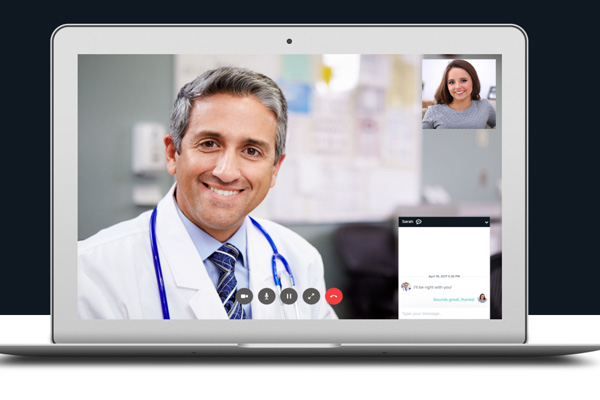
There are patients who have to drive to the top of a nearby hill and patients who have to stand in a certain place in their home to get the reception they need but in the time of Covid-19, video conferences and phone calls with doctors and specialists have become commonplace for Memorial Hospital.
As the hospital prepared for the potential large scale response to the pandemic, a rapid rollout of alternative methods to meet regular patients began as well.
While certain procedures have been conducted remotely and Memorial’s Behavioral Health Unit has been using telemedicine procedures for several years, the Medical Practice Management side of the hospital had not implemented the service yet when the state began shutting down in March.
Fortunately, a team was studying the usage of telemedicine by the hospital’s physicians when COVID-19 hit.
“We had actually tabled it to take more time to vet the entire process to see what fit for Memorial Hospital,” Amy McConnell, Director of Medical Practice Management, said.
But as the impact of COVID-19 was starting to spread across the U.S., McConnell and the team decided to quickly bring the program up to speed. They saw there would be a need to continue to help patients who may not be able to get out and about due to safety concerns, or those who were abiding the stay-home order, while also responding to the pandemic in the hospital’s service area.
“Within three weeks we were able to launch it,” McConnell said.
Dr. Adam Dawkins, a cardiologist at Heartland Cardiology, was in the initial pilot group of six physicians who began using the technology for patient care. Since starting on April 6, Dr. Dawkins has been meeting Heartland Cardiology patients in his office almost exclusively through telemedicine.
“Maybe 80 to 90 percent of our patients are now on telehealth as we try to keep people out of the office for the most part,” Dr. Dawkins explained.
Dr. Dawkins uses the technology to keep tabs on known patients to review their symptomology or go over certain numbers with them.
“They’re doing things like checking their own blood pressure for us at home, their pulse, their weight, and then we’re just discussing how they’re feeling,” he said.
His office also conducts screenings and initial consultation via telehealth for referrals to his office. Those screenings allow them to triage patients who may need to come into the office for an exam rather than wait.
Many of those early telemedicine meetings with his regular patients were conducted solely over the phone. He’s since switched to using video teleconferencing — the vendors providing the service to the hospital are HIPAA compliant — and his patients have responded well.
“I think they love it,” he said. “Particularly the ones we know really well. They enjoy seeing us and they get much more out of the appointment.”
Doctors are also able to observe visual cues related to the health of their patients. Dr. Dawkins can ask them to show them their necks to see their veins as well as see any areas of swelling or listen and observe respiratory patterns that wouldn’t be available by a simple phone call.
Although the hospital has partitioned off areas to separate potential Covid-19 cases from those seeking care of other medical problems, the virus has caused many to hold off on seeking emergency care in a timely manner. Waiting to long to seek treatment further complicates a patient’s outcome but in the case of telemedicine, doctors have been able to identify problems that required patients to come in for care.
“We have patients who are so scared to come in and so scared to seek care that they’ll reach out to have a visit like this (telemedicine),” Dr. Dawkins explained. “And then I recognize this is not something we should sit on, or you can see something on physical exam (over video) that could lead to something very bad, and we get them quickly into the hospital.”
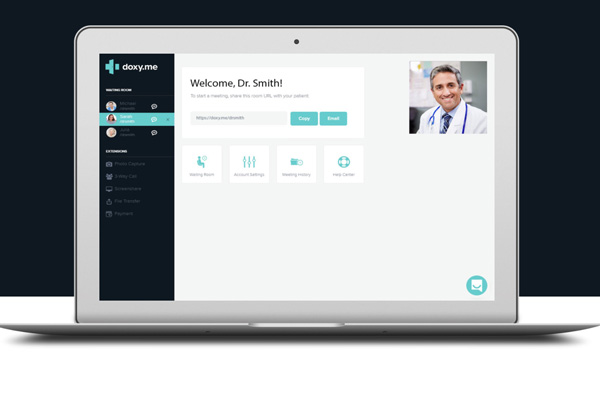
Dr. Dean Beckman, an internist who works in pediatrics at Jasper Primary Care Physicians, sees patients of all ages with a variety of needs. He still sees children for their needed vaccinations and of course, deals with things like strep throat, ear infections and other acute cases in the office. But for those at-risk groups who are especially susceptible to Covid-19 complications, telemedicine has been readily adopted as an additional tool to help in those cases.
One such group are those in nursing homes. According to Dr. Beckman telemedicine has been very helpful to see patients in nursing homes as those facilities have been forced to shut their doors to prevent the spread of the coronavirus. Through telemedicine, he can meet with the nurse there and then see patients virtually rather than making personal visits.
He expects to continue using telemedicine for patients he would normally have to see in person even after the pandemic subsides. “If a patient has a barrier (to coming into the office), it is another tool to reach them,” he explained. “So far it’s really enhanced our ability to take care of patients.”
For those older patients, sometimes the technology can be daunting but the doctors and McConnell’s team have been able to coach them through the process and get them connected.
“I’ve done a few with 90-somethings that have never done FaceTime. So it’s pretty neat to watch their reaction when you pop up on the screen,” Dr. Beckman said.
McConnell added that in a recent demo they were working with a mother and daughter together. “You’re thinking someone younger,” she said. “Mom was 91 and daughter was 71.”
Originally, the hospital was considering ways to reach individuals that didn’t have a primary care provider. According to Director of Business Development and Marketing Melanie Powell, the question became, is there a population of people who want the easiest route to see a doctor?
“And is this (telemedicine) going to provide them a way to have a primary care physician or get connected with a physician because maybe they just don’t want to go to a physician’s office,” she said.
The ramp up has provided proof of concept. By the end of April, the hospital had conducted more than 1,000 telemedicine appointments. According to Powell, the hospital will probably continue to see a mix of regular in-office patient visits and telemedicine visits as they move forward.
Although telemedicine is one way the hospital is meeting its patients’ needs, Powell explained, the hospital has taken many precautions to ensure patients’ safety in the hospital during Covid-19.
“We are taking every precaution. Our staff has appropriate personal protective equipment on so although we look a little different, we’re doing all of that to keep them safe,” Powell said.
She added that people have become very concerned about going into hospitals due to Covid-19.
“Ultimately, people need to be concerned going to family functions, going into the grocery store and the gas station and places where you think you’re safe because there are not patients there,” she said. “So we just want to make sure the public knows we have a safe place and a safe environment.”
But for those that are still fearful, telemedicine has become a way for them to meet their doctors.
