
Stay Brewed: New coffee roastery launched in St. Anthony
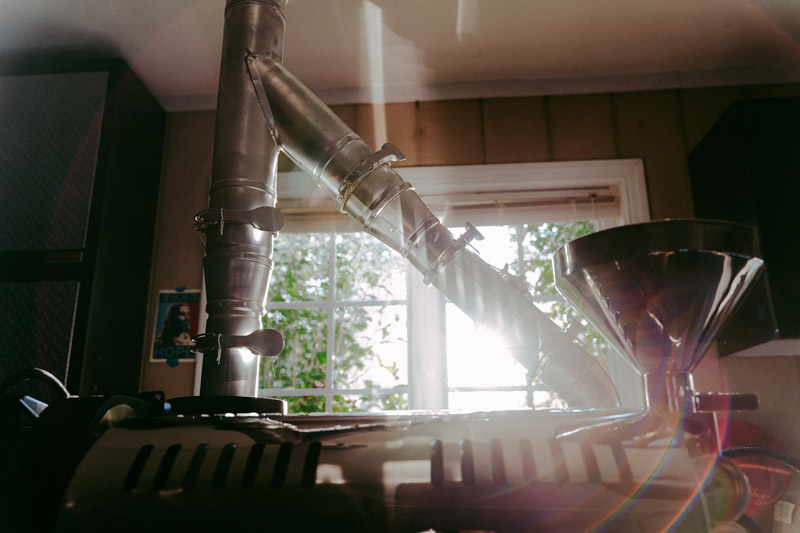
A stylized image of Jesus Christ overlooks Craig Weyer while he tracks the temperature of the swirling cacophony of coffee beans in the small roaster he has in his repurposed garage.
Craig and his wife, Lori, started their new coffee roastery, Stay Brewed, in St. Anthony about two months ago.
The growing popularity of their coffee keeps Craig at the helm of the little roaster pumping out freshly roasted goodness about four to five hours a day, five days a week.
“That has been surprising,” Craig said. “We had thought it would take longer to get customers, but I seriously underestimated how fast this would take off.”
Lori agreed. She handles a lot of the administrative side of the fledgling company. “The word of mouth is different with the internet,” she said. “I underestimated the impact that would have. I’m meeting with friends to tell them about our coffee, and they already know about it.”
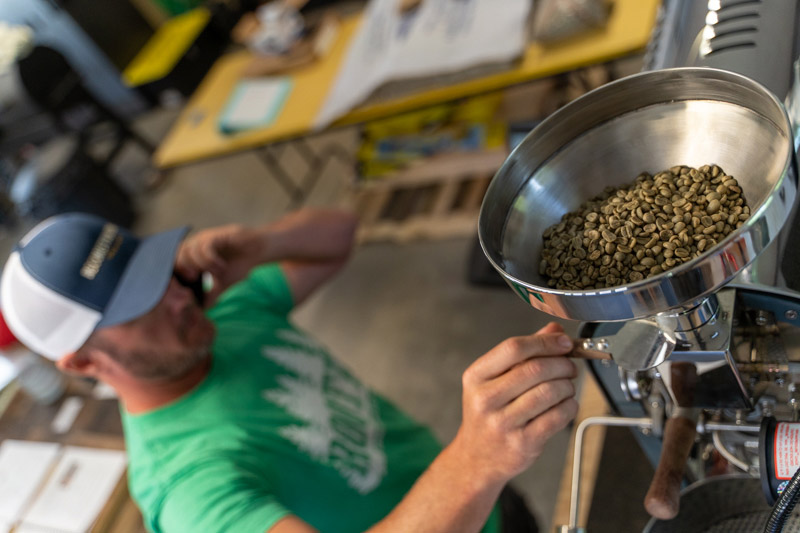
Each run is a somewhat miraculous transformation of a bitter green bean into a chocolate-colored roasted bit of goodness.
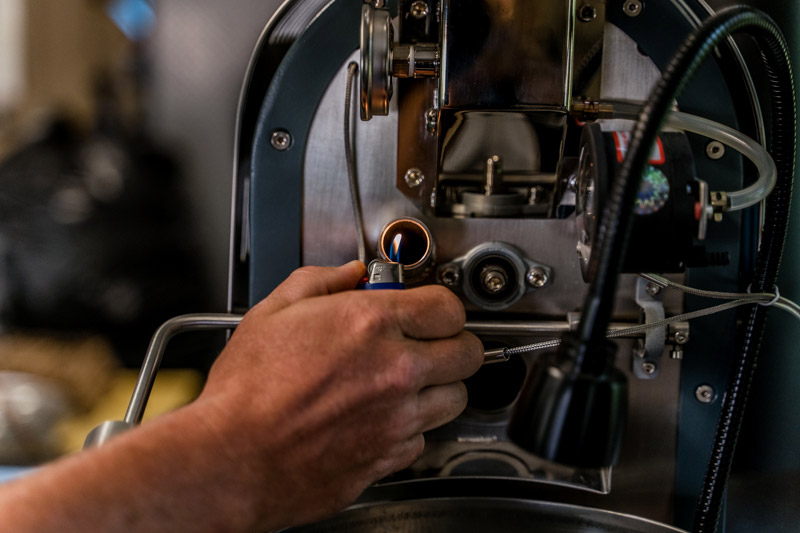
From the moment he releases the green coffee beans into the spinning heated drum, Craig runs a race with the roaster. The dance between the computer screen, a nearby notebook, the buttons controlling heat and fuel to the roaster, and the inspection port is constant for about 15 minutes each time.
Coaxing these flavors out, he has to listen for the telltale signs of the start and end of the roasting process. Much like popcorn, the beans heat up enough for the water vapor to crack them open. The first time happens a couple of minutes into the process, and depending on the roast he is trying to achieve, usually, one more time before he releases the finished coffee into a steel bowl where it cools.
Then, the beans go into nearby buckets marked with the geographic source of the beans, as well as how dark they were roasted. About a day later, they will be ready to become a cup of coffee.

Craig and Lori have been slowly releasing beans into the local market of friends and family. The response has been pretty positive so far, but early on in the process, those miraculous runs sometimes ended up with undrinkable swill.
He’s documented the notes of each profile of the coffee he has roasted. Early experimental roasts yielded some unexpected results. Flavors like orange juice poured from a burning tire and leather bomber jacket used to put out a field fire are annotated on the lines beside different roasting profiles.
The notebook gives Craig a reference point for replicating similar flavors in beans sourced from the same batch.
During one roast, he didn’t write any of the temperatures and times on the notebook, and the batch turned out delicious. Fortunately, the computer program that tracks the roasting process produces a line graph that Craig was able to use to reproduce the batch.
It’s all been a learning process for Craig and Lori.
“There has been a ton of information about coffee that I was completely unaware of,” Craig said about the fire hydrant of information he has assimilated over the past couple of months. “I’ve always liked coffee but never appreciated the depth of coffee.”
Flavors like pipe tobacco, leather, and smoke are actually good attributes to have for the finished product. There are more than 800 different flavor notes of coffee documented.
Lori has also been surprised by coffee’s many qualities. “It’s a craft to the point where there are so many possibilities for flavors that it’s basically endless,” she explained.
Craig’s first taste of coffee happened sitting across from his grandfather, Lawrence Fritz. “He would get up at five in the morning, and I would get up shortly after because I could smell his coffee,” Craig said. “I’d sit there with him, and he’d get out three cookies, and we’d dip cookies in his coffee.”
The vanilla wafers sweetened the bitter brew a bit.
“I took sips. It was terrible coffee,” he explained.
It wasn’t until he was a freshman in high school that he had his first full cup of coffee. He drank it black so he could learn to appreciate the stuff his family drank regularly. “I really wanted to enjoy that cup of coffee like they did,” Craig said.
Through pure stubbornness, that appreciation developed and coffee became a mainstay in Craig’s life. He could drink whatever was hot and available, but when he started exploring the idea of a roastery, he learned about the complexities of the beans.
“I am completely fascinated with this process (roasting),” he said.
Along with introducing him to coffee, Craig’s grandpa also exemplified characteristics that Craig grew to esteem. Lawrence worked at Alcoa nights and came home to farm during the day. His wife, Lillian, worked hard as a homemaker raising five children. His grandparents valued hard work and family.
Those values and the industrious work ethic of the tradesmen, farmers, factory workers, and craftsmen in the area are what they thought of as they worked through naming the coffee roastery.

They worked through variations of names that included their seven daughters — Layla, 15, Mia, 14, Hallie, 12, Kira, 10, Fallon, 9, Annalee, 7, and Julia, 5; they pop in and out of the roastery during the day to ask Craig questions about their homeschool work — as well as other characteristics of the community where they live. Finally, recognizing their own love for hard-working families and the power coffee has to keep people on their toes, they decided on Stay Brewed.
“Stay Brewed is there to highlight the journey from point A to point B,” Craig said. “The backbone of strong communities is a good work ethic, and it’s a sweaty process. We are here to keep people on that journey, whatever it is, on their toes. Coffee’s the original energy drink.”
For now, anyone interested in some locally roasted coffee can reach out to Stay Brewed by phone or email to order roasted beans from around the world, including Ethiopia, Burundi, Columbia, Peru, Papua New Guinea, and more. A full list is available on their website here and you can follow them on Facebook here.
