
Special: The Majesty of Movies
With the upcoming annual Southwest Indiana Film Festival (SWIFF), I cannot help but fan my flames of excitement for this event by revisiting a number of favorites from my own DVD shelf, as well as the personal history shared between these primarily long-forgotten gems and myself.
The art of cinema has always been a large deal in my life; I would deem it safe to say that watching and studying various films of my choice happens to make up a large portion of how I spend my free time. As for discussing film, don’t even get me started, or we’ll never get out of here!
My parents were big moviegoers. So, some of my earliest memories of my childhood consist of overheard banter between my mother and father over whichever movie they had recently watched.
I believe my earliest exposure to high-quality cinema came when I was very young, no older than five or six, on a sunny weekend morning when my father came home with a brand new double-VHS tape copy of Steven Spielberg’s 1975 fright fest, Jaws. This is a film that left a great impression on my then eleven-year-old father when he saw it in theatres, and still remains a top pick of his to this day, nearly forty years later.
I would watch it over and over on my parents’ VHS player, growing more and more terrified at the prospect of this great white predator lurking beneath the murky surface of the Atlantic.
When little Alex Kitner was lifted from his bright orange body raft, turning from boy to gushing fountain of gore before being dragged to the unknown depths that only the shark was familiar with, I sat mesmerized. Never before had I imagined that a ferocious sea demon who swam unnoticed and killed seemingly indiscriminately, not even sparing the youth enjoying their fun in the sun, could be right underneath me as I hit the water of the city pool after a great jump from the now abolished high dive.
“Jaws” did not take names, he didn’t mess around; he was a gargantuan killing machine, eternally hungry for the blood of little boys who swam out past the safety ropes at Patoka Lake.
Needless to say, one could always find me in the safety of the shallows, water rising no higher than my knees.
If I stay near the shore and don’t allow the water to rise above my waist, I would reason to myself, then there is no possible way that an aquatic killer would snag me. That was until I viewed Joe Dante’s 1978 Jaws rip-off, Piranha, at which point I decided that I was better off landlocked. But then came Prophecy (about a gigantic mutated bear terrorizing those who stayed on land).
Those early memories of watching my parents’ favorite films still remain fondly in my mind. Now, all these years later, I still remain an avid movie-watcher; and much like my deep sea nemesis of my childhood, I remain constantly hungry for more; movies, that is . . . not human flesh.
It has taken me a long while to establish such a list that would rank my top ten favorite films of all time, as I love and enjoy so many different films. I present my list today, my final testament to the form of art I so much adore.
 One – Rebel without a Cause:
Nicholas Ray’s 1955 teenage masterpiece; a frank and stirring portrait of youthful disillusionment during the Eisenhower-era in small town California. Starring the ever majestic James Dean as new kid in town Jim Stark; brooding, tough, and charming, while at the same time both vulnerable and sorrowful; a young dreamer filled with restless longing and a desire to be understood. Over the course of two nights, Jim is faced with various realities that existed in the adult word, like death, violence, love, and betrayal; and, as Dean always seemed to do so wonderfully both on and off screen, we see Jim Stark takes these travesties with empathetic grace.
A beautiful display of color and lights, should one skip over the black-and-white edition, Rebel without a Cause became my teenage sacrament. James Dean, my role model…the kind of man I realized that I wanted to grow up to be. The film remains as precious and insightful to me now as it did when I was fifteen years old.
Two – Days of Heaven:
 By the film’s release in September of 1978, critics and contemporaries alike saw that director Terrence Malick was a fresh and enigmatic force that remains unrivaled to this day.
The reclusive former philosophy student crafted a parade of stunningly cinematographed imagery, an enchanting narrative told almost entirely through a young girl’s voiceover, and a plot that consisted of one of the most devastating love-triangles in recent cinematic history.
A film that I have never grown tired of, Days of Heaven was Malick’s final film before his twenty-year absence from the public eye. He would return in 1998 with the sprawling WWII epic, The Thin Red Line, but Days of Heaven remains his genuinely untouchable masterpiece, an achievement in quality movie-making, as well as the crafting of art. One could pause nearly every frame in Days of Heaven and observe its swirling colors and set-design as one would admire a painting at the Smithsonian.
Three – Raging Bull:
 During the seventies and eighties, Martin Scorsese was the untouchable example of what a film director should be. He turned out fascinating depictions of a very real, very close-to-home American landscape. While it was difficult for me not to include his films Mean Streets, Taxi Driver, and Goodfellas on this list, his 1980 biographical drama about the rise and fall of former World Middleweight Champion Jake “The Bronx Bull” LaMotta takes the cake.
De Niro, in a shining example of his legendary “method” approach to acting, portrays the troubled boy from the Bronx who rose to prominence in the 1940s as championship boxing’s great contender, only to have his success disintegrate in a haze of rage, paranoia, and sexual obsession.
Shot in a shadowy black-and-white with an outstanding performance by Joe Pesci as LaMotta’s brother/manager, Raging Bull remains a genuine Scorsese gem. It was also voted Best Movie of the 1980s. I have to agree with this choice.
Four – Barry Lyndon:
 Stanley Kubrick’s 1975 follow-up to the controversial Clockwork Orange arrived in the form of a heavily researched period epic focusing on Ryan O’Neal as an Irish lad named Redmond Barry and his opportunistic, rags-to-riches adventures across 18th century Europe.
Based on a long-forgotten Thackeray novel, The Luck of Barry Lyndon, Kubrick did not hesitate to innovate the form of filmmaking through this particular flick. With camera lenses designed by NASA and a wardrobe so realistically crafted and worn that one could assume Kubrick had invented a time machine to acquire them, Barry Lyndon became a benchmark in contemporary cinema.
From the astounding performances given by the film’s leads, as well as the mind-blowing set designs and unforgettable score, the film makes for a brilliant artistic experiment that never fails to entertain, as well as flaunt its use of innovative film methods and equipment.
Kubrick has often been hit-and-miss with me, but any dry and self-serving drivel that he may have come out with during the prior decade, Barry Lyndon, along with 2001 and Eyes Wide Shut, serve as his well-deserved hall passes.
Five – Unforgiven:
 My philosophy has always been “one cannot go wrong with Clint Eastwood.” I still believe that to be true, and while there is a very large number of Eastwood films I could have easily included on this list of greats, his 1992 Revisionist Western masterpiece stands out even among his various greats.
Following in the footsteps of the late-great Sam Peckinpah, Unforgiven attempts to de-romanticize the mythology of the American West. Instead of sunny desert-scapes, heroes and villains on either side of a thickly drawn good and evil line, and the inevitable triumph of good, Eastwood presents viewers with a bleak and impoverished West, where tragedy and violence come roaring out of the shadows, and triumph remains a distant dream.
Eastwood’s portrayal of the haggard and sickly former outlaw, William Munny, is easily his greatest performance given, especially considering he had been preparing for the role since his Josey Wales days, refusing to make the film until he felt he was “old enough” to adequately portray the fallen cowboy.
The acting, both on Eastwood’s, as well as Morgan Freeman’s, part is stellar; the story is both exciting and heart-wrenching, and Gene Hackman as Big Whiskey’s sinister sheriff, “Little” Bill Daggett, was his best performance since Hoosiers.
They don’t make Westerns like this anymore; Unforgiven represented the end of an era, long past, but rarely forgotten.
Six – Buffalo ‘66
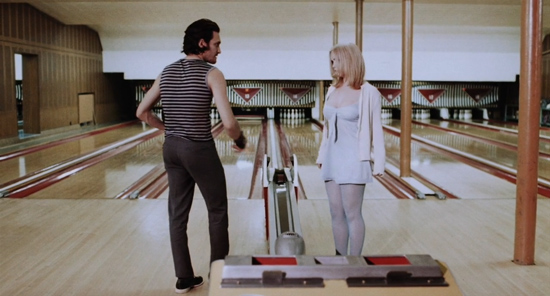 Better known these days for his outrageous commentary and general hostility toward critics and fans alike, it is easy for one to forget that professional painter-turned male model-turned bit part actor-turned film director, Vincent Gallo, is responsible for one of the greatest independent films of all time.
Gallo’s first and final great directorial effort was released in 1998 and boasted an impressive cast of eclectic names from Angelica Houston and Ben Gazzara to Christina Ricci, Mickey Rourke, and Gallo, himself, in the starring role.
In a film that manages to blend elements of absurdist comedy, quirky love story, family drama, and organized crime thriller, Buffalo ’66 is not a film to be missed, never mind that the same directorial mind is also responsible for universally despised indie romp, The Brown Bunny. Never mind Gallo’s lack of charm and political correctness when he speaks. Never mind that this film has nearly vanished into the fabled late-‘90s art scene; it is still a great film, a masterpiece that I am yet to grow disenchanted with.
Seven – The Fountain
 Effectively blending elements of science fiction, world history, theological mythology, and lost-love romance, Darren Aronofsky’s 2006 visual epic is often overshadowed by his more commercially viable films, Requiem for a Dream and Black Swan.
Balancing a story about the inevitability of mortality in three very different storylines and timeframes, The Fountain’s central plot concerns a frantic surgeon named Tommy (a stellar performance given by Hugh Jackman) and his distressful determination to rescue his cancer-stricken wife (another stellar performance given by Rachel Weisz) from mortality.
For me, this film has it all: a tearjerker with stunning visuals and underlying philosophical observations. It remains a very special film, in that there will never be many like it; and even at its most far-out, The Fountain still maintains a sense of love and longing that remain both effective, as well as very real.
Eight – Badlands
 Terrence Malick’s debut, as well as arguably most accessible film, Badlands is everything that you would expect it to be: a colorful road film, two teenage fugitives leaving violence and destruction anywhere they land, and a greatly overlooked morality statement.
Based, in part, on the true crimes of Charles Starkweather and Carol Anne Fugate in the late 1950s (these crimes also went on to inspire Springsteen’s classic tune “Nebraska”) as well as some very obvious allusions to notorious lovers Bonnie and Clyde, Badlands swept the Cannes Film Festival upon its release in 1973, even beating out Scorsese’s Mean Streets.
With chilling performances by a very young Martin Sheen and Sissy Spacek, as well as a great performance from the late Warren Oates, Badlands remains a staple of its time, as well as an unrivaled example of art in film.
Nine – Apocalypse Now
 I am a cinematic blasphemer, I know, because I have openly expressed my dissatisfaction with Coppola’s Godfather Trilogy. It just didn’t work out for me, you know? I prefer to see organized crime of any sort left to Scorsese.
That said, never have I claimed that Francis Ford Coppola is a bad filmmaker, because he has proven many-a-time that he is a gifted individual; from 1974’s The Conversation to his rendition of Bram Stoker’s Dracula in ‘92, I have thoroughly enjoyed many of the films this man has made.
When speaking of Coppola’s 1979 Vietnam epic, Apocalypse Now, I must admit that I did much more than thoroughly enjoy it, I fell in love with it. It is a film of lights, nearly every frame being illuminated by flame, fluorescents, or flood lights, the scenery is menacing, and the atmosphere is unnerving. I would almost hesitate to call this a “war” film, because it plays out much more like an effective psychological thriller.
With a basic structure borrowed from Joseph Conrad’s novel Heart of Darkness, the film moves the setting to Vietnam, but the tormented spirits of both leads remain as true in film as they were on page.
A rugged and grim Martin Sheen is sent on a mission to sail up the river to assassinate AWOL renegade Captain Kurtz (Marlon Brando’s greatest performance, in my opinion), meeting a number of equally unnerving characters along the way: a manic Robert Duvall in a performance on par with that of Sheen and Brando, and a greasy and hopped-up Dennis Hopper as an American photographer-turned loyal Kurtz disciple.
Pairing the carnage of the Vietnam War with certain religious imagery, Coppola delivers completely here. Not a single undertone goes unnoticed. This is a film of color, of sound, of epic proportions…how else, though, should one do it when addressing the very epicenter of human madness?
Ten – The Teacher
Essentially a long-forgotten 1974 sexploitation film featuring the always gorgeous Angel Tompkins as sexy high school teacher, Diane, who begins to pursue her recently graduated, and often unbelievably oblivious, neighbor (Jay North, of Dennis the Menace fame). While many B-movie/drive-in releases of that time were produced without sincerity, all easily forgotten, The Teacher does not slip away so easily.
With a frank portrayal of a blossoming love between the eighteen-year-old Jay North and twenty-eight-year-old Tompkins, two characters with very accurate emotions are born onto the screen.
No worries, there is still plenty of seventies sleaze to enjoy, from wing-collared polyester, flashy cars, and a van that manages to appear in nearly every scene. To add to the film’s “grindhouse” appeal is a second storyline that is happening unbeknownst to the two lovers: a mentally unhinged stalker played by a greasy Anthony James (who would later go on to portray Skinny Dubois, the unfortunate Inn owner in my #5 pick on this list, Unforgiven).
While The Teacher can easily be shrugged off as a dated and gimmicky sex-romp that should be forgotten, something about the movie has made that impossible for me to do. Could it be the accurate portrayal of innocence lost? An impossible love? I am not sure, though I still remain completely taken with this gem of yesteryear.

Austin C. Morgan was raised in Jasper, Indiana. He is currently working with Aaduna literary review in publishing a four-piece fiction project. He also has several volumes of poetry, which he intends to release sometime in 2015. He is an avid outdoorsman and often finds inspiration within the nature around him. When not writing, he divides his time between extensive, cross-country travel and his personal research.
