
Roman Kiefer: a survivor’s story
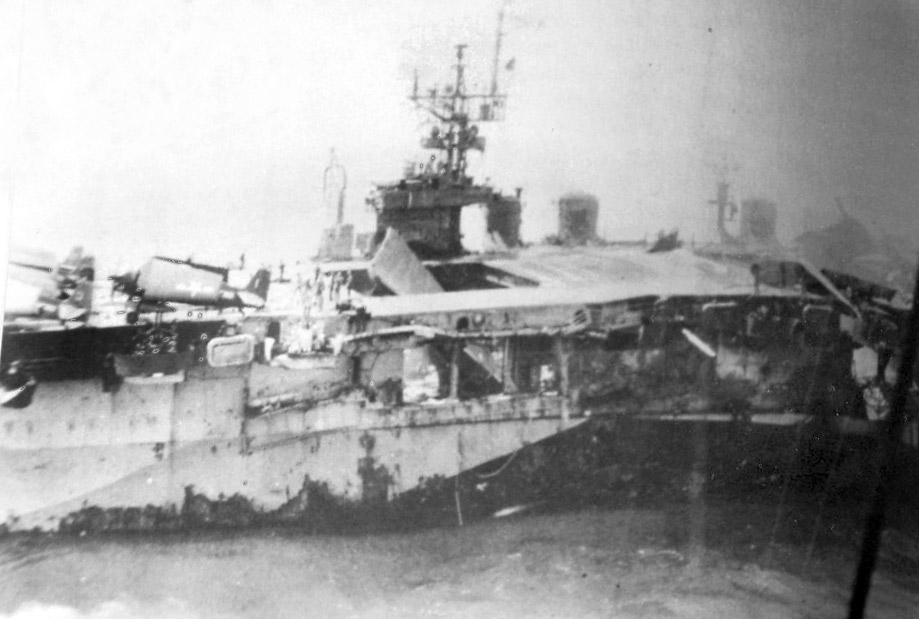
Roman Kiefer joined the Navy during World War II and was serving aboard the carrier USS Princeton in the Leyte Gulf on October 24, 1944 as the light carrier was destroyed by a single bomb dropped by a Japanese “Judy”.
The lone Japanese plane suddenly appeared from the cloud cover and dropped two 550 pound bombs. One fell harmlessly into the sea.
The other dropped through the flight deck and into the crew’s galley, severing the main gasoline line used to fuel planes and damaging a torpedo plane in the hanger leading to a raging fire.
The Princeton, a light carrier, carried 23 fighter planes and 10 torpedo bombers. All were refueled following their morning air battle and ready to join in the next wave of combat when the bomb tore through the decks leading to massive fire and explosions.
If not for the fuel in the aircrafts, the bomb would likely have done little damage and would not have led to the sinking of the ship.
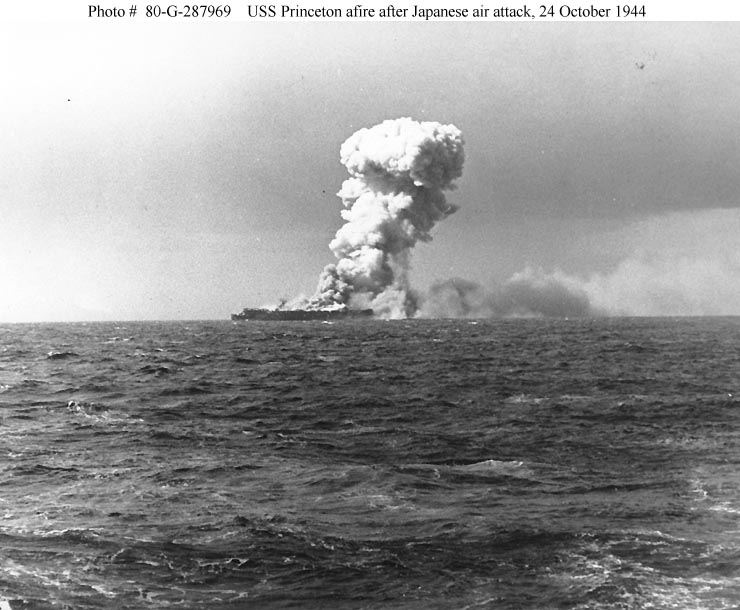
However, as plane after plane and the aviation fuel storage areas caught fire and exploded, the ship’s destiny was sealed.
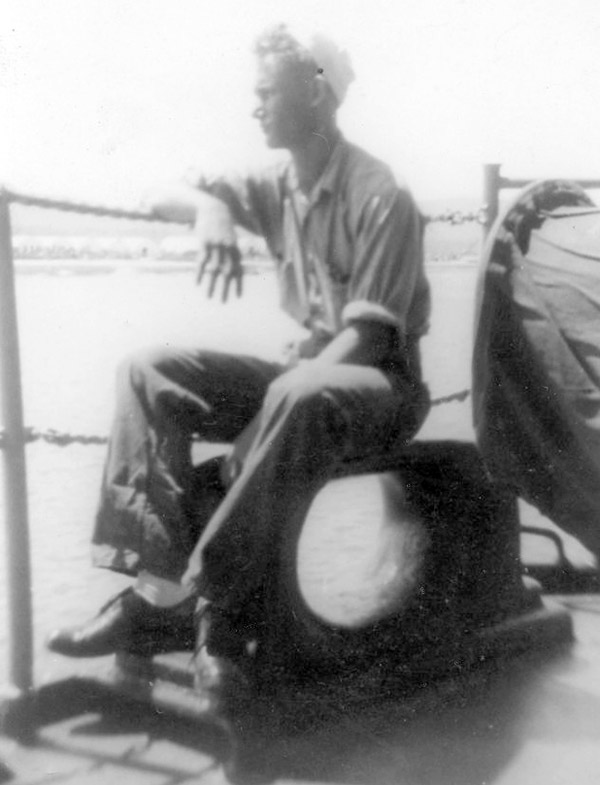
Kiefer, a Dubois County native, says his last memories of the Princeton were of clinging to the side of a life raft filled with survivors of the great vessel’s destruction, and of being rescued by the crew from the Cassin Young.
Aside from personal memories, the description of what happened October 24, 1944, varies little from sailor to sailor.
Most of the crew were at General Quarters at the time of the “Judy’s” attack owing to the proximity of hot spots just off the coast of Luzon.
Among those at their posts when the bomb hit the Princeton was Kiefer, who served as a loader for the 20-mm anti-aircraft gun on the starboard side of the vessel. His description of the day are taken from a letter he sent to The Tiger Rag, a publication focused on the events of October 24, 1944:
“I was a s2c compartment cleaner in the 3rd Division and a loader on a 20-mm on the starboard side aft of the stacks … I went on board the Princeton at Pearl [Harbor] in April 1944.
“On the day of 24 October 1944 I was at my GQ Station on the 20-mm with nothing to do … I heard and felt something hit the ship … Everybody was running around except we had to stay by our guns. Fire was coming out of the hangar deck. The gun mount got very hot. A barber I believe he was, said he’s going down to get his money out of his locker. As he left the gun captain said, ‘Let’s get out of here.’ As I got on the flight deck and turned forward, 20 feet from the forward elevator, the elevator blew up. The guy to my left said something — he got his legs torn off by something and I couldn’t help him. This kid was 17 years old. (He didn’t give his true age when he first enlisted in the Navy.) Now as I got forward and was starting to go over the side, something or somebody fell on top of me and we both went over into the water. As I came to myself the ship kept on hitting me, or I was bouncing off of the ship since it was still moving. At the time it seemed like I was stuck to the ship. Earlier I seen this big guy with the officer’s mattress out in the water. As time went by my life jacket soaked up with water, then I had to drop my shoes. By that time I was hanging on to a life raft by a rope. The raft had 8 or 10 people in it and not much more room. I was getting very tired … my life jacket was getting heavy and was getting to a point where it was not doing me any good. But then this DD [torpedo destroyer] came along. About 5 feet the bow of the DD came down, and I got a hold of one of the life lines. One man on there got hold of my arm and up I went with the ship. I was so tired, as I now remember, one man on the Cassin Young saved my life, because I had nothing left in me to hold to.”
As he held onto the side of the raft, Kiefer also recalled being surrounded by sharks which gunners from nearby vessels were shooting.
Following his rescue, Kiefer remembers, “After a few days on the Cassin Young I was transferred to the Lexington, then to two other ships before I got to Pearl again.”
Once Kiefer arrived in Pearl, he was transferred to San Diago and then given a 30 day survivors leave.
Kiefer would opt to remain in the Navy for another 16 years before returning to Dubois County to stay.
But, the date of October 24 still brings back memories of lost friends and the sinking of a “gallant lady” as the USS Princeton went down.
Casualties from the Princeton numbered 347 killed, 552 wounded and four missing.
Other ships damaged to some degree in their efforts to rescue Princeton survivors included the USS Birmingham, the Cassin Young, Morrison, Gatling and Reno, all as a result of a lone Japanese dive bomber.
