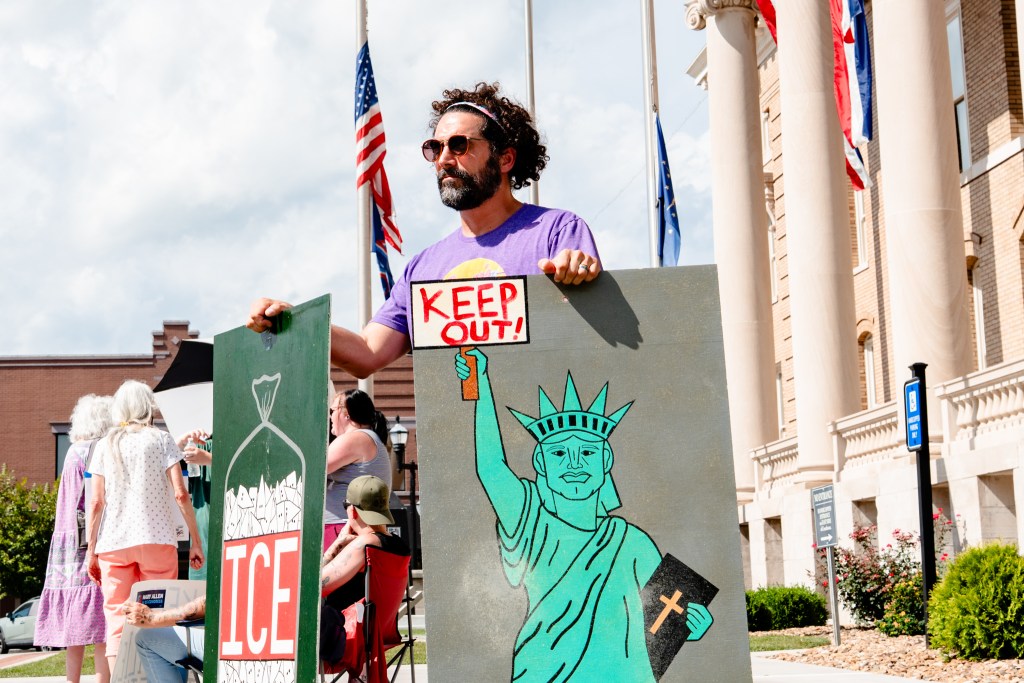
Residents speak up for friends and neighbors

“Do you not see your neighbor?” Brandon Lopez asked rhetorically. “Do you not understand what is going on?”
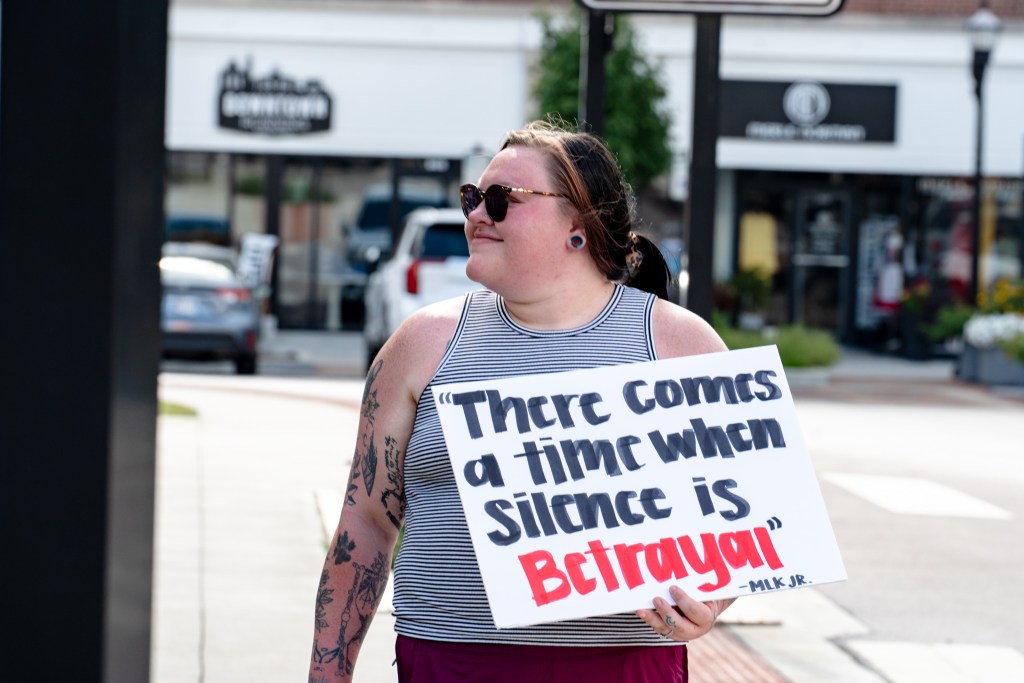
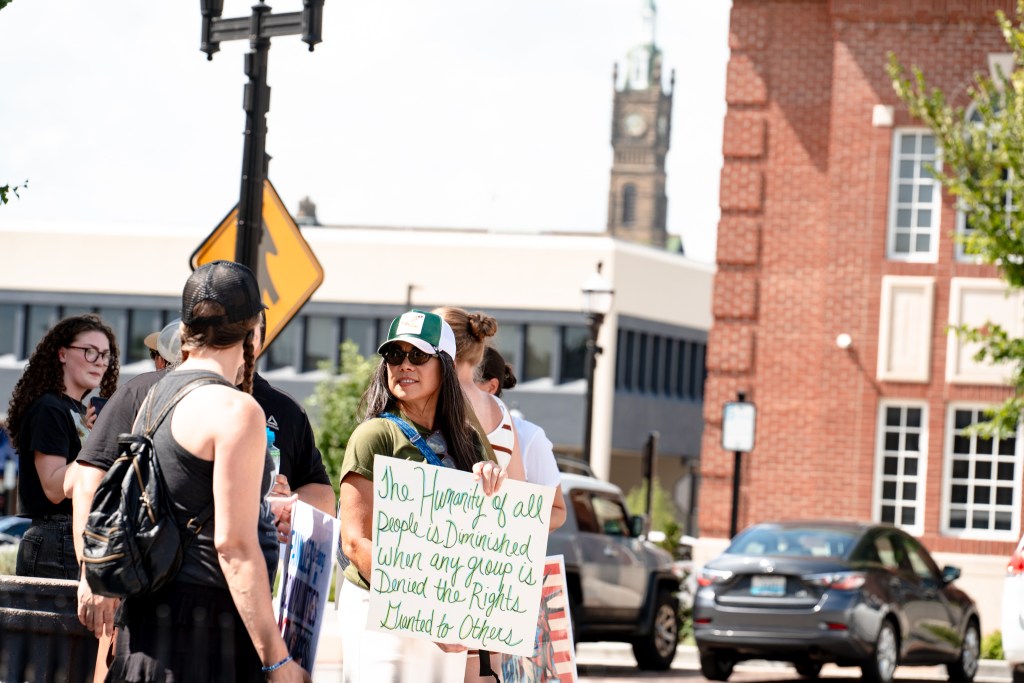
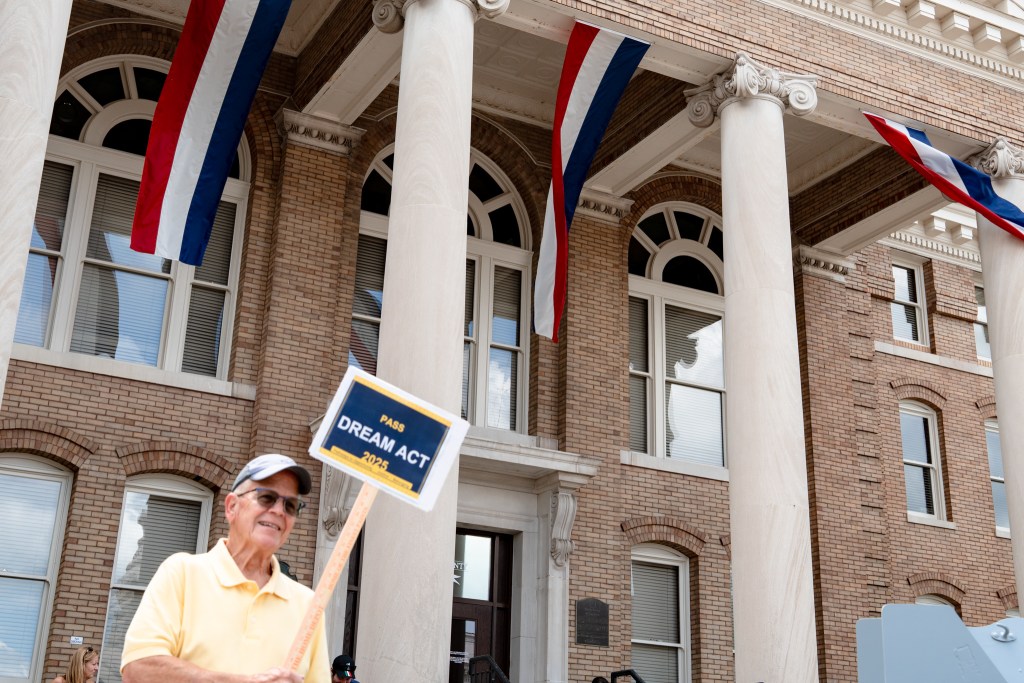
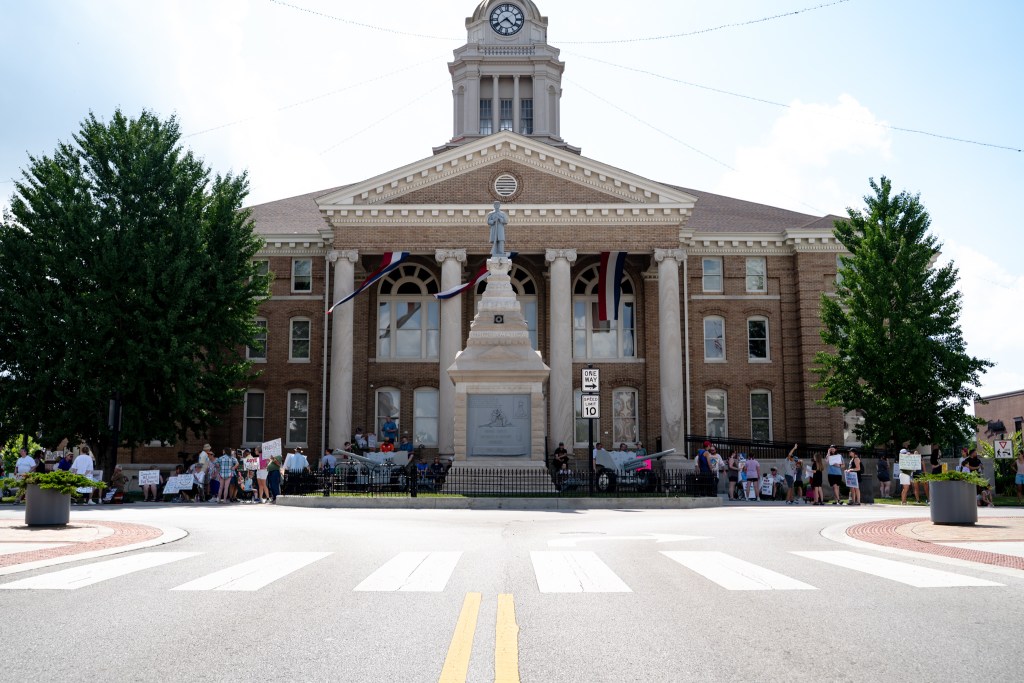
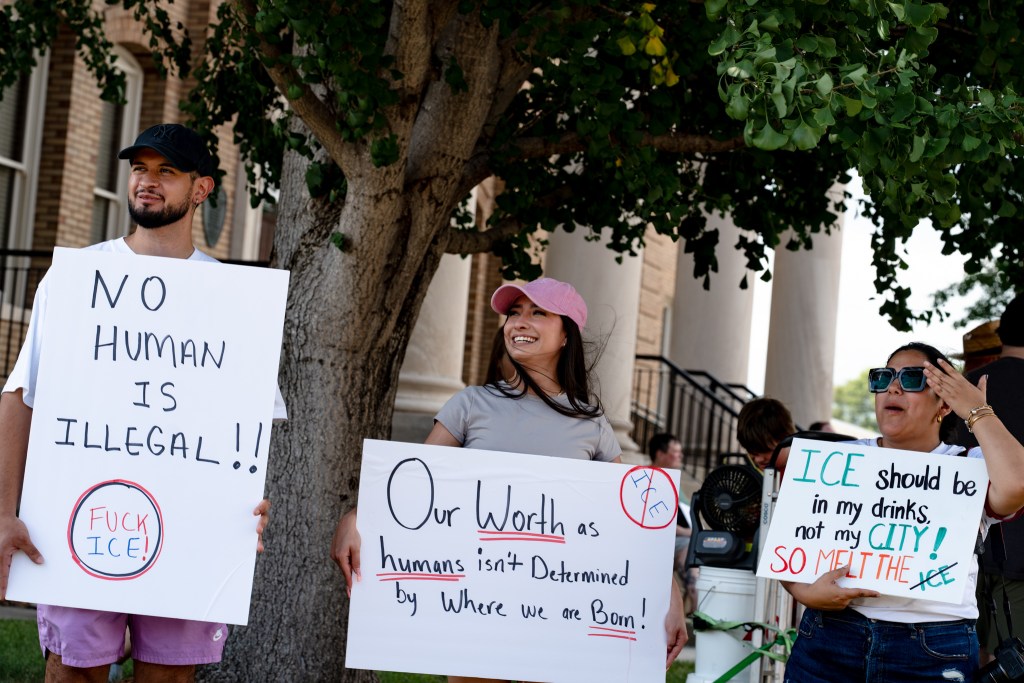
Lopez was gathered with about 80 concerned citizens who came out to the Dubois County Courthouse Saturday afternoon to protest recent Immigration and Customs Enforcement activity in the area.
Spurred by the arrest of Jasper resident Angel Hernandez, most carried signs denouncing the federal agency and the current administration or calling for empathy for immigrants and each other.
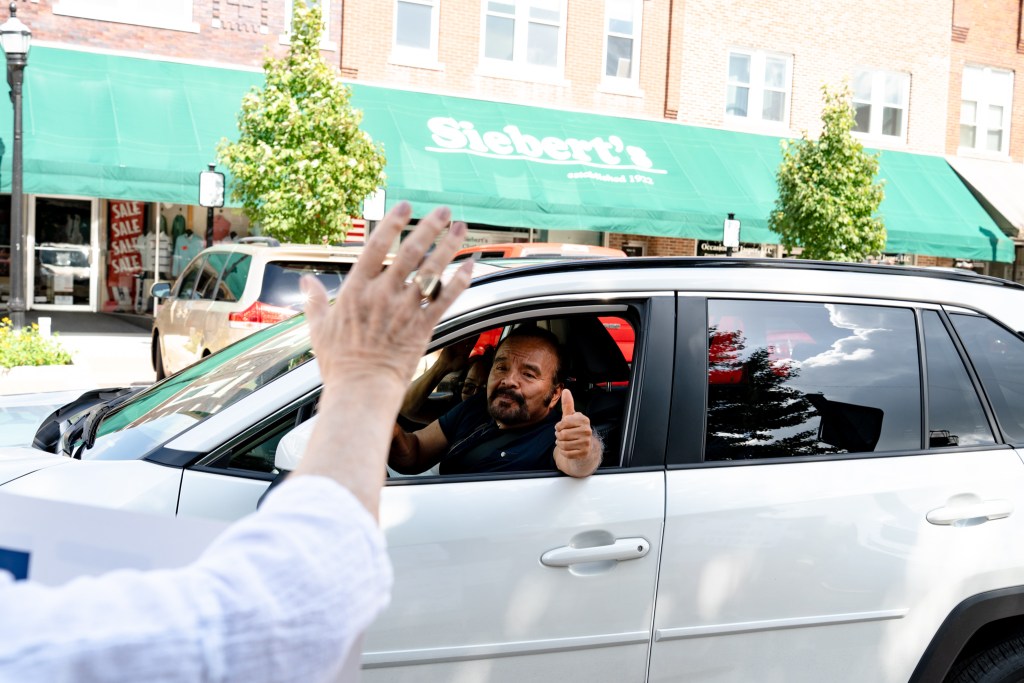
Passersby mainly showed support for the gathering, though a vehicle drove by with a t-shirt hanging from the driver’s-side window that sported a pro-ICE message. As it passed, an individual in the crowd invited the two occupants to stop and come talk with them. The invitation was ignored, and the pair didn’t return.
Their passage is what invoked Lopez’s question. He’s a first-generation U.S. citizen whose family came from El Salvador, and he doesn’t understand the sentiment that would empower them to drive by with that message.
Lopez said he’s had interactions with ICE in the past. “My mom had to get my passport and show them I was a U.S. citizen,” he said. “They had me in handcuffs. I was 16 and on my way to high school.”
They did take his father and deport him, though, forcing Lopez to have to take on a full-time job to help support the family.
He’s angry about what is occurring around the country.
“Let’s be honest, they are taking U.S. citizens just because they look Hispanic,” Lopez said.
His girlfriend, Blanca Villalobos, who owns Bonita LLC in Jasper and is also a U.S. citizen, is sure to carry her passport with her.
Just in case.
But Lopez doesn’t.
“I’m a U.S. citizen,” he asserts. “Is this Germany in the 1930s?
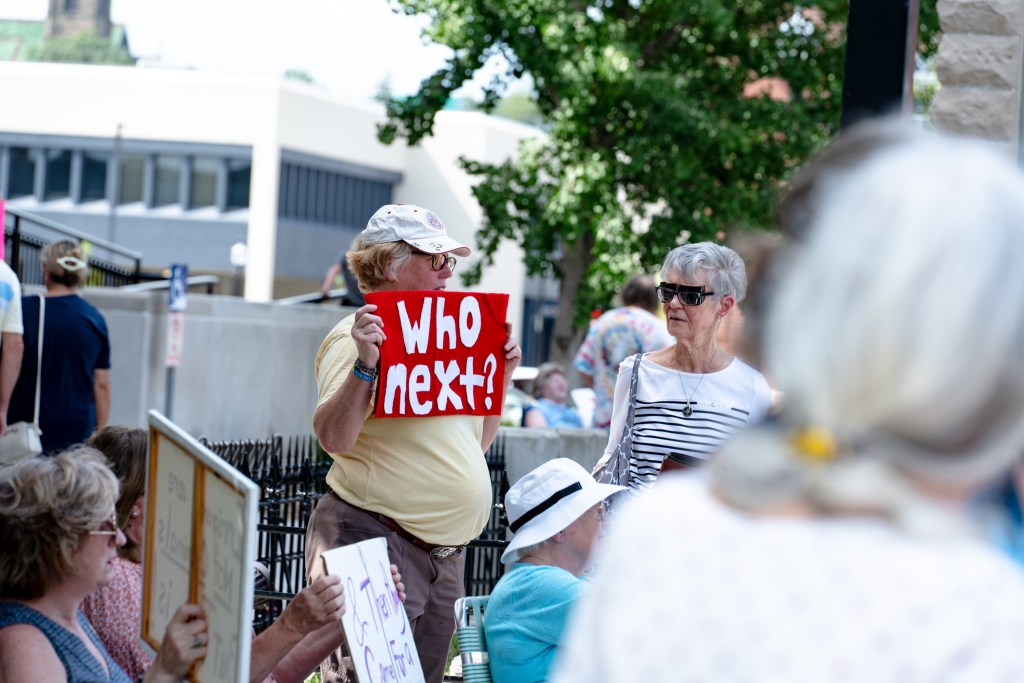
More than a dozen sisters from the Ferdinand monastery were also in attendance at Saturday’s protest.
Sister Michelle Sinkhorn explained that assisting immigrants is a foundational aspect of their mission. The first sisters of the Benedictine order moved to Ferdinand in 1867 to address the needs of German immigrants.
They continue to assist immigrants in the area, regardless of where they come from.
Sinkhorn helps individuals like Angel Hernandez Ramos, who were brought to the country as young children through the monastery’s immigration services. If these individuals, called Dreamers, are accepted into the Deferred Action for Childhood Arrivals (DACA), as Angel was, they have two pathways to citizenship available.
If they marry a U.S. citizen or their parents are citizens, they can be sponsored by them to obtain a waiver, or an employer can also sponsor them. Both paths are expensive, and under the current administration, most businesses aren’t willing to file for a DACA employee.
Similar to Temporary Protected Status, DACA is not guaranteed and requires individuals not to have a criminal record. Additionally, as part of the process, they are required to return to their country and file for the applicable waiver there before being allowed to return.
Dreamers are scared to leave the U.S. to complete the process for fear of being denied the waiver and being stranded outside of the only place they’ve known as home. It also takes months to move through the system while outside the U.S.
Sinkhorn said she could not speak about Angel’s case due to confidentiality but affirmed he was going through the process of obtaining a waiver.
“He did nothing wrong,” she said.
Sister Joan Scheller, who works with Sinkhorn in the immigration services offered through the Sisters of St. Benedict, added that the sisters in front of the courthouse were there because they were Catholic religious women.
“We believe that what we do to the least of these, we do to Jesus,” she said. “It’s our Gospel message.