Q&A with Republican candidates seeking nomination for District 63 State Representative
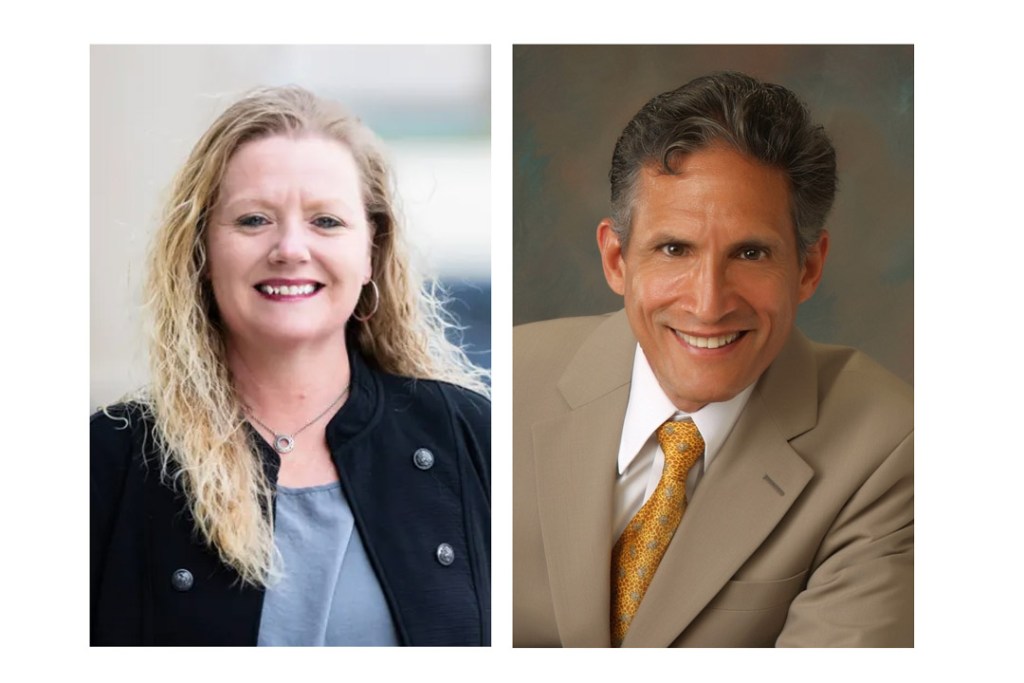
Amy Kippenbrock and Dr. Richard Moss are vying to represent the Republican Party in the upcoming General Election for District 63, Indiana State Representative.
House District 63 encompasses all of Martin County, and portions of Daviess, Dubois, and Pike counties in southern Indiana.
The answers are published as provided by each candidate with light editing for grammar and format.
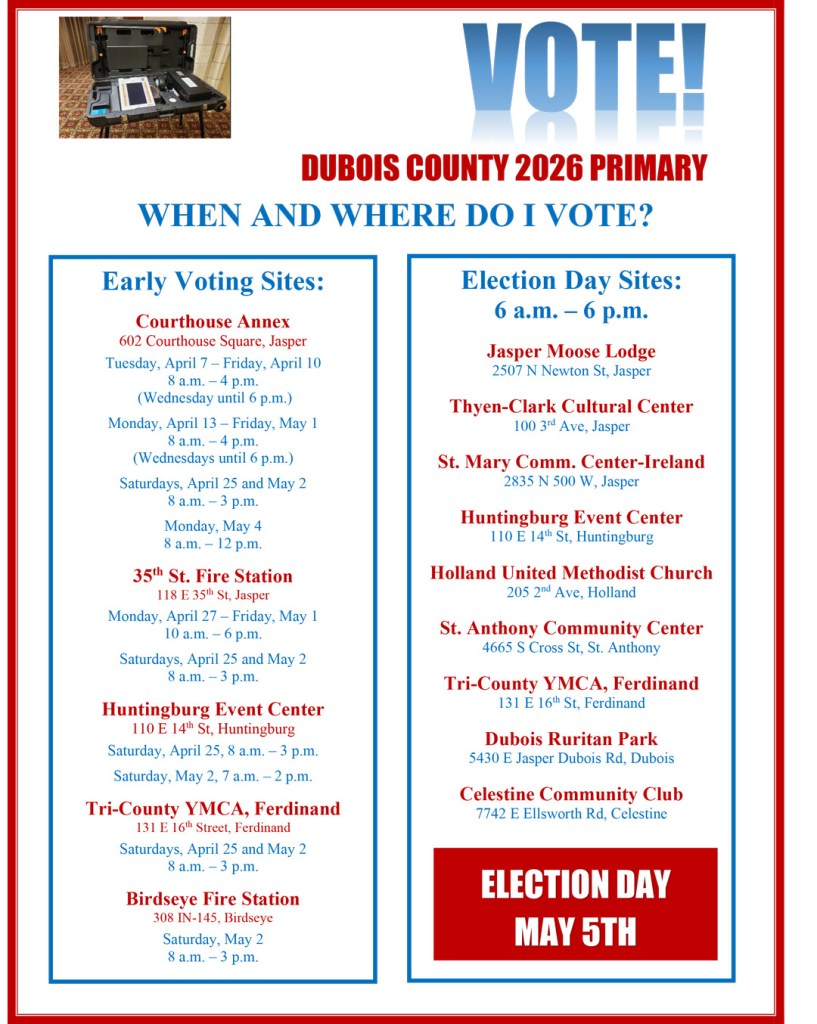
Early voting is ongoing, and we have included information at the end of this article regarding hours and locations.
What motivated you to seek this office, and why are you the right person to represent District 63?
Kippenbrock
Public service has been one of the most rewarding experiences of my life. I truly enjoy connecting with people across our community—working together to solve challenges and celebrating the successes we achieve along the way. Those experiences have allowed me to help bridge gaps and bring people together.
Serving as County Clerk and reaching my term limit, I feel called to continue giving back in a way that allows me to make an even greater impact. With deep family roots in Martin County and having lived most of my life in Dubois County, I understand the people, values, and priorities of District 63. I am well connected throughout the district and deeply passionate about serving its residents. I believe my experience, relationships, and commitment make me the right person to represent District 63.
Dr. Moss
I am a surgeon in practice in Jasper and Washington for 35 years since 1991 (recently retired), with tens of thousands of patients from the four-county 63rd district (HR 63) (Dubois, Daviess, Martin, Pike) and have gotten to know the community well. I had privileges at Memorial Hospital and Daviess Community Hospital and was one of the original investors in the Memorial Hospital Outpatient Surgery Center. I spent three years as a volunteer cancer surgeon in some of the poorest countries on earth, in Thailand, Nepal, India, and Bangladesh. I have four children raised in Jasper and who have gone through our excellent school system and have graduated from Indiana University in Bloomington. I grew up in the Bronx, one of five sons raised by my mother, a single Mom (my mother, by the way, was a Hoosier and moved to NYC as a child) and came to Indiana at the age of 19 to enter IU and then the IU School of Medicine. I have started local businesses including the Bronx Bagel as well as a real estate company, Sabra Real Estate, LLC, based in Jasper, French Lick, and Evansville. I have written three books and hundreds of articles, often of a political and cultural nature, many published in our own “Herald.”
I have a long interest in political matters and have run for office before. I seek to represent the district to work with other like-minded legislators, to ensure the district and the state remain fiscally, economically, culturally, and morally, on solid ground. Based on experience in multiple areas, training, knowledge of the issues, awareness of potential threats to our continued success, combined with fresh, innovative ideas and solutions for winning the future, and an abiding commitment to the district and the state, I believe I can represent the interests of our community.
If elected, what are your top two or three priorities for your first term, and how do you plan to advance them in the General Assembly?
Kippenbrock
One of my top priorities is election integrity. I am passionate about elections and want to continue strengthening election law to ensure our systems remain secure, transparent, and accurate. Hoosiers should have full confidence in the process, and I will work with colleagues, election officials, and stakeholders to support policies that protect and improve our elections.
Another key priority is affordability. Families across our district are feeling the pressure of rising everyday costs, and I am committed to finding practical solutions that help ease that burden. Whether it’s addressing taxes, supporting job growth, or looking for ways to reduce costs for working families, I will focus on policies that make a real difference in people’s daily lives.
A third priority is ensuring we are responsibly managing and leveraging our natural resources and DNR-related initiatives to support long-term economic growth in District 63. Our land, water, and natural assets are part of what makes this region strong, and we need policies that both protect those resources and help unlock opportunities for tourism, outdoor recreation, conservation, and local development.
To advance these priorities, I will collaborate with fellow legislators, listen closely to constituents, and stay engaged with local leaders and industry experts. My goal is to bring forward thoughtful, commonsense solutions that reflect the needs and values of District 63.
Moss
1. Form a conservative coalition amongst Republicans and common-sense Democrats to promote Indiana First. I put state interests and the interests of Hoosiers over global interests. I want to protect what belongs to Hoosiers.
2. Core conservative principles: balanced budgets, low taxes, cutting burdensome regulations, reducing the size and scope of government.
3. College education, Indiana Land, and Indiana Jobs for Hoosiers. Not foreigners/illegal aliens or foreign countries like China, Qatar, or Saudi Arabia. “Cheap labor is not cheap—it drives down wages and undermines working families.”
4. No COVID-era shutdowns, mandates, and school closures. “We will not shut down our economy or sacrifice our children’s future again.”
5. In the end, we must remember that it is the states that created the federal government and not the other way around. It is solid red states, like Indiana, that first and foremost must protect itself and its citizens against federal tyranny. I have concerns about the next Democrat administration, and the potential for widespread abuses of power, especially from its Justice Department, going after political opponents – and red states like Indiana. I want to sound the alarm and galvanize our state government against that possibility.
What does a thriving District 63 look like to you in ten years, and what role should a state representative play in getting there?
Kippenbrock
A thriving District 63 means strong schools and strong job opportunities. In ten years, I want to see our schools continuing to prepare students for success—whether that’s college, a skilled trade, or entering the workforce—while staying connected to the needs of our local communities and employers.
It also means having quality jobs right here at home, so families can build their lives in this district without having to look elsewhere. Supporting local businesses, attracting new industry, and encouraging workforce development will be key to making that happen.
As a state representative, my role is to be a strong advocate for our district—supporting policies that invest in education, promote economic growth, and remove barriers for businesses and workers. Just as important, it’s about staying connected to the people I represent, listening to their needs, and making sure their voices are heard at the Statehouse.
Moss
Prosperous, self-reliant, law-abiding communities, a dynamic economy, cheap, reliable energy, good, safe, quality schools, excellent healthcare, and a population of healthy, robust, innovative, hard-working Hoosiers. Indiana should remove illegal aliens from our midst, using employer sanctions, penalties, E-verify, working with ICE, and deporting them ourselves when necessary. Indiana jobs for Hoosiers.
I believe in a strong civil society rooted in faith, family, and community. When those foundations are strong, we don’t need an overreaching government to fill in the gaps.
Last year, the General Assembly passed Senate Bill 1, which cut property taxes for most homeowners and farmers but gave cities and towns new authority to impose their own local income taxes — a tool they previously did not have, while local units of government stand to lose a projected $1.5 billion over three years, with public schools representing roughly half of that loss. Critics have argued that this effectively shifts the tax burden rather than reduces it. Do you believe Senate Bill 1 struck the right balance between property tax relief and the fiscal health of local governments and schools? What, if anything, would you change?
Kippenbrock
The goal of Senate Bill 1 was to provide property tax relief and simplify the system, and I believe we are moving in the right direction. At the same time, I recognize this is a complex issue, and with any change like this, there are real trade-offs.
While many homeowners and farmers are seeing relief, I take seriously the concerns from local governments and schools about long-term funding. That’s why I don’t see this as a finished product—I see it as a starting point that we must continue to refine.
At the Statehouse, I would support several practical next steps. First, we need to closely monitor the real financial impact on schools and essential local services and require transparent reporting so we can respond quickly if gaps emerge. Second, I would work with colleagues to adjust the formula if needed—whether that means revisiting funding mechanisms for schools or ensuring communities are not forced into difficult choices that weaken critical services. Third, I support maintaining strong local input, but I also believe we should evaluate whether the shift toward local income taxes is creating unintended burdens and make adjustments if necessary.
Local control remains important, and communities should have a voice in how they respond. But with that comes a responsibility at the state level to ensure we are not simply shifting the tax burden or creating inequities between communities.
Going forward, I am committed to continuing this work—listening to local leaders, reviewing data, and being willing to make thoughtful changes—so we can deliver meaningful tax relief while also ensuring our schools and local governments have the stability they need to serve our communities well.
Moss
I believe that government closest to the people is best. Local leaders, in close communication with citizens, will decide what they can afford, what services they can provide, and whether or not to raise taxes. Local leaders in communication with the citizens can best decide on matters of budget, services, and taxes.
Solar farms, battery storage systems, and data centers are increasingly being proposed on agricultural land in southern Indiana. The General Assembly recently considered legislation that would have allowed these developments to bypass local zoning and public hearings on certain farmland. What role should the state play in regulating where these projects are sited, and how would you protect local communities’ voice in that process?
Kippenbrock
I believe local control is the best approach. Communities across southern Indiana are not all the same, and decisions about land use should reflect local priorities, values, and long-term planning goals. Those communities that want to embrace solar farms, battery storage, or data center development should absolutely have that opportunity, but they should also have a meaningful voice in how and where those projects are located. Communities need to work on educating themselves on zoning opportunities now to be best prepared as these projects arrive.
Coming from a background in county government, I’ve seen firsthand that government closest to the people is often the most responsive and effective. Local elected officials and planning bodies are in the best position to weigh the benefits and concerns of their residents, protect agricultural land where appropriate, and ensure development fits the character of the community. Preserving that local input is key to maintaining both trust and balance in the process.
Dr. Moss
I would oppose bypassing local zoning and public hearings. I oppose all taxpayer-funded green energy efforts because they are not efficient or effective, are costly, and have a negative impact on the environment. I would not spend a dime of taxpayer money on “green energy” and not allow them to bypass local zoning and public hearings. I do not subscribe to the notion of “man-made” climate change. I oppose tax payer funding of AI/Data Centers. If private enterprise wants to invest in AI/Data Centers/“Green Energy” that is up to them, but I would oppose government intervention or taxpayer funding for any of it. I would work with other legislators to build conservative, common-sense coalitions to protect local communities – and the state.
Do you support or oppose the Mid-States Corridor project as currently proposed by INDOT? Please explain your position.
Kippenbrock
I’ve heard from and understand the concerns of those in our community who both oppose and support the current Mid-States proposal. I support the language included in Senate Bill 27 last session requiring Budget Committee review over large projects like the Corridor. I hope the current pause provides an opportunity to find a better balance between the concerns of impacted property owners and the economic needs of the region—strengthening our community by supporting job retention and growth while also being responsible stewards of property rights and taxpayer resources. I also believe any path forward should clearly demonstrate meaningful, long-term benefits for our local communities, ensuring this project not only meets regional needs but truly serves and supports the people who call this area home.
Dr. Moss
There are pros and cons. Overall, I oppose it. Costly. Bypasses Jasper and Huntingburg, which will hurt these two towns. Driving time is not cut down very much. There is minimal benefit, huge costs, including tearing up farmland with only slight benefits.