
Purdue Extension Does…Meat on the BBQ
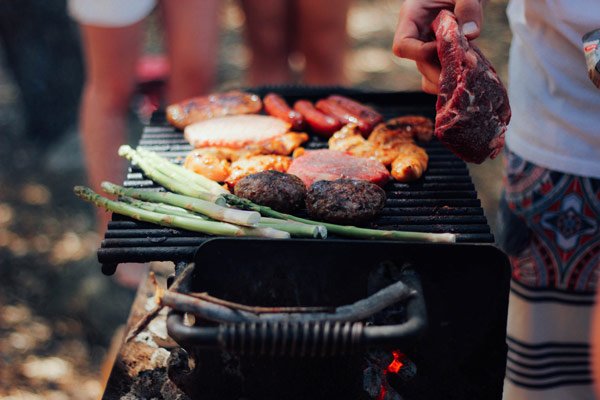 It’s summertime and that means it is time to fire up the backyard barbecue. So if you are a BBQ novice or expert you might like to know just how to get your meat grilled to perfection.
Stacy Zuelly has made a career out of perfecting the selection of good meat for cooking and grilling. The assistant professor of animal sciences at Purdue University advises that getting the most out of your barbecue starts by selecting the best cuts of meat.
“People often go to the store with a set amount of money and pick up the cheapest steak they can find,” Zuelly said. “And then they’re disappointed when they have a dry steak.”
To hone your backyard barbecue skills, Zuelly offers some advice for anyone who grills meat.
Buy a meat thermometer and use it. If you want to be better at any type of meat preparation, a digital meat thermometer is necessary. “I don’t know why it’s a point of pride for people, but the one thing I say over and over again in my boot camps is spend the money to buy a digital thermometer,” Zuelly explained.
Meat thermometers help keep food safe while also preventing overcooking. Color and touch can be extremely deceiving. Sometimes, pink meat is perfectly safe to eat and people will end up overcooking meat until it is too dry to enjoy, Zuelly said.
Digital meat thermometers are better because they read temperatures instantly, and you do not have to insert them deep into the meat. Zuelly also recommends using a meat thermometer with a thin tip so it does not splice through burgers and ruin them.
If you are looking for an easy barbecuing experience, pick a center cut. Cuts from the center of the animal are the tenderest. And tenderness is usually seen as a good thing. “The middle is where you are good steaks come from, like the ribeye and the loin,” Zuelly said. “Because they are user-friendly, these center cuts are also the most expensive.”
Do not discount the limbs; they just need more love. This means that cuts from the limb will be less tender. So, anytime you go to the grocery store and it lists shoulder or round, it means they will be less tender.
“That doesn’t mean they’re not good cuts,” Zuelly said. “They just need more attention, cooked in a method that will bring out the flavor.”
The limb cuts lend themselves better to ground products. Or to bring out tenderness, they can be marinated and cooked low and slow. Interesting fact: The Boston butt pork roast is actually from the shoulder of the hog, not the rear.
Select front cuts; they will be more flavorful. Animals fatten from front to rear. This means front-end cuts like the beef brisket will have more fat, flavor and juiciness. This is also why the ribeye has more fat than the New York strip steak. The hind limbs will be tougher and have less fat, which means if you have a hind cut, you will really have to marinade it for tenderness and juiciness.
While at the grocery store or butcher shop, look at the cut information. See which part of the animal the meat is coming from so you will know how you will have to prepare it. Make sure you read the cut information at the grocery store, because the information about where the cut is coming from and the grade will always be on that package.
Use your cut selection to determine your cooking method. If you have something with enough fat, you can barbecue it. Grills are high temperature, so you need to have selections rated for good tenderness. Burgers, steaks and pork chops can go on the grill because they are tender meats and can cook well with those high temperature. Less tender meats should be slow-cooked at a low temperature.
 Interesting fact: Once you go past four hours of a smoker, you are not really adding any more smoke so feel free to wrap up your cut to continue cooking it.
Select a steak with marbling. When you choose U.S. high Choice and Prime, you get the most consistency in getting this type of selection. This demonstrates the importance of knowing what the grading scale means. Low Choice and Select meats are the most common and will be sold in your average grocery store. “This doesn’t mean they won’t be great, but as you go down the quality grading scale, the variability within the meat cuts increases and the likelihood of having an unsatisfactory eating experience goes up,” Zuelly says. “From a flavor standpoint, nice flecks of fat inside the meat are important.”
Know what different certified breeds offer you. You may come across terms like Certified Angus and Certified Heritage Berkshire Pork, but what do they mean? Zuelly does not recommend a certain breed of meat, but she does mention that if they are certified, they have to meet certain standards for that breed, which means you know that you will get a certain standard of marbling and will have a bit more consistently.
Know what cuts to look for in beef. Zuelly recommends the sirloin, which comes from the middle-back portion of the animal. She says these offer the biggest value for their flavor. They are generally bigger steaks and can come as top sirloin, bottom sirloin or tri-tip. Zuelly says they are often underrated and overlooked by consumers. If you are willing to spend more, Zuelly recommends the ribeye, chuck-eye, porterhouse, T-bone, tenderloin, and New York strip as excellent cuts that will not disappoint.
Learn to pick out the best pork selections. For pork, Zuelly says to look at two things: marbling and color. The ideal color is a reddish pink. “Pale means dry,” said Zuelly. “It may look like it has juices on the outside, but that means they’re not on the inside and the moisture is not in the meat.”
Zuelly also says that it is OK to cook pork medium-rare and recommends cooking the pork to 145 degrees and letting it rest for three minutes. “It will have a slight pink center, but it tastes so much better,” she says.
Do not underestimate the importance of grilling poultry well. Many grilling or cooking instructions for poultry can be misleading, Zuelly says. “If you Google how to grill a chicken, it says to cook it until the juices run clear,” she says. “I was like, ‘What does that mean?’”
So, Zuelly conducted an experiment. When she taught her students at South Dakota State University, she instructed them to do just what cooking instructions often told them; cook the chicken until the juices run clear.
After five semesters of this experiment, she compiled her results. There was over a 100 degree spread between the “clear juice-cooked chicken.” Some students had severely unsafe chicken that was not OK to eat while others had cooked chicken until it was too dry to stomach. This proves that meat thermometers are the best way to get that safe and flavorful eating experience, Zuelly exlained.
“Poultry, in general, is fairly lean,” she adds. That means it needs help to bring out its flavor. Poultry purchased in the grocery store often will be enhanced to add moisture. However, for certain cooking methods like grilling, you will need to add marinades for additional moisture.
Do not ruin lamb by over-seasoning. Lamb will consistently be fairly tender and lean. Zuelly herself is a lamb producer and her top tip is to not over-season the lamb meat. “You don’t need rosemary and mint jelly to make it good.” she says.
So enjoy your BBQ but remember it all starts with knowing your meat selection and following these tips!
If you would like more information, please contact Purdue Extension – Dubois County at 812-482-1782 or jmdougan@purdue.edu.
