Overdose vigil recognizes loss and brings hope

Man, they love you so. Don’t let them go.
–Vigil attendee
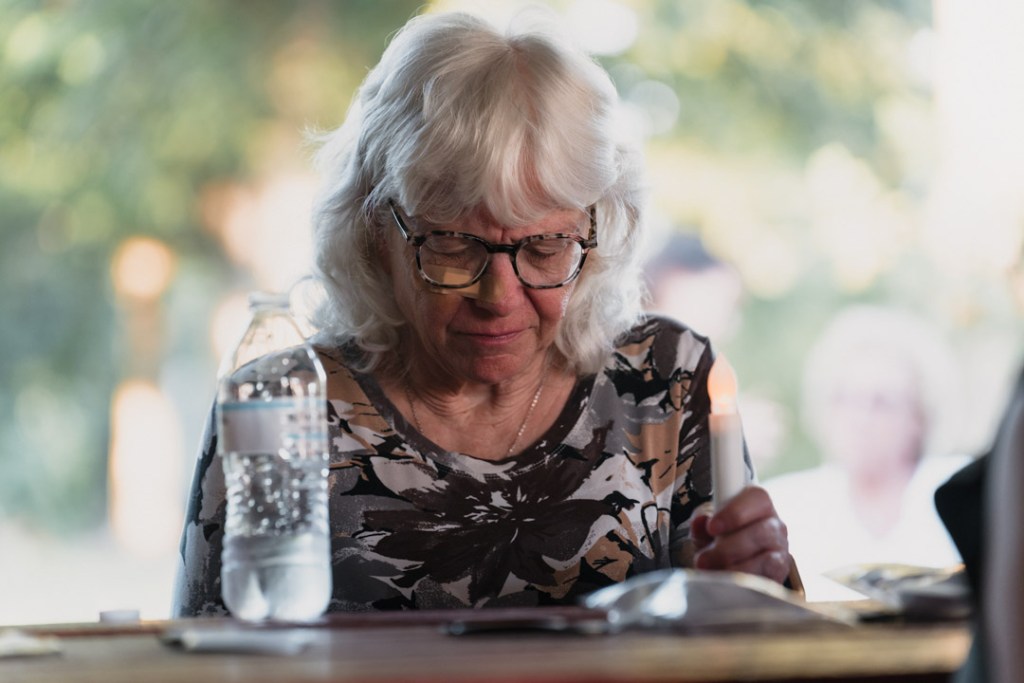
The lifeline of community and help from a higher power wove itself through the speakers sharing their pain and triumph at the eighth annual overdose vigil Thursday evening.
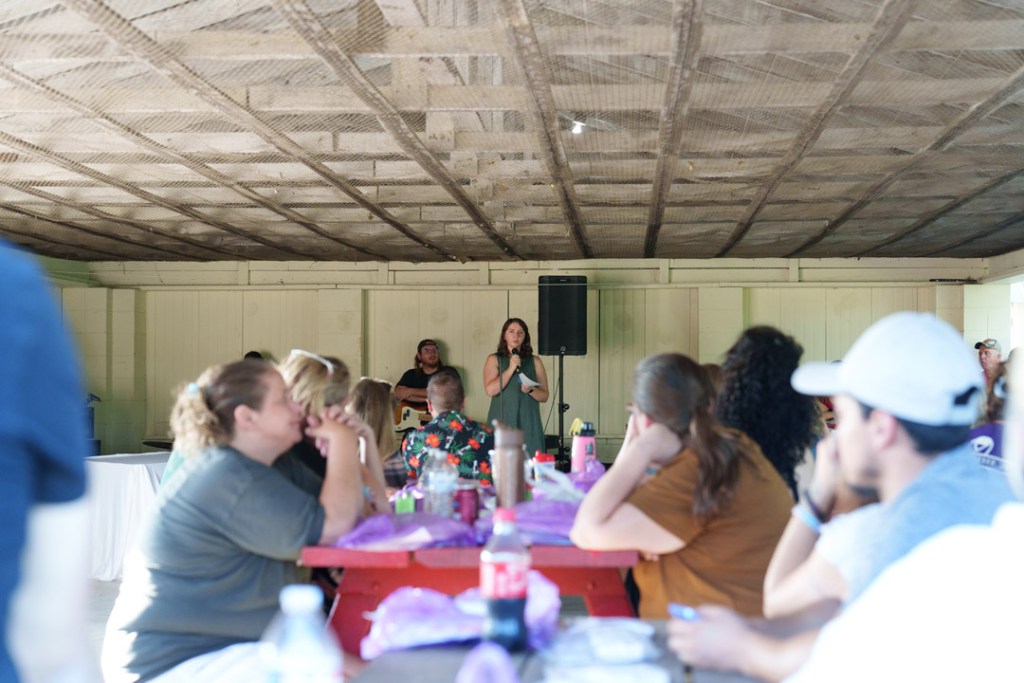
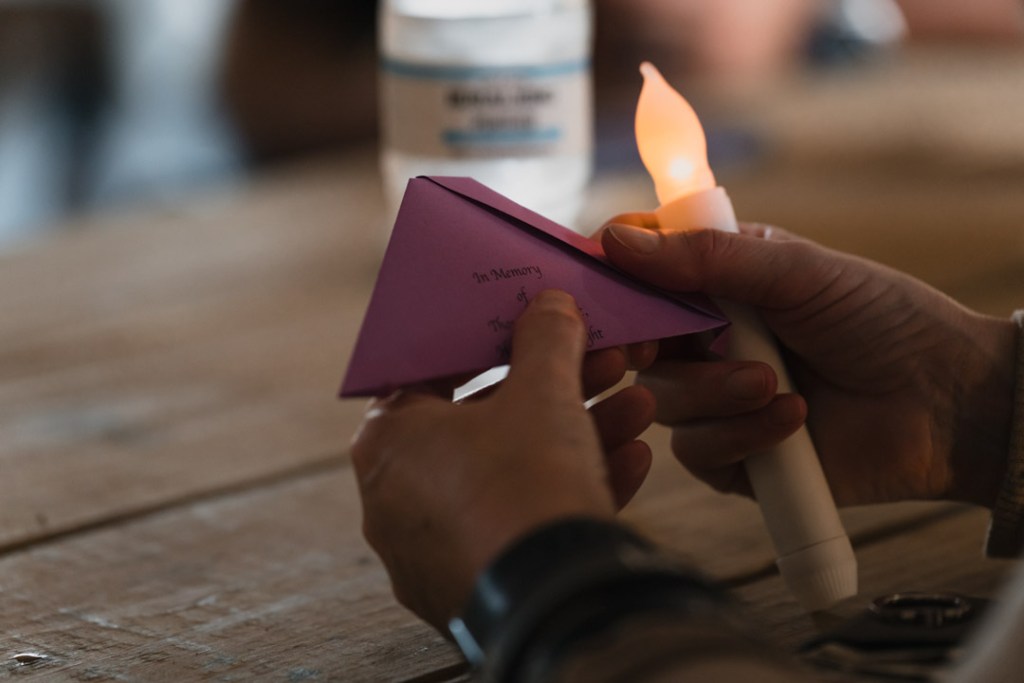
Organized by Dubois County Advocacy for Recovery and Prevention Council, the event draws attention to the lives lost to substance use disorder. During the event, attendees are given space to mourn and acknowledge the loss of their loved ones, as well as share their own personal struggles.
Michael Uppencamp, who is celebrating 16 years of sobriety, and his wife, Michaela, who has eight and a half years of sobriety, spoke about their struggles with addiction and the challenges of recovery. Their stories highlighted the complex dynamics of addiction within relationships and the role of the criminal justice system in their recovery journeys.

Michael described his experience watching his wife struggle with heroin addiction while he maintained his sobriety. He explained the daily fear and helplessness he felt during her active addiction.
“Every day, you know, I have 10 hours until the sickness comes,” Michael said about his wife. “They fear that sickness more than anything because it’s…you don’t want that.”
Knowing what his wife was going through meant doing whatever he could to make sure she didn’t withdrawal, even as he was attempting to stay sober.
The couple married while Michaela was still using drugs, and she was arrested a week after their wedding. Michael said the same official who signed their marriage certificate upstairs was signing an arrest warrant for his wife downstairs.
“I was left with a three-year-old daughter to raise while she got eight (years) to four,” Michael said, referring to Michaela’s prison sentence.
He remained steadfast and waited for his wife to get out. She did after serving four years.
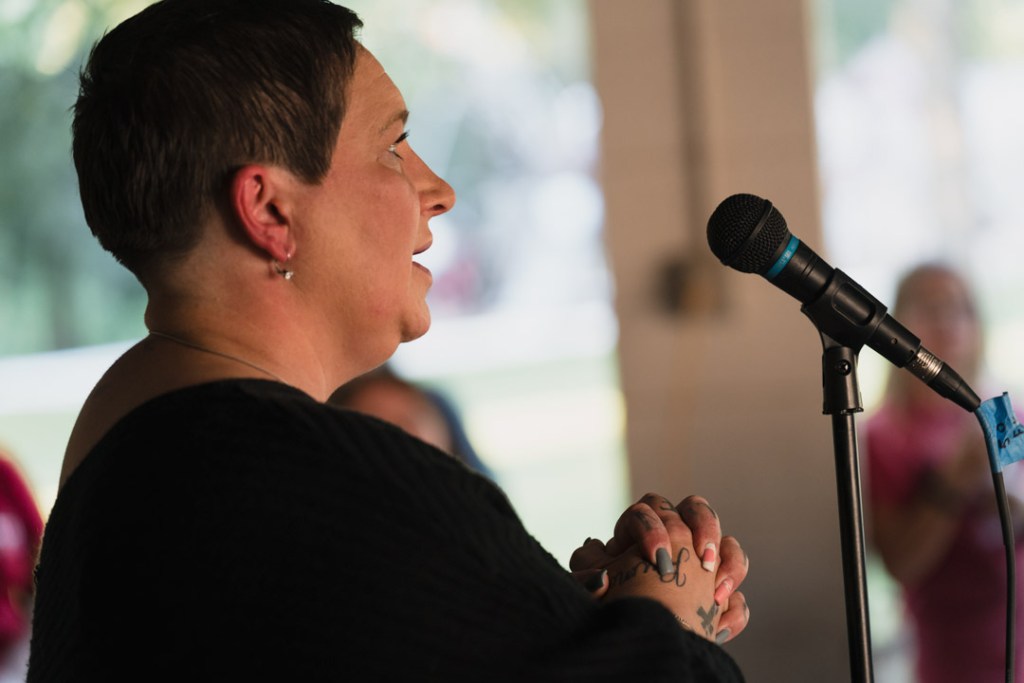
Michaela described her journey from feeling like she didn’t fit in as a child to using drugs as a way to belong. She said she never realized when partying became a problem.
“I don’t know, I woke up one day and it was a problem. I was just partying,” she remembers telling her 19-year-old son when he asked when her addiction became serious.
Before her incarceration, Michaela developed a severe bone infection called osteomyelitis from injecting drugs in her neck. The infection required removal of her left collarbone, upper two ribs and half her sternum, leaving a 5-inch hole in her chest.
“When I was in the hospital, my heroin dealer was coming out from Louisville bringing me heroin,” she told the crowd.
She credits prison as the beginning of her salvation. She knew it was necessary; she didn’t fight the arrest when it came.
“I sat there and I said, I’m going to go away for a long time because I need this,” she said. “Prison saved my life. Hands down. Anybody that knows me will tell you prison saved my life.”
It took a few years, though. The day came three years into her sentence when she woke up and knew she would never use again.
Since her release after COVID-19, Micheala has rebuilt relationships with her children and achieved professional success.
“I have restoration. I have restoration of life. I have restoration of family. I have restoration of extended family, of friends. People trust me,” she said.
Both speakers emphasized the importance of addressing underlying trauma to achieve lasting recovery. Michaela said she had to “dig really deep to the core of the beginning of the issue” and work the 12-step program properly.
“I don’t think you’ll find very many recovering addicts that won’t tell you that at the end of the day, we want it more than anything in the world. We want to be clean and sober. We want to live a good life. We want to make people proud. We want to love ourselves,” Michaela said. “And the problem is that there’s so much trauma and baggage that comes along with guilt and shame for all the years that we’ve let everybody down that we can’t get past that.”
Michaela said the insidious nature of substance use disorder is the tendency for individuals to isolate themselves.
“What we need, in my opinion, is love. Hands down, love,” she said.