
New housing development planned on Jasper’s southeast side
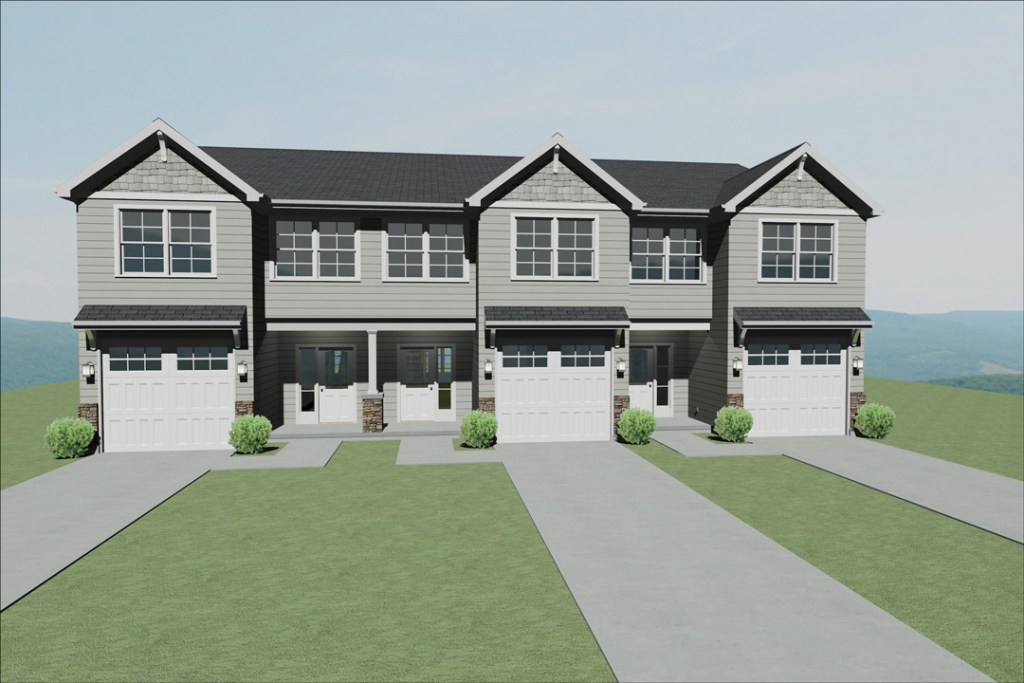
The Jasper Board of Zoning Appeals approved four variances for a new development featuring multi-family homes on Jasper’s east side.
The commission approved a variance to allow the multi-family units (tri-plexes) in an R-2 zone; a variance for the lots not meeting the 10,000 square-foot area requirement; a variance for the 80-foot lot length requirement along St. James Street; and a variance for the 7.5-foot side setback. A fifth variance to not meet the 50-foot setback from a minor arterial street was dropped because the developer stated they could meet the setback requirement.
Four property owners requested additional considerations and infrastructure changes to accommodate the development during the public hearing held Wednesday evening.
Developers Scott Adams and Adam Deweese of Rockport and Roll LLC presented plans for a 48-unit development on vacant land near Third Avenue and St. James Avenue. Their company has been in business since 1998 and manages all its properties.

“We pride ourselves in building in smaller communities with the fact that we listen to the community. We listen to the neighbors,” Adams said. “We don’t come in with our idea and try to shove it down anyone’s throat.”
The project would include a mix of single-story and two-story buildings with two and three-bedroom units. Adams said the company has already made changes to the initial plans based on feedback from neighbors, including making some units single-story instead of two-story as initially proposed.
“We’re here to listen to what the community needs,” Adams told the board. “We know there’s a housing need here. We’re not looking to build cheap, entry-level type of rentals.”
Several neighbors spoke during the public comment period, expressing concerns about increased traffic, stormwater management issues, and the proposed development’s density.
Joe Rohleder, who lives on St. James Avenue, supports the development of the property but feels the current proposal is too dense for the area.
“Do we want to have families all in this area? I think this is more appropriate where we’re at for senior living more than we have for family living, in my opinion,” he told the board.
He also noted that in speaking with a real estate attorney, he had been told that if a, “developer has to request five or six variances for an exception to a property, R-2 property, it strongly suggests that this project is inappropriate for that location.”
His wife, Judy, told the board to reconsider allowing the multi-level units, keeping them as one-story buildings and eliminating the need for stairs.
Nearby resident to the development Jason Stamm, the City of Huntingburg’s Street Superintendent, urged the council to require traffic and stormwater studies before approving the project. He noted that with the additional 50 families in the area, it would create a lot of congestion and potential traffic safety concerns.
“In our whole subdivision, which goes way back, Hochgesang Addition, in that whole area out there, there’s 75 families living there, and they’re putting 56 [sic] in that little bitty area,” he said. “It’s too many. We don’t feel this is the right thing for that area.”
Mr. Leinenbach, the owner of the building that formerly held MASA, which sits on the west side of the development, told the board that any development allowed in the area would require storm drainage improvements.
Mike Schmitt, the owner of the lots being considered for the development and former owner of MASA, said he had enlarged a nearby ditch years ago to handle stormwater and believes it should be sufficient if properly maintained. He had to do so to ensure a product he sold that was especially susceptible to water would remain dry.
“I can tell you that there’s been no problem with water as it sits today,” Schmitt said.
In response to the concerns, Adams said the company’s engineers would develop a stormwater management plan that the state would approve. He also noted that about half of the units would now be single-story to address concerns about accessibility for seniors.
“We’re hearing from the community, from the neighbors that that’s what they want,” Adams said. “I understand there’s a lot of driveways there and you know, the traffic is above my pay grade as far as this development now on Third Street.”
After closing the public hearing, board members noted that many of the concerns raised were outside their purview and would be addressed by other city boards. Before the project can proceed, the developers will still need to obtain additional approvals, including from the city’s planning commission and a review by the stormwater and engineering departments to ensure it meets with state and federal regulations.
A special exception request for the tri-plexes in the development was tabled until next month’s meeting.
Rockport and Roll LLC was also on the agenda for the Jasper Plan Commission to consider approval of the proposed plat of the development called Z Place Square subdivision. However, Mr. Adams and Deweese left before the meeting, and since they were not in attendance, the plan commission tabled the request for January’s meeting.
Editor’s note: Corrections have been made in this article to reflect the approved variances and clarify who oversees the project. We originally wrote that the stormwater board would have to approve the development, but this is actually reviewed by the department and engineering for state and federal compliance. Additionally, the tabled special exception item was the two-family dwelling (duplex) in an R2 zone. This larger concept (not specifically this development) was later voted on in the Planning Commission meeting as part of a package of Unified Development Ordinance changes to move the two-family dwelling from a special exception to a permitted use in R2. According to Josh Gunselman, the city’s Director of Community Development/Planning, “most developments of single-family homes include covenants that restrict to only single-family homes to prevent duplex and multifamily housing. This will not change for those established neighborhoods in R2 with covenants restriction them. This gives developers more flexibility in future developments (like this one) to build that type of inventory into the neighborhood from the get-go, promoting lower housing costs and greater density.”
