New book explores Purdue Extension’s history in farming

The crowd at the 70th Annual Meeting for the Dubois County Soil and Water Conservation District was well entertained for a 45-minute presentation by Dr. Fred Whitford.
Whitford, who said he was under the weather but never faltered in his presentation, held the audience’s attention as he explored the Purdue Extension’s impact in Dubois County from the turn of the 19th Century to the late 1930’s.
A professor at Purdue, Whitford is one of three authors of the soon to be released book, Enriching the Hoosier Farm Family: A Photo History of Indiana’s Early County Extension Agents. The book covers a photographic history of the extension interacting and teaching farmers in Indiana. Two books are planned; the first has over 850 photos and ends in 1939. The second will pick up and go up to the 1960s. According to Whitford, the rich photographic history he was able to dive into dwindles after that.
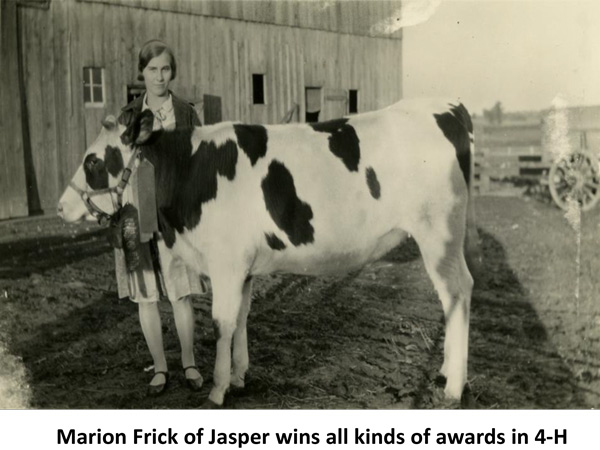
In a give-and-take talk, Whitford flipped through many photos that he found taken in Dubois County. “How about this name,” he would repeatedly ask the audience about names like Frick, Melchior and Weyers.
Some names rang a distant bell in someone’s memory but for others, there were easy connections. With the full house at the Huntingburg Event Center though, nearly every slide had occupants at the furthest tables standing to see if they recognized the subjects.
Here is his presentation but some photos specifically from Dubois County are at the end of this article.
In one of the funnier moments of the night, Whitford, who correctly identified a table of politicians, asked how one could tell if a chicken was laying eggs or not. Dubois County Councilman and retired Southridge teacher Jerry Hunefeld immediately stood and explained the process. “You take a couple fingers and feel underneath the latter part or back part of the abdomen,” said Hunefeld. “If two fingers go in, they’re laying eggs.”
Whitford agreed and explained that if they weren’t laying eggs then their bones in the lower hips wouldn’t be spread apart.
“And if they’re not layin’, then they’re gonna get eaten,” he added.
For Whitford, the book is important to show the deep history and impact the extension has had in farming. “Purdue wanted to do something through the school of ag to contributed to the bicentennial,” he explained. “I found these pictures in the Purdue Archives. They had all the annual reports and many of them had pictures from nearly every county in the state.”
For Whitford, the book is important to show the deep history and impact the extension has had in farming. “Purdue wanted to do something through the school of ag to contribute to the (Indiana) bicentennial,” he explained. “I found these pictures in the Purdue Archives. They had all the annual reports and many of them had pictures from nearly every county in the state.”
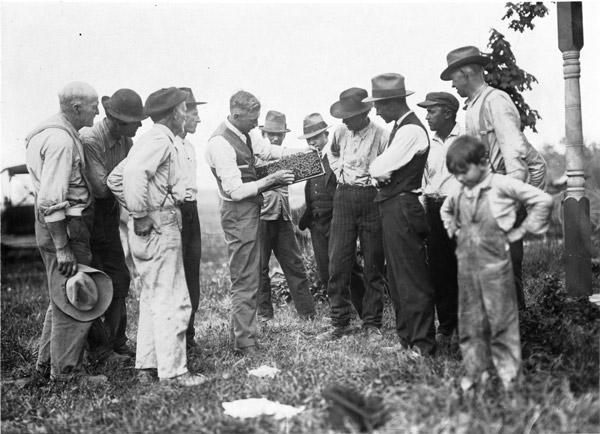
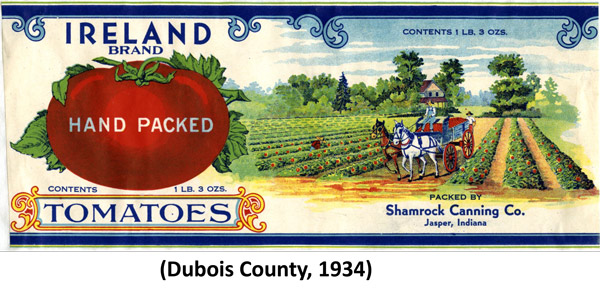
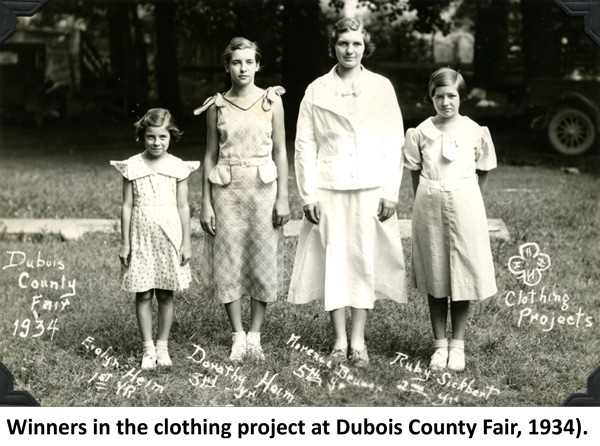
The extension was dedicated to helping farmers who at the turn of the century were largely poverty stricken. But it also helped them with things in the farmer’s household. With many communities lacking doctors and teachers, the extension officers would teach basic first aid as well as home economics like proper canning techniques and even cooking.
The extension still offers similar classes today.
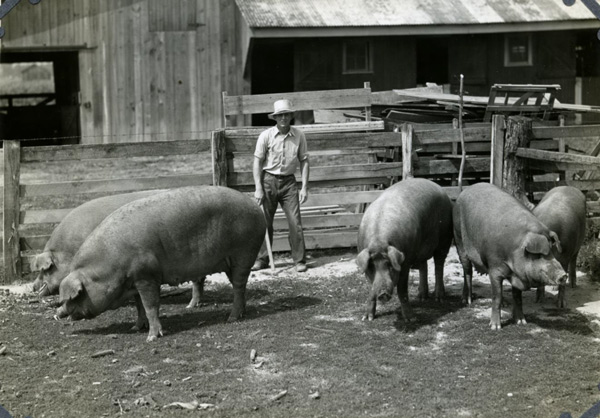
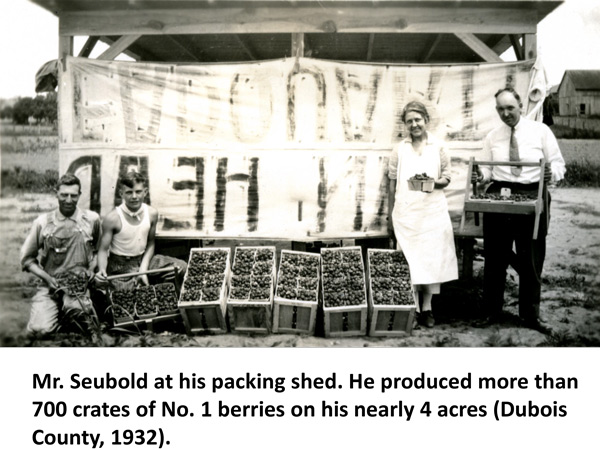
In the field, they brought farmers the most recent scientific research and procedures to increase the productivity of their crops and animals and thus help them become more successful.
“But farmers are hard to convince,” Whitford said. “So an extension agent would come in and meet with one farmer and then that farmer would call their neighbors in to show them.”
Farming is a risky business,” he said. “At (Purdue) extension, we are always trying to get them to take that next step.”
Here are a few of the images shown last night.