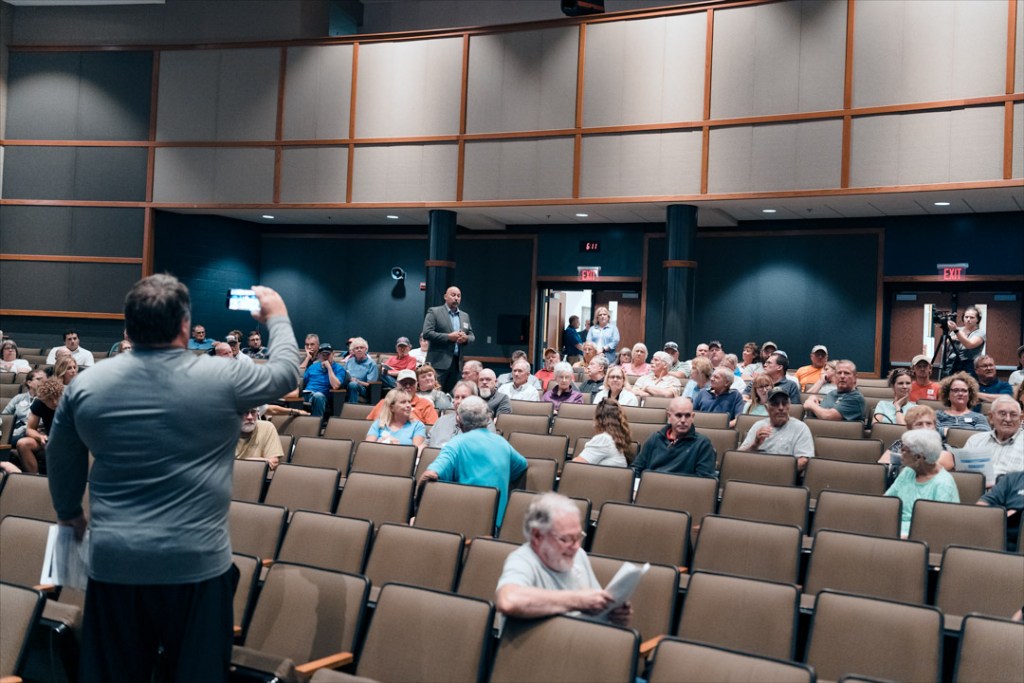
Mid-States Corridor informational meeting turns contentious
The attendees of the Mid-States Corridor meeting held at the Jasper Middle School Thursday became upset after representatives of Lochmueller Group and the Indiana Department of Transportation aired the short video embedded above.
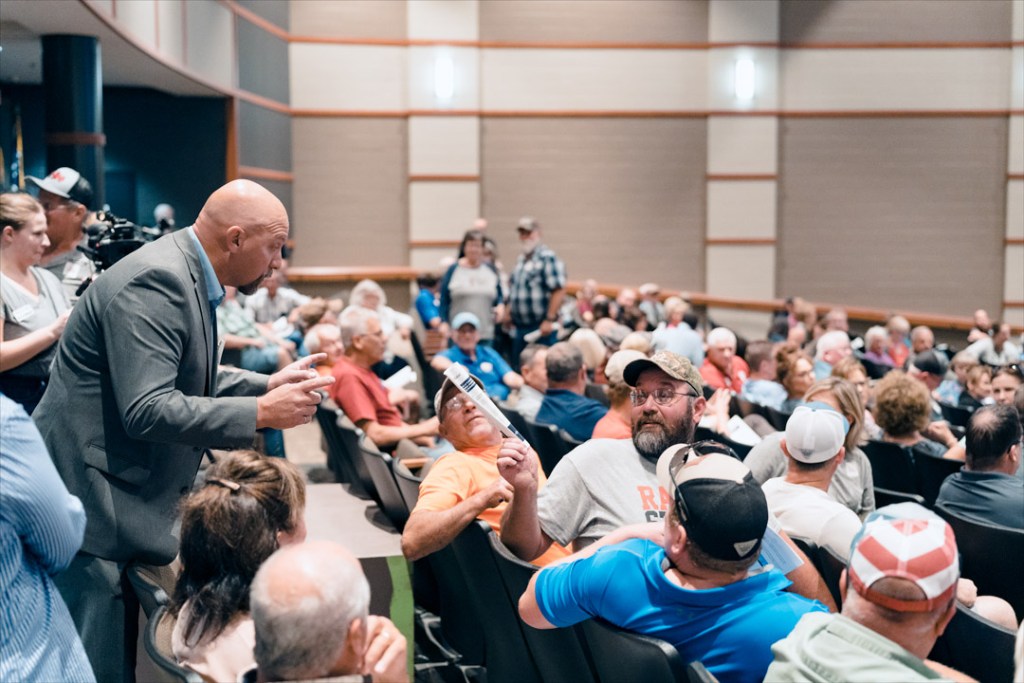
Many thought they might have a chance to ask questions in the public forum; however, after playing the video, they were directed to the cafeteria to speak with representatives individually. This angered many who felt their questions and concerns were being kept from being made public.
Many voiced their anger as facilitators attempted to usher them into the middle school cafeteria, where they could speak directly with INDOT and Lochmueller Group representatives.
“This is just an excuse to blow smoke up everyone’s rear-ends,” said one frustrated property owner before leaving.
Members of the study group reiterated that they are only three months into a process that is expected to take up to three years.
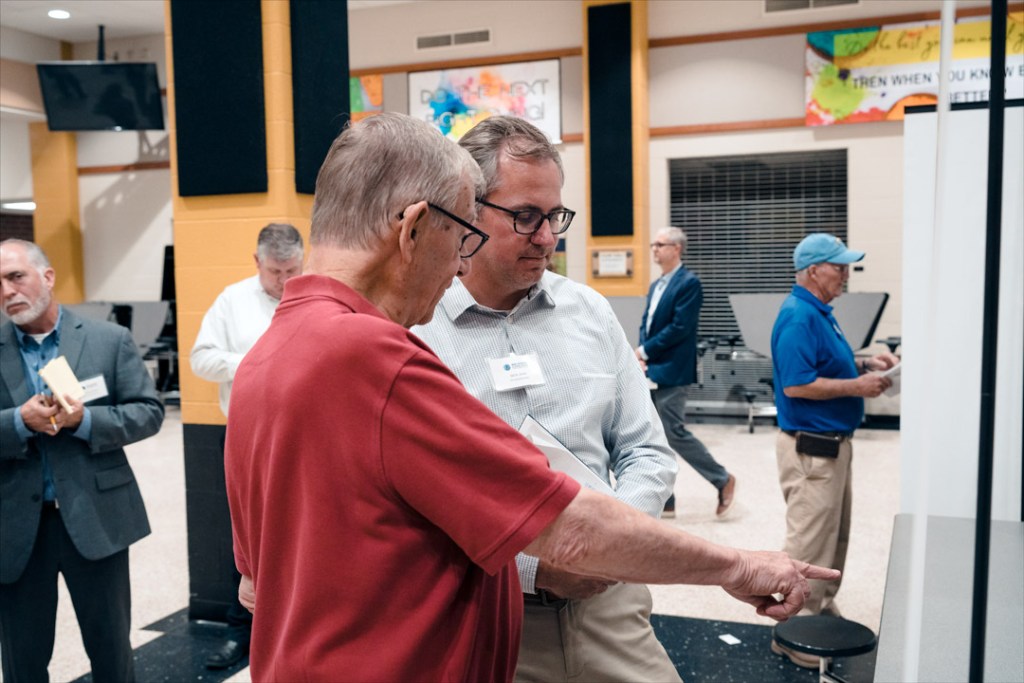
As people moved out into the cafeteria, many continued speaking directly to Jason DuPont, Lochmueller Group’s project manager for the Tier 2 study, and the INDOT representatives as others began moving to the different displays of the Dubois County study area.
The house Larry Feldmeyer built by hand nearly 50 years ago near U.S. 231 south of the Huntingburg Regional Airport is on the eastern edge of the 2,000-foot wide corridor. He and his wife Martha are concerned about where the finalized path ends up. “If it’s on the eastern edge, it will take out our home,” Mr. Feldmeyer said.
“That yellow line is right through the middle of our home,” he said as he pointed at the map displayed in the cafeteria.
The Tier 2 study is designed to consider many factors to determine where the road—a super-2 or a four-lane are the only two options being considered for the project—will run in that 2,000-foot-wide corridor. According to Lochmueller Group spokesperson Nicole Minton, these meetings help them to determine where the road will go. It allows residents to provide feedback and point out access issues and other important concerns like historical sites, cemeteries, and natural resources.
Signing up for emails and texts from the study group also helps them keep people informed on the progress.
Mr. and Mrs. Feldmeyer are concerned about their home. They don’t want the road to be at their front door and if they have to sell, they want to get a fair price. “I can understand if I was a farmer and this was going to split my valuable farmland, I could get mad,” he said. “That’s not the case with us.”
The Mid-States Corridor is now an INDOT project; the Mid-States Regional Development Authority is no longer involved directly. However, the RDA and the local grassroots group Stop the Mid-States Corridor Coalition are considered participating agencies in the process. “A participating agency means they come to meetings and provide input,” said Kyanna Wheeler, INDOT Project Leader. “The RDA advocates for the corridor, whereas the Stop the Mid-States Coalition says they don’t want this corridor.”
According to Wheeler, the only portion of the study currently being conducted is the Dubois County section. It is the only section funded at this time. She was not sure when the next sections studies would be completed.
“We cannot complete this Tier 2 study without funding being allocated for future phases,” Wheeler explained and added that, “as of today, no funding is allocated for right-of-way purchases, for construction or design.”
Additionally, as the state legislature approves INDOT’s budget, the state agency has to balance those funds for all the projects across the state. “For this to move forward into anything beyond a study, it competes with our projects statewide,” Wheeler said. “So, it completes against overlays in Fort Wayne, against bridge replacements in LaPorte.”
It comes down to what the biggest need is, according to Wheeler.
“The state only has x amount of dollars and follows that deliberative process, just like every project,” she said.
That is little consolation for the property owners waiting to determine if the impact of the road on their homes, farms and businesses. However, with the Tier 2 project only three months into an estimated three-year process, answers to their questions are scant.
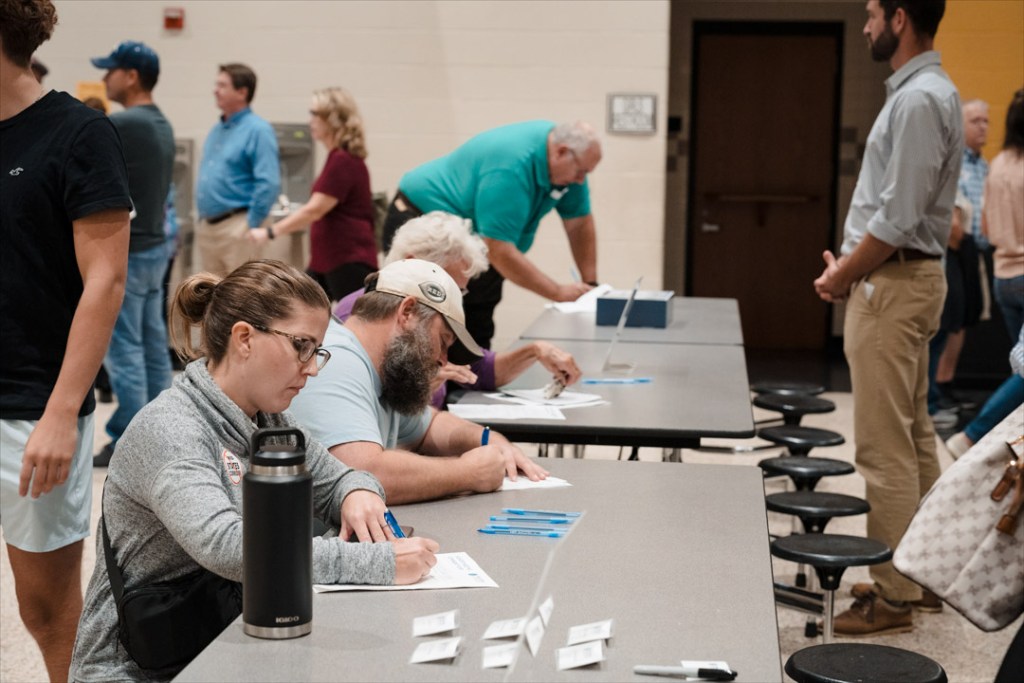
Lochmueller and INDOT want the residents to know they have options to get answers. Whether through phone calls to the multiple contacts on the project website or by setting up a meeting at the VUJ office, residents can speak to the study representatives.
According to Minton, they want to hear from you.
“We’re happy to answer questions, we are out here for that purpose,” said Minton.
Speaking to the frustration in the auditorium when attendees learned they would be taking questions, Minton said those types of meetings can be counterproductive.
“That’s why we have this style of open house meeting,” she said. “It’s really hard to be productive when people are shouting and frustrated.”
At this early stage in the Tier 2 study process, Lochmueller and INDOT are trying to accumulate good information from property owners within the route to help determine the location and type of road that will be recommended.
“We’re trying to reach out to property owners to get good information that can be used in the study process,” Minton said.
Though Thursday’s meeting was not an open forum, attendees were invited to submit comments in writing. More conversations and meetings are planned in the future. A public hearing will likely be held in 2026 for public comments to be entered into the record.