
Meat and potatoes replaced with beans and carrots under new school lunch guidelines
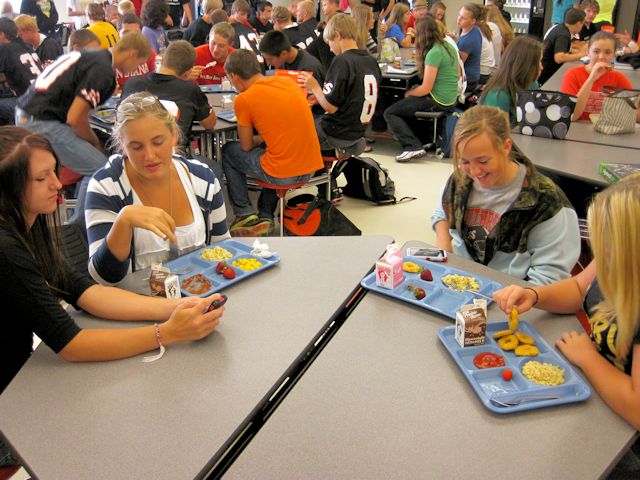
Northeast (NE) Dubois high school students relished in an outdoor cookout of hamburgers or hotdogs, a bag of baked potato chips, fresh watermelon and cantaloupe their first day back; a free treat to high school students in the corporation before the school begins to follow a new healthier menu.
Joyce Hulsman, director of Food Services at NE Dubois, said the first meal did not have to fulfill the new U.S. Department of Agriculture (USDA) guidelines. They take effect this school year across Dubois County and kids should expect some changes.
“We will be removing quite a few potato items and adding more fresh fruit and vegetables in addition to more beans,” Hulsman said about the changes. “I’m sure it will be a little different for the children but after a few months they will adjust.”
The guidelines influenced by First Lady Michelle Obama’s Healthy, Hunger-Free Kids Act will nearly double the amount of required vegetables and fruits in cafeteria lunches, along with limiting carbohydrates. It will be the first major change to school meals in more than 15 years.
In anticipation of additional cafeteria work, the Greater Jasper School Corporation promoted Paula Wheeler, the former cafeteria manager at 10th street Elementary school, to Food Services Coordinator for all corporation schools. Superintendent Tracy Lorey says Wheeler had all of the knowledge and certifications needed to help all Japer schools adjust to the new changes.
“We needed an individual who would help us be compliant with federal guidelines, oversee all cafeterias to see they operate efficiently and effectively,” Lorey said.
[quote]”We will try a black bean salsa and a few whole grain rice dishes.” Jasper’s new Food Services Coordinator Paula Wheeler[/quote] Wheeler knows lines move slower on the first day of school. She offered a turkey sandwich, carrots and celery sticks dipped in ranch with peaches and milk. She chose to incorporate the new guidelines slowly as the cafeteria staff adjusts to the changes, which involve a lot of math skills and planning.
“It’s going to be a bear,” Wheeler said. “We all have questions and are working with our State School Nutrition Specialist to become comfortable with the changes. I believe we are all working towards a common goal.”
To become compliant with the new standards Wheeler says Jasper Schools will incorporate new foods such as more sweet potatoes, dark green vegetables and legumes.
“We will try a black bean salsa and a few whole grain rice dishes,” Wheeler says. “I am always searching for new items and questioning my salesmen.”
Most schools will introduce new food items, including some fresh vegetables for the first time. Oralee Cotton overseas all cafeterias in the Southwest Dubois Schools. She says fresh steamed broccoli was first on the students’ plates last year.
“The biggest change I’ve done is going for fresh vegetables instead of frozen or canned. It’s not hard, but it’s time consuming,” Cotton said. “The presentation is much prettier in fresh broccoli. There’s more stems than anything in the frozen.”

Cotton says she will mainly use a fresh vegetable mix of cauliflower, broccoli, carrots, peppers and cucumbers dipped in light ranch dressing to fulfill the additional veggie requirement. But Cotton says so far, students seem to like the changes. There has already been an increase in lunches sold this year.
SW Dubois Corporation does not seem to be concerned with lunch budget shortfalls, but Cotton admits it will be tight. “I shop savvy like I do at home,” Cotton says. “I work with three different vendors. Whoever has the cheapest price, I go with as long as quality is there.”
While adding in much more fresh vegetables and fruits, cafeteria managers will also be restricted on providing some items. Ruth Hoppenjans coordinates the menu at Ferdinand Elementary and says the new meat and bread restrictions will be the hardest to follow. She points out that meat served on a bun counts as two bread servings.
[quote float=”left”]“Dubois County is a meat and bread place.” [/quote]“The challenge is mostly in the grains, reducing grains and increasing all vegetables,” Hoppenjans said. “Dubois County is a meat and bread place.”
Other requirements each week include ½ cup of dark greens, ¾ cup of red/orange vegetables, 1/2 cup beans/dried peas, ½ cup starchy vegetables, ½ cup of other green vegetables such as green beans, cauliflower and cabbage. Hoppenjans said she doesn’t want to throw all the food at the students at the beginning so she plans to try fresh blueberries, canned apricots, cauliflower and spinach this year.
School districts and independent schools that choose to take part in the National School Lunch and School Breakfast programs get cash subsidies and USDA foods for each meal they serve. In return, they must serve lunches that meet the new USDA requirements. In anticipation of increased costs, some local schools have raised their lunch rates.
Wheeler predicts a meal cost increase of $.55 or higher with drought and fuel prices. Figuring out the budget as they go, school officials still have no clear idea of the cost of the guideline changes.
Greater Jasper elementary schools regular lunch will now cost $2, Jr. and high school students will pay $2.25 for a school lunch. Lorey expects that, even with the overdue raise in rates, the corporation will still be low in what new meals will cost.
Northeast (NE) Dubois also raised the rates of their lunches 10 cents at the high/middle schools and 5 cents at the elementary school. Southeast (SE) Dubois Corporation raised their rates 10 cents at the elementary school, and 15 cents at the junior/high school. Rates did not increase at Southwest Dubois corporation schools, according to the superintendent’s office.
[quote]“Typically in elementary schools, there’s a lot of food waste. I’m concerned we are going to have additional food waste.” Lee Begle, food service director at SE Dubois[/quote]Dubois County school officials fear new guidelines will also cost more waste. School cafeteria managers encounter the same problems with feeding children as their parents: How do we provide healthy meals with ample vegetables and fruits that children will like and not waste, for the least amount of money?
Lee Begle, food service director at SE Dubois, says they had already begun to introduce new foods such as broccoli and whole grains last school year.
“Typically in elementary schools, there’s a lot of food waste. I’m concerned we are going to have additional food waste.” Begle said. “We are trying to be creative. Kids are pretty picky based on their eating habits at home. We provide decent meals, but a lot of things that are provided are commodity foods from the government.”
Because of the short shelf life of produce, cafeteria managers will have to do some last minute planning, sourcing some items from the nearest grocery store at a higher price.
[quote]“I believe it is a start in a way for the kids to eat more vegetables, but home is where the changes have to take place in order to make it more effective,” Joyce Hulsman, director of Food Services at NE Dubois[/quote] Hulsman says her staff will make the transition smoothly. She agrees that changes to food offerings are positive for children’s health, but she knows some of the changes will surprise children. Like other school officials and cafeteria managers, she has reservations about the new guidelines. She says changes made in school lunches won’t guarantee healthier children.
“I believe it is a start in a way for the kids to eat more vegetables, but home is where the changes have to take place in order to make it more effective,” Hulsman says. “Fresh fruit and vegetables are more expensive and it will cost the corporation more. We’ll just have to see how this first year runs after the implementations take place.”
 Schools will not be closely monitored by USDA representatives or penalized for this school year to help adjust to changes. The new standards will be largely phased in over a three-year period, starting this school year.
The USDA changes hope to reverse a growing trend of obesity in the U.S. But, Cotton agrees with Hulsman that schools aren’t solely responsible for childhood obesity.
“Everyone has to get involved,” Cotton said. “I don’t feel like one meal per day is making kids obese. If they don’t get up and move at home, it doesn’t matter what anybody serves.”
School officials aren’t sure yet how students will respond to changes. But, Wheeler says that students need fruits and vegetables available in order to try them.
“I am hoping they will give us a chance,” Wheeler said. “We will have some new items on the menu I hope they will be tempted to try just out of curiosity. After that, who knows?”
