
Local nonprofits concerned about fiscal cliff
 Across the board federal budget cuts and tax law changes looming in 2013 have some local non-profits concerned.
The Federal Budget Control Act of 2011 starts “sequestration” in January unless U.S. senators and representatives in D.C. act to revise implementation.
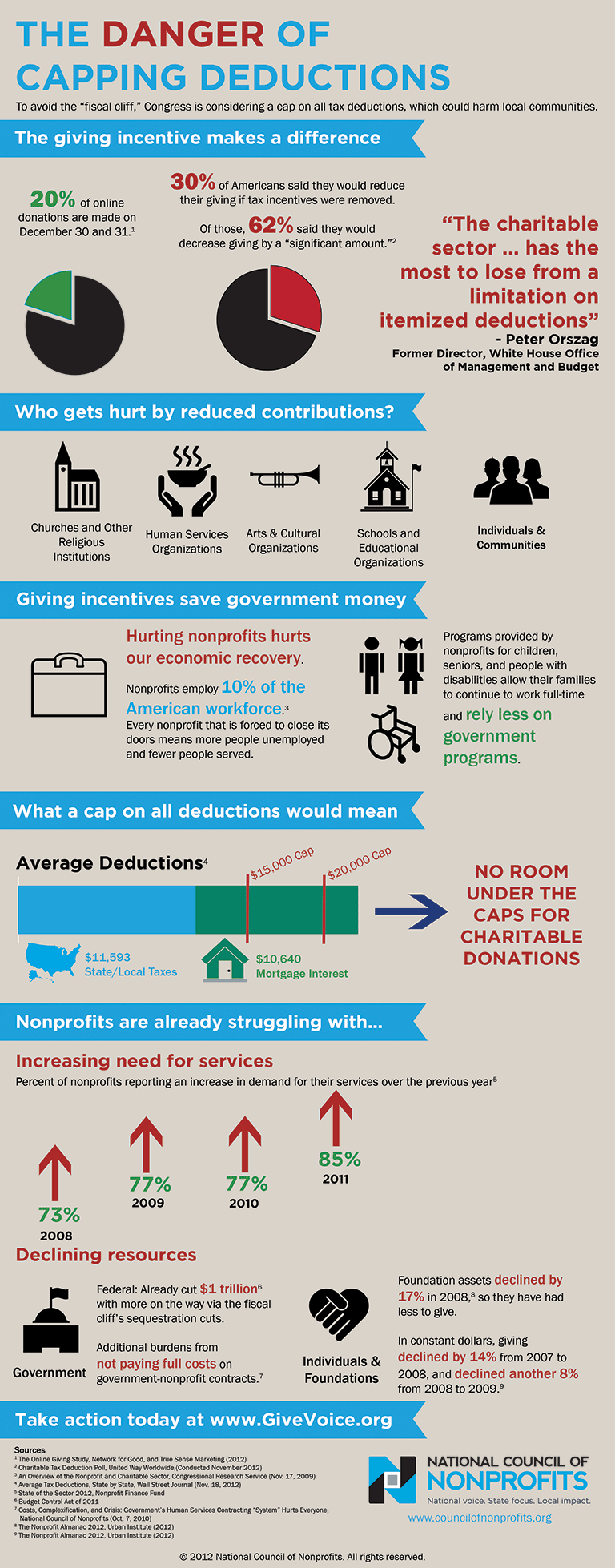
According to a report from the National Council of Nonprofits two aspects of the fiscal cliff policy will hurt charities. The first is the across the board budgetary cuts that will affect many public programs. In effect what has happened is summed up well in this New York Times article , “The measures from the 2011 deal are set to take effect at the same time as the changes to jobless benefits, the alternative minimum tax adjustment and the Medicare “doc fix,” and the expiration of the Bush Tax Cuts — a confluence that the two parties did not fully expect back in August 2011.”
From the same article, “The biggest cut would be $65 billion, enacted across the board for most federal programs over the last nine months of fiscal year 2013, from January through September. This cut, known as the sequester, was mandated by an August 2011 budget deal between Mr. Obama and Congress that ended their standoff over raising the nation’s debt limit. In that deal, they agreed to reduce spending by $1 trillion over 10 years and to identify an additional $1.2 trillion in savings by January 2013. If they fail to agree on the second installment — as is the case so far — the automatic cuts will kick in.”
The combined tax increases and funding cuts are in place to cut the deficit by around $400 billion on Jan. 1, 2013.
The cuts on so many public programs will place an increased burden on charities as they fill the gap left by the reduction in funding.
The second aspect of this is the proposed cap on itemized deductions on tax returns. For example, if the cap limit were set at $15,000 to $20,000 for deductions, the average homeowner’s housing deductions combined with state deductions would eat up that amount. Donors would not be able to claim their donations as a deductible expense.
According to Brad Ward, CEO of the Dubois County Community Foundation, he has some concern about the tax laws however he acknowledges that many individuals do not make contributions based on the tax deductions they will have. “The tax deductibility [sic] of a gift is certainly part of the equation but it isn’t necessarily what motivates donors to give. It simply provides that extra incentive and benefit.”
Ward stated at the end of the year many individuals make donations based on dividends from appreciated stock. “Anytime you sell appreciated stock you are going to pay capital gains,” he explained, “The concern is the taxes on capital gains are likely to increase, so a lot of people are moving to liquidate those appreciated assets now.”
Those donations based on appreciated stock are a good gift due to being from a portfolio rather than directly from a donor’s pocket. Individuals will get the full tax deduction of the value of the give rather than the value of the gift after paying taxes on the capital gain.
Ward looks at the big picture of social giving, “When 80-something-percent of all giving is done by individuals, are they driven by that tax deduction or do they see that [deduction] as an advantage of charitable given,” he said. “We are hopeful they see it as an advantage and if any changes are made it won’t deter them from any giving but we should expect some type of an impact.”
Michael Jones, Executive Director of the Memorial Hospital Foundation, is concerned as well. “The bottom line is, if limits are set on charitable deductions it certainly will impact not only Memorial Hospital Foundation, but all charities in general. People who contribute to church, the Red Cross, the American Cancer Society etcetera,” Jones said. “Many give for the pure sake of giving, but others give knowing it will come back to them on their income tax returns. It’s those folks it’s going to impact.”
Ward and Jones understand and appreciate the deep community support Dubois County experiences. “I do worry about the tax deductions,” Ward said, “but we have to remember, above all, what motivates people to give. Honestly, throughout, whether it is money or time, above all it is simply the right thing to do and people enjoy giving. But that does not mean the tax savings does not have an affect on charitable giving.”
Both acknowledge though that if people are looking at making sizable donations in the next five years, they may want to look at their portfolios and consider acting sooner than later. “Now is the time to accelerate your giving,” Ward said. “We know for a fact changes are coming.”
