Judge Verkamp hears INDOT’s request for temporary restraining order allowing access to properties in Mid-States Corridor
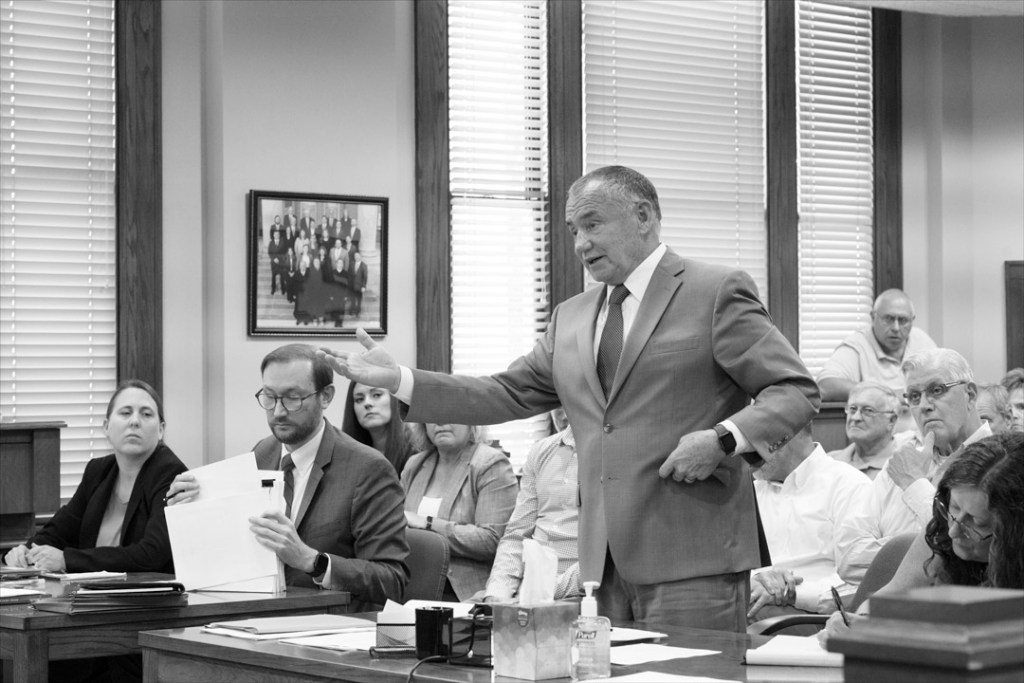
The Dubois County Circuit Court is considering the Indiana Department of Transportation’s request for a temporary restraining order against property owners who have denied access to their land for environmental surveys related to the Mid-States Corridor project.
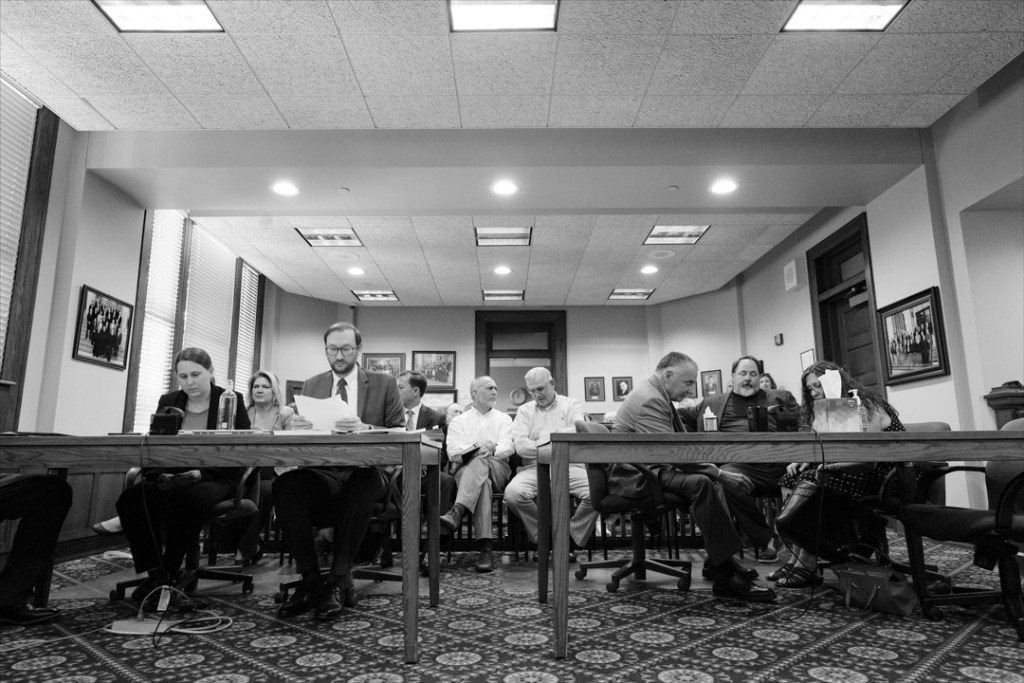
Judge Nathan Verkamp heard testimony Thursday in a case that pits the state’s statutory authority to conduct preliminary surveys against property owners blocking access to their properties in the corridor area.
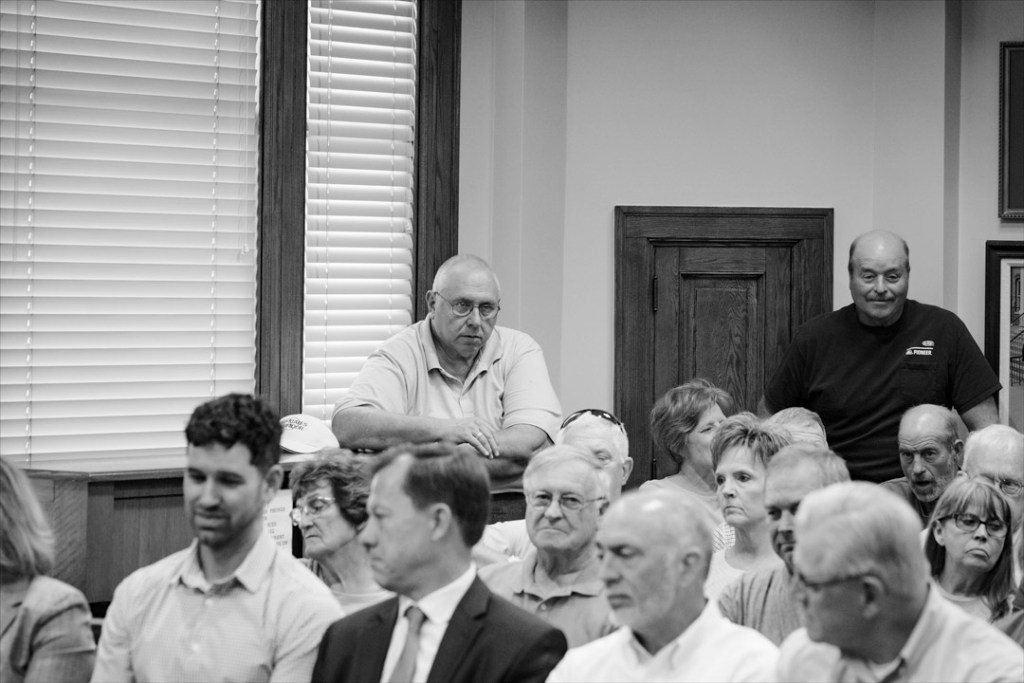
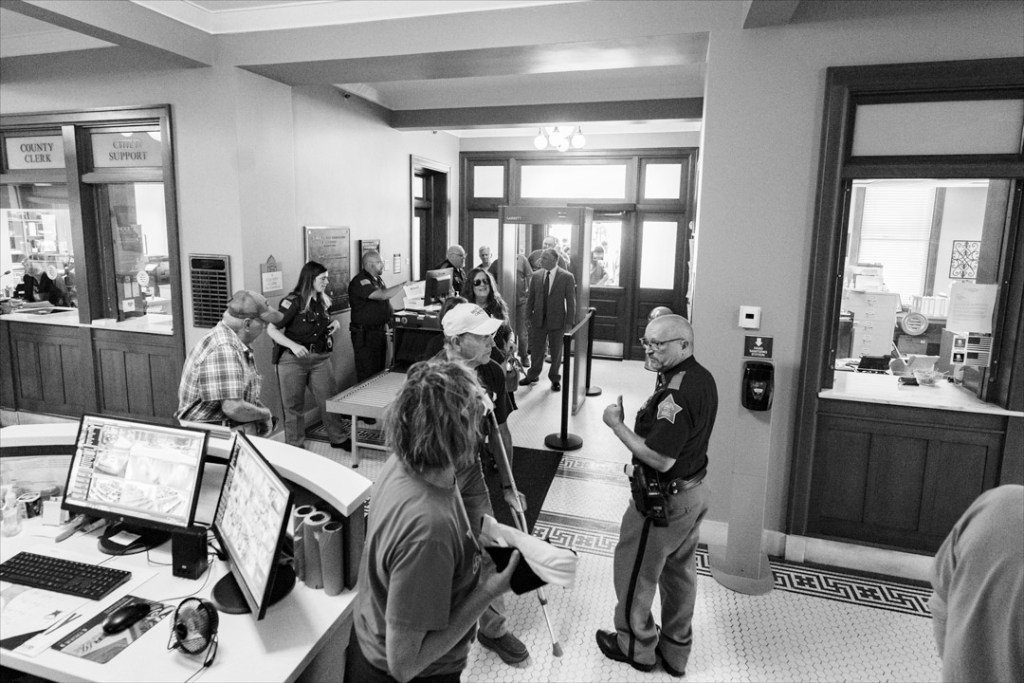
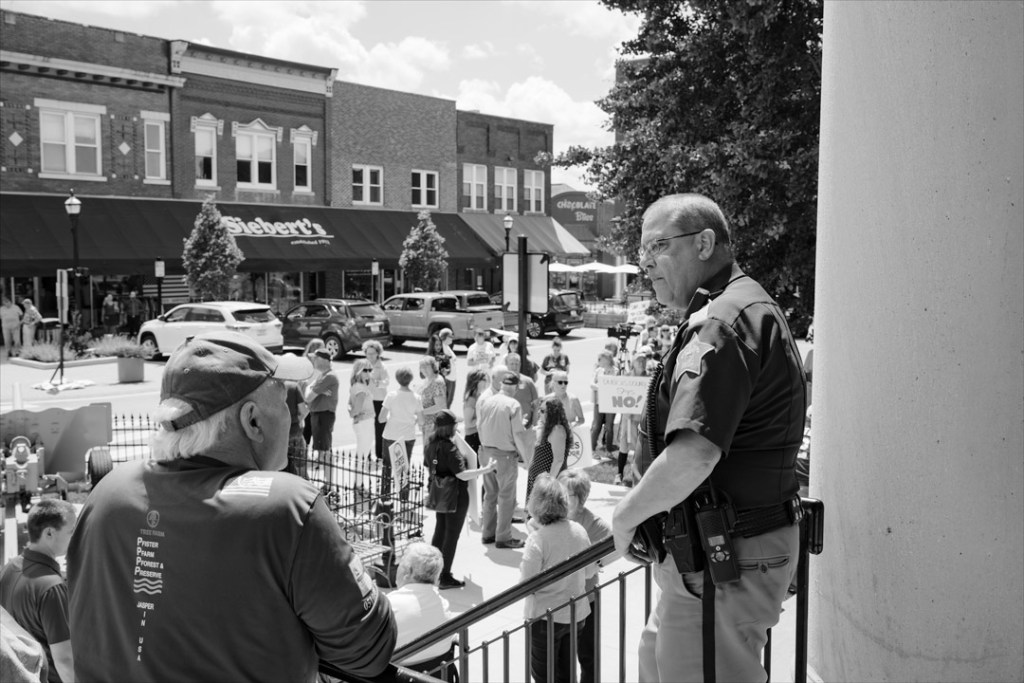
The circuit court was packed by property owners Wednesday afternoon while those supporting them viewed the proceeding in the county’s extra courtroom. Between the two courtrooms, about 125 people attended the hearing.

Judge Verkamp began the hearing by saying he understood the Mid-States Corridor was a matter of significant importance to the community. “I appreciate and I can empathize with you all as a property owner here in Dubois County,” he said. “But this particular case is not about whether the Mid-States Corridor is proper or best for Dubois County. That is for a different forum.”
He then had the state proceed with their case.
Wesley Garrett and Meredith McCutcheon, deputies with the Indiana Attorney General’s office, represented INDOT in the hearing today. Indianapolis attorney Russel Sipes, who has been retained by the Property Rights Alliance, represented most of the property owners in the case.
Jason Dupont, director of environmental services for Lochmueller Group, testified that his firm is conducting environmental assessments for the project as the state’s contractual agent.
“As part of our evaluations for the National Environmental Policy Act evaluation that INDOT is conducting, we will conduct topographic survey, conduct ecological surveys and habitat assessments, archaeological surveys, wetland identification and delineation,” Dupont said.
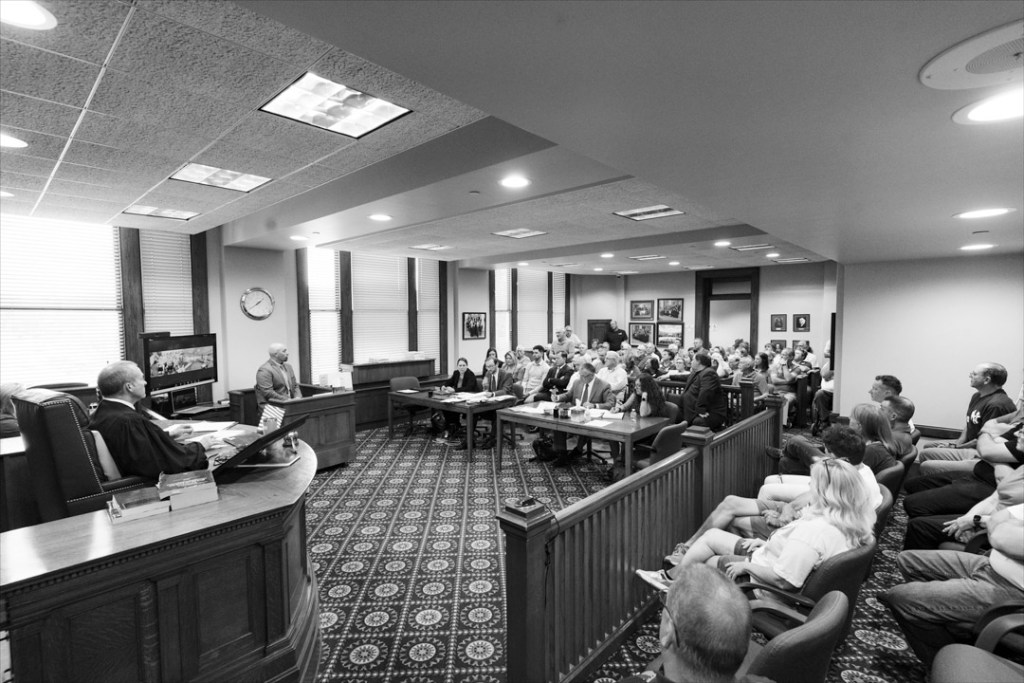
Dupont explained the project is in Tier 2 of development, focusing on Section 2, which covers the section through Dubois County from I-64 to State Road 56.
Garrett pointed out that Indiana Code section 8-23-7-26 gives INDOT and its agents statutory authority to enter private property for survey purposes.
Dupont testified that the Lochmueller Group sent initial notices to property owners in July 2024, followed by phone conversations, face-to-face notifications and emails when accepted.
During this process, Lochmueller was denied access to several properties. In response, the contractor “provided follow-up notices acknowledging the validity of the survey through the Indiana Code and identifying that we would ultimately have to take legal action to address those denials,” Dupont said.
The state presented several exhibits showing the various notices sent to property owners, including a September 2024 letter warning of potential legal action, door hangers left at properties, and notices of intention to proceed with legal action.
Dupont testified that despite these efforts, some property owners continued to deny access, with some sending “cease and desist” letters through the Property Rights Alliance group.
The ongoing denial of access is causing significant delays to the project, according to Dupont.
“The initial survey efforts for reconnaissance work was scheduled for completion in October of last year,” he said. “We continue to have a portion of those that are yet to be completed to date with the properties in question. There’s a seven-month delay on that step which is now pushing into subsequent phases of the project.”
These delays also result in additional costs, with Dupont testifying that over $50,000 in extra expenses have already been incurred “directly related to just addressing these actions.”
Garrett asked if any damages would be incurred the homes, farms or businesses being surveyed.
Dupont emphasized that the surveys would not cause damage to the properties or disrupt owners’ use of their land.
“This is foot access and general observation work for the most part,” he said. “The most intensive work would be small shovel test pits or soil evaluation.”
He explained in the case of farmland, they try to schedule it when the land it not in use.
Sipes questioned the adequacy of the notice provided to his clients, stating that “a full quarter of my clients respondents said they never got notice of that letter, which is required by statute.”
Sipes argued that the state’s motion for a temporary restraining order should be denied due to inadequate notification of the hearing.
“The statute requires that the state explain what they did to try to get notice to everyone,” Sipes said. “There is no averment of the efforts made to notify all defendants of this process today.”

Samuel Mehringer, one of the few unrepresented property owners present at the hearing, testified that he had allowed survey crews on his property previously but objected to comments made by one individual.
“What I did have a problem with was this person came up to me and started talking to me and saying you ought to be proud that you are allowing this to happen for the community,” Mehringer said.
Mehringer said he then kicked them off his property.
Subsequently, he said he never received the notifications Dupont testified had been sent out. “All what you said is not really true,” he said. “I’m talking about the people that got these letters because I didn’t get all of them that you’re talking about.”
In closing arguments, the state contended it had met the requirements for a temporary restraining order, citing a 2005 Indiana Court of Appeals case that established that when defendants refuse to follow a statute, the state does not have to show irreparable harm.
“The defendants’ refusal represents irreparable harm per se under Indiana law,” Garrett argued.
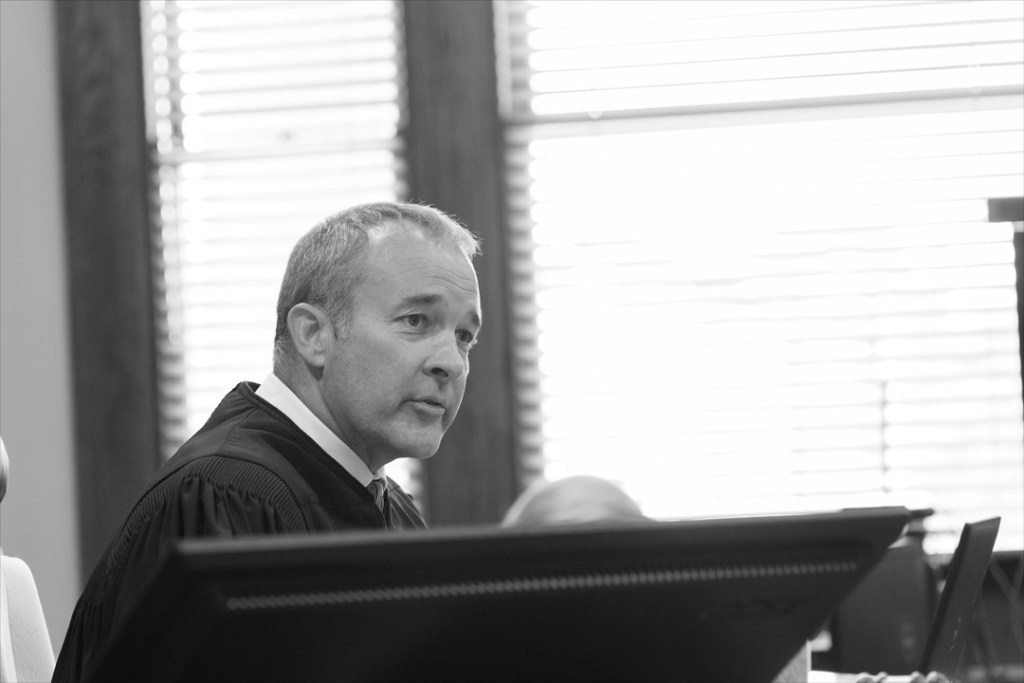
Judge Verkamp took the matter under advisement, stating he would review the cases cited and issue a ruling “hopefully in the next couple days.”
After the hearing, Jason McCoy, president of the Property Rights Alliance, said that he expected Verkamp to follow the rule of law in issuing a decision in favor of INDOT.
“We know that the judge will likely rule in the state’s favor because the judge has to apply the rull of law,” McCoy said. “However, we will not go quietly into that good night. We won’t go down without a fight. This isn’t the hill we die on. This is just our opening salvo.”
This hearing addressed the state’s request for a temporary injunction while a hearing on the full complaint is scheduled for July 2.
“It’s part of the system we live in, the system of government,” said Bob Pfister about Wednesday’s courtroom proceedings. “As you look around, you see a crowd of people that many of them have never been in a courtroom. Why? Because they were busy building their lives, their farms, their businesses, their homes. They really didn’t have a say today, so we’ll see how this plays out, but we will be here.”
We spoke to the state’s attorneys at today’s hearing and were directed to the media contact for the Attorney General’s Office. A message was left with them, and as of the publication of this article, it had not been returned.