
Jasper women’s recovery home expected to open this fall
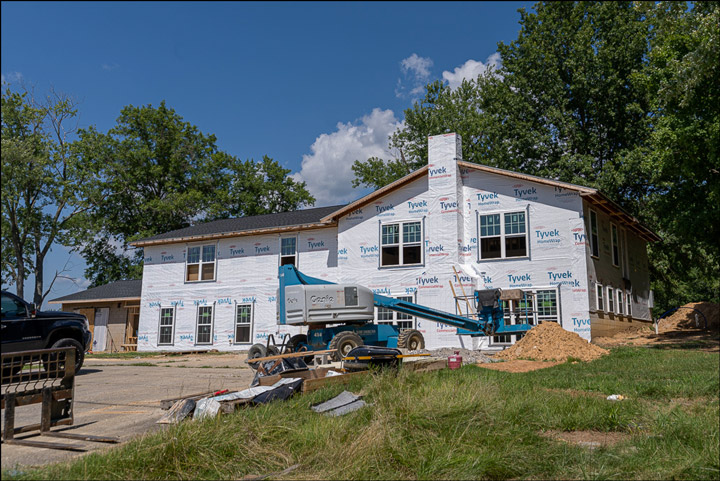
Work is progressing on the new women’s recovery home being built in Jasper. Dove Recovery House anticipates opening the county’s first home dedicated to helping women recover from substance abuse sometime this fall.
The home is one facet of a recent push to address mental health and substance abuse in Dubois County. The efforts are driven by the Large-Scale Community Leadership Grant of $4.4 million through the Lilly Endowment Inc.’s Giving Indiana Funds for Tomorrow (GIFT VII) initiative awarded to the Dubois County Community Foundation in 2020 to support efforts to significantly improve access to services that address mental health and substance abuse disorders in Dubois County and the surrounding region.
The women’s recovery home received a boost in being established when the City of Jasper donated the home located on Knust Street to the Dubois County Community Foundation.
Then, the Dubois County Community Foundation announced they were partnering with Indianapolis-based Dove Recovery House due to the organization’s excellence in addressing women’s substance abuse. The Jasper location will be Dove House’s first expansion from its Indianapolis base.
With the partnerships around mental health and substance abuse that have formed in Dubois County, as well as the infusion of money from Lilly to address these needs and the ideal location on Knust Street, Dove House is ready to step in to bring their special form of healing to vulnerable women in our community.
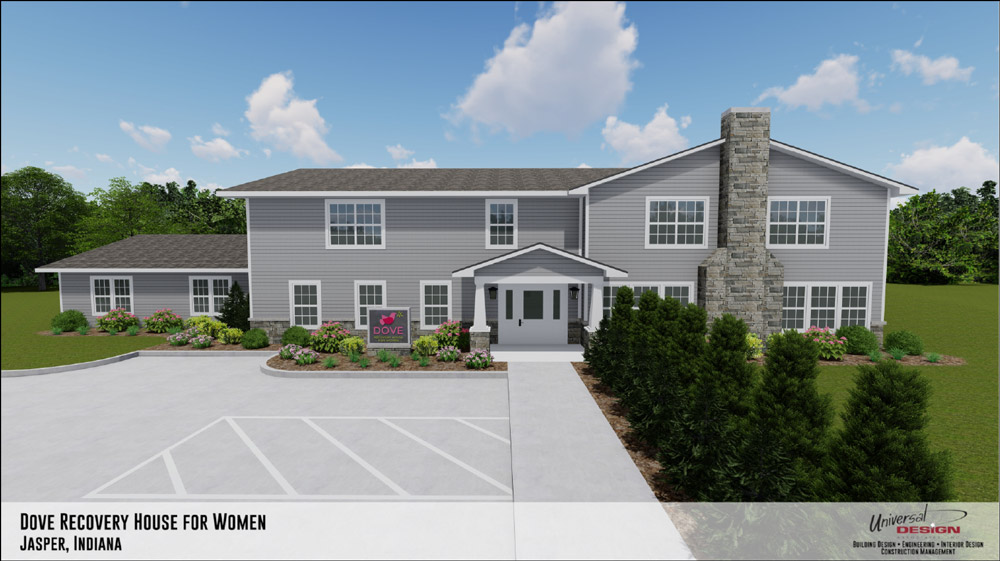
“We don’t have an opening date yet,” said Wendy Noe, Dove House Executive Director, during an interview on Wednesday. “We went on a tour today, and drywall is getting ready to be put up. So, we can see the rooms. It’s exciting to see the iteration and transformation of the building.”
When completed, the two-story home will have space for 15 participants. It will have handicap-accessible features on the ground floor as well as a kitchen, living room, dining room and office space for programming and Dove House staff members. The majority of the beds will be on the second floor. And there will be laundry services available on both floors.
For Noe, the beauty of the home is the location. There is easy access to local jobs, health care and outdoor recreation — the entrance to the Riverwalk is about a block from the home.
“One thing about Dove House is we don’t want it to feel clinical or commercial,” Noe said. “This is a great space for us.”
Noe pointed out that the open floor plan, the surrounding trees and the abundance of natural light are all important factors for the atmosphere Dove Recovery House attempts to facilitate.

“It is going to be a really great place for women to recover,” she added. “And I think for many of them, potentially one of the nicer places they have ever lived; certainly one of the safest.”
Dove Recovery House’s program is free to participants. This aligns with the organization’s goal of removing any barriers to participants accessing lasting, transformative help to overcome substance abuse disorders.
The program will help some of the most vulnerable women in our community. Ones that have nowhere else to turn. According to Noe, about 95 percent of their clients have experienced childhood sexual abuse, and all of them have experienced some form of trauma as an adult.
“Trauma is the gateway drug,” she said. “Something brought them to addiction and that’s trauma.”
The minimum stay is 90 days. However, the greatest success is seen in longer-term participants, which can translate to living in the home for up to two years.
“There’s evidence that show that it takes about six months for a person’s brain to really open up and recover from substance abuse,” Noe explained.
And Dove House assists them through the process. In addition to removing financial barriers to help, they provide the services in-house, virtually, or through local providers and step them through the process until they develop healthy habits and have a firm foundation to leave the home. This includes having a job and housing. In Indianapolis, they provide rental assistance for successful participants — an option Noe hopes to replicate in the Jasper location.
“Our success rate is 70 percent, and we put a lot of expectations on that 70 percent,” Noe said. “So that when they leave, they’re not only sober. They’ve successfully completed our program, they’re housing stable, they’re employed or enrolled in school. They have health insurance.”
The goal is to remove all of the potential life risks that could increase the proclivity to fall back into addiction or criminal behavior.
Dove House also considers these participants partners — called Doves — with the program for life.
“They continue to stay in touch with us; continue to work with our therapist; sponsor other Doves,” Noe said. “We see them. They text us. They stop by. They come get hugs. We see their children.”
Once a Dove, always a Dove.
“This is the best testimonial,” Noe said about those long-term relationships that form. “It doesn’t mean they all work out. It doesn’t mean they won’t relapse when they are out of our program. But, if they relapse, they know they can always come home again. There’s no judgment. We love them until they can love themselves.”

This level of excellence and dedication is what attracted the Dubois County Community Foundation to seek a partnership with Dove Recovery House. Besides not wanting to go through the arduous process of creating their own program from the ground up, Dove Recovery House is the gold standard in the state for addressing women’s needs.
“We need a partner in this community that does the work that Dove does,” said Dubois County Community Foundation Executive Director Clayton Boyles.
More information on Dove Recovery House is available here.
