
Jasper refines Regional Wellness Center funding amid new state rules and budget uncertainty
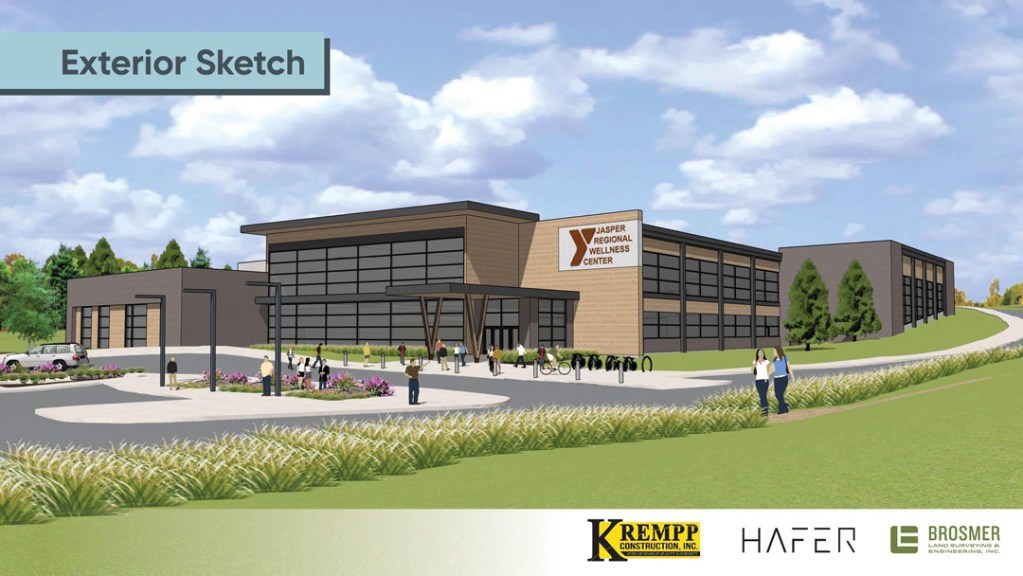
City leaders say the Regional Wellness Center is on pause — not canceled — as they seek federal help and adjust plans to cover a multimillion-dollar gap.
The City of Jasper is revising its funding formula to support the development of the Regional Wellness Center, while addressing the funding changes implemented by recent state legislation.
During Tuesday’s project priority planning meeting, Jasper Clerk-Treasurer Kiersten Knies informed the council that they were unsure how Senate Bill 1 would impact the 2026 city budget and would likely not know until they submit it to the Department of Local Government Finance later this year.
Anticipating the need for reductions, though, the city has taken steps to find savings. Mayor Dean Vonderheide opened Tuesday’s priority planning meeting by briefly outlining steps the city was taking to find cost savings in the budget for 2025 and 2026. He announced that they had identified approximately $950,000 in savings over the next two years by revising, deferring, and eliminating projects. He did not give details on what those line items were before the main section of the meeting began.
With funding uncertainty looming over Tuesday’s meeting, the council and city officials reviewed a list of priority projects and identified needs, ranking them in order of importance. Through the three-hour meeting, the city and council went down the list that included infrastructure projects like the northside wastewater treatment facility and the new Northwest Electric Substation, road and sidewalk improvements, major equipment purchases like replacement tower and ladder trucks for the fire department, park additions and updates, expansions, renovations and more.
Among the topics discussed was the status of the Regional Wellness Center.

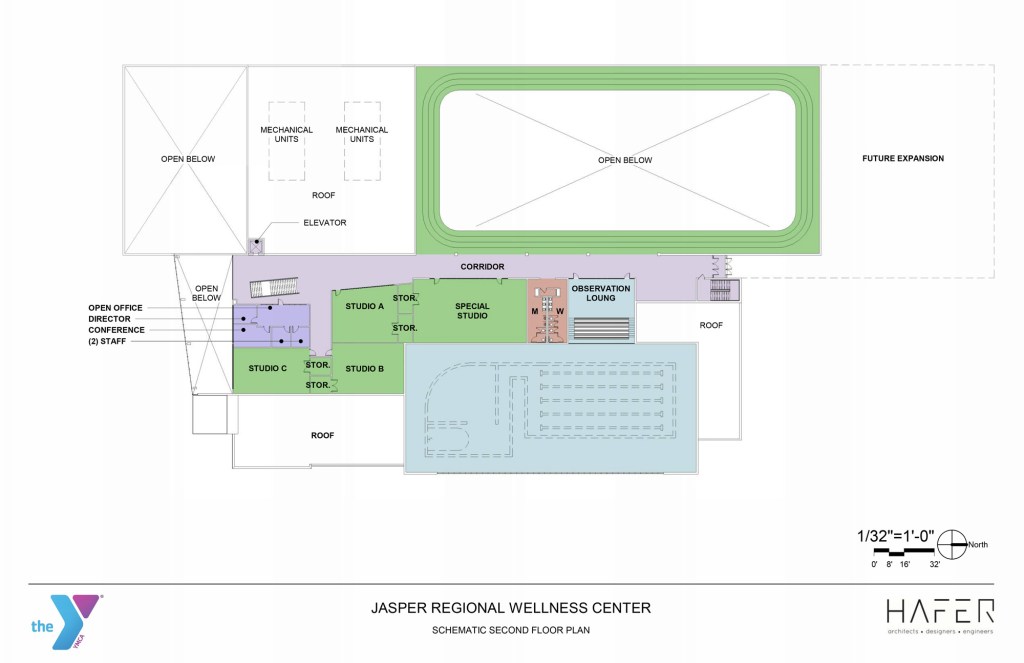
In February, the future of the center appeared to have a clear path with minimal impact on taxpayers, but by the end of the 2025 legislative session, officials realized that the path would need to be altered.
While property tax relief was touted as the goal, state legislators had also changed how long-standing funding mechanisms could be used by taxing units. Specifically, the Economic Development Income Tax funds are being phased out in the next two years, leaving taxing units the option to enact a Local Option Income Tax.
In addition to now allowing cities with populations over 3,500 to implement their own Local Option Income Tax, the legislation mandates that the tax be reaffirmed annually starting in 2031. Officials believe the annual renewal requirement for the LOIT creates problems for bonding, as lenders are reluctant to issue bonds against funding that must be renewed on an annual basis.
“They’re not going to issue a bond against something that has to be renewed annually,” Jasper Mayor Dean Vonderheide said. “They want something that’s going to be relied upon for years in the future.”
Along with those changes, Vonderheide says the city can no longer rely on Tax Increment Financing (TIF)-backed bonds for the project because the increment captured by the TIF district may be needed to cover other funding gaps in the city’s budget.
“It is too much of a risk with the unknowns and the impact on the city in the future,” he explained, adding they don’t want to put those burdens on future councils and city administrations.
He and the council also don’t want to move the funding burden from property taxes to local employees through an income tax increase. “It’s just not right,” Vonderheide said.
EDIT and TIF were two important elements of the funding plan for the Regional Wellness Center to repay the bond issued for its construction. The city has approximately $25 million in hand, which includes $15 million from private donors, a $5 million READi 2.0 grant from the state, and $5.8 million appropriated from existing city funding by the council.
If completed as currently designed, the overall project cost, including design and soft costs, is approximately $45 million. Originally, the city was going to issue an $18 million bond to be used in conjunction with existing funding to construct the facility, but that bond was backed by EDIT, TIF, and the Food and Beverage Tax.
With EDIT/LOIT and TIF out of the funding for the bond, this leaves the Food and Beverage Tax as a source to support a bond of about $6 million–a $31 million project. In light of the gap, the city faces the option of either redesigning the project to reduce costs or taking a phased approach to completing it as currently designed.
However, the city is taking steps to close the gap by pursuing a federal Defense Community Infrastructure Program grant. City officials believe they’re in a strong position for the grant because of the proximity to Naval Surface Warfare Center Crane and the National Guard presence in the city.
“We’ve got support from our Senators and the Crane command,” Vonderheide said. “It’d be a real win if they could close that gap with this grant.”
The grant application is due July 3, and the city expects to know the outcome by August. Officials are gathering letters of support from senators and preparing their submission package.
The recreation center is designed to serve the broader region and support efforts to attract talent. With the county unemployment at 2.2%, city leaders view the facility as crucial for attracting both businesses and workers to the area.
“People want to live where they want to live because of the amenities that are offered there,” Vonderheide said.
The project also ties into broader economic development strategies, particularly supporting the Naval Surface Warfare Center Crane’s role in enhancing military readiness and advancing technology development.
“With Crane just up the road and it being part of the Golden Dome Initiative…we can play a role in attracting talent to work at Crane by providing a quality place to live,” Vonderheide said.
Recent defense industry expansions in the region include Kratos’ $50 million expansion in Odon and Promethius Energetics’ acquisition of 550 acres in Bloomfield to build solid rocket booster engines. Both bring new jobs to the area.
“We are a strategic partner in attracting talent to work in these defense industries that are going to be localized,” Vonderheide said.
The mayor stressed that the pause doesn’t mean abandonment of the project.
“When we say put on pause, we mean pause,” Vonderheide said. “We’re just trying to balance our checkbook before we write a check.”
The city anticipates making firm decisions about the project’s future by August, following the announcement of the federal grant and the completion of the budget process for the upcoming year.
Why is the project paused?
New state legislation changed local funding sources (EDIT and TIF). City leaders want to avoid shifting the cost to an income tax while protecting future budgets.How much money is still needed?
The city has about $31 million secured for the estimated $45 million project. They hope a federal grant and other cost adjustments will close the gap.What happens if the grant doesn’t come through?
Officials say redesigning the project or building it in phases are options if more funding isn’t secured.When will final decisions be made?
The city expects to learn about the grant by August and will finalize the 2026 budget plan soon after.
