
Jasper Airsoft team takes on international competition amid Middle East tensions
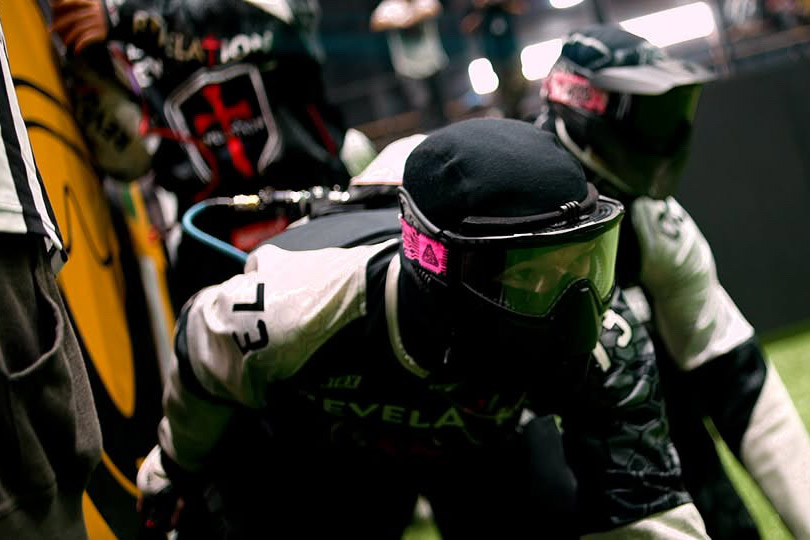
When the two American teams set to compete in the first World Airsoft Games in Abu Dhabi dropped out due to the heightened tensions in the Middle East, Harrison McCoy received a call from a highly popular local name in the sport with an offer he couldn’t refuse.
Harrison operates HTK Airsoft at 1355 Vine Street in Jasper. He is also a member of the five-person competitive Airsoft team.
Caleb Freeland, a Petersburg resident who works as a commentator and live stream manager for international airsoft events, is the one who called McCoy. Freeland had been in the United Arab Emirates for a week, preparing equipment and coordinating with government officials, when the American teams withdrew.
“He called us and he’s like, ‘Hey, you know, both US teams dropped out. We need somebody to represent the United States. Is there any way you can get five people that have passports and have them fly out two days from now?'” Harrison explained.
It was an all-expenses-paid trip arranged through the hosts of the tournament. Freeland also assured them it was safe.
“He said, ‘You gotta trust me. You guys will regret it forever if you do not come to this event,'” Harrison recalled.
With two days’ notice, they decided to trust Freeland and attend the international competition—the first of its kind in the sport.
“They are trying to create Olympic level Airsoft here,” Hairrison said. “There’s been nothing like it in airsoft before.”
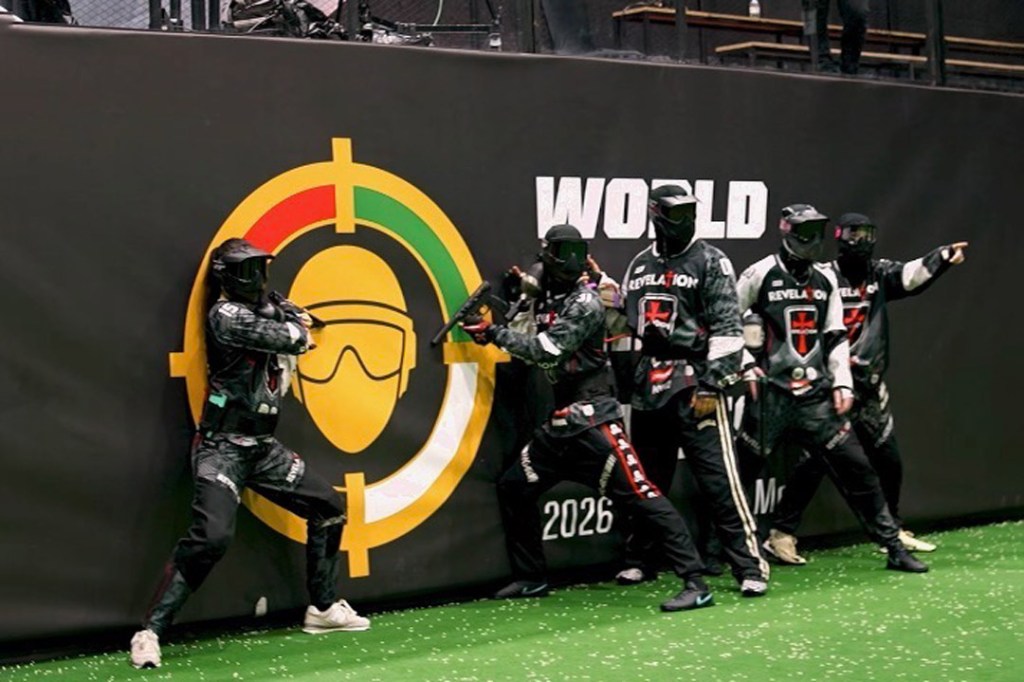
Harrison’s team, named Revelation for the competition, included his sister, Kate, and Dubois County residents, Micah Englert, Mason Schue and Khale Burger.
They would be competing in Speedsoft, a high-speed, competition-focused offshoot of Airsoft where aggression replaces the slow, tactical gameplay of traditional military simulation. Teams have three minutes to grab the flag from the center of the field and hang it on the opposing team’s starting gate. Players must do this without being hit by the opposing team.
Played on compact courses lined with inflatable bunkers, competitors dressed in lightweight protective gear dart between cover, snapping off shots in matches that can be decided in a matter of seconds.
You can watch the competition here.
The tournament featured 64 teams from around the world, including multiple squads from Russia, Kazakhstan, the United Kingdom, Germany, Belgium, and the Philippines. The Belgian team ultimately won the competition.
Going in with an untested team was one factor they had to overcome, but doing so against some of the best teams in the world only heightened the competition.
“It was intense and surreal because not only are we playing against, you know, literally the best teams in the world, but we’re playing teams of people that we’ve been watching on YouTube for the last decade,” Harrison said. “And we’re competing against them in a high stakes tournament for a first place prize pot of thirty grand.”
The tensions in the Middle East were on their minds as they considered going, but once they arrived in Abu Dhabi, those concerns faded.
“Once we were on the ground and walking around and interacting with everybody and seeing the landscape for ourselves, we just completely forgot about it and got right into tournament mode,” Harrison said.
At least until they were woken up by what Harrison described as an Amber Alert on their phones at 3 a.m. Only the alerts were for impending missile strikes.
“We wake up to that in our hotel in the middle of the night and we look at it and we’re trying to figure out what to do,” Harrison said. “And within about three minutes, another text comes in. Threat neutralized, you know, totally, totally normal. All good, nothing to worry about.”
Those moments happened several times throughout the competition. Each ending the same. Harrison spoke with the hosts, who explained the alerts were precautionary measures. They assured the team that the cities’ missile defense systems provided adequate protection. However, a successful drone strike near Dubai airport did cause a two-day shutdown, but the team experienced no direct impacts from the regional conflict.
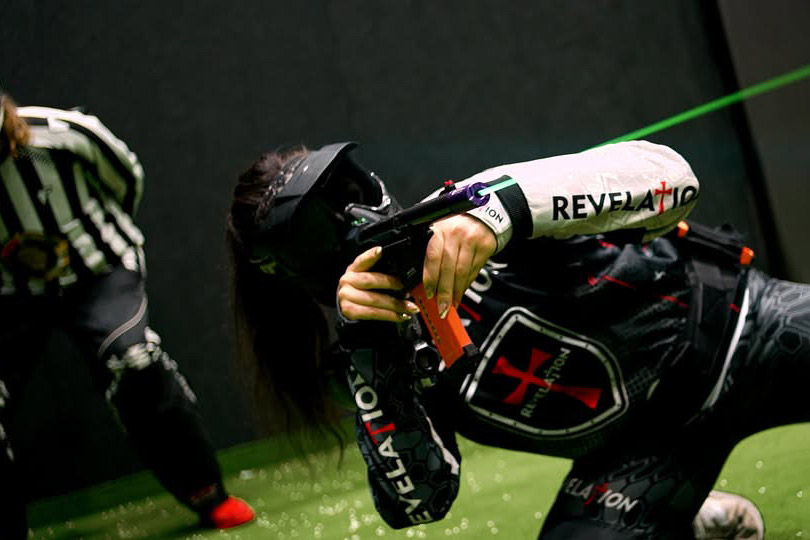
Having the United States represented proved important to UAE organizers, who wanted to demonstrate the tournament’s international scope.
“People really enjoyed having America being a part of this tournament was a really big deal to the UAE,” Harrison said. “It was important to them that they were able to post the American flag on their media pages.”
And the team did well, operating under some stressful conditions and on short notice, they placed eighth overall and earned $5,000, which they distributed among members to reinvest in equipment, jerseys, and training.
And the event organizers and other participants praised the American team’s sportsmanship and competitive spirit. Freeland, who had access to high-level discussions throughout the event, reported positive feedback about the team’s conduct.
“He said America was the people’s team,” Harrison said.
They competed with an intensity and sportsmanship that set them apart from the other teams, Freeland told Harrison.
Harrison explained that with the short notice and the ad hoc team he put together at the last minute, they had decided to go in, play hard and ultimately have fun as well.
With their finish, the team has received a guaranteed invitation to next year’s competition. Harrison expects they will do better.
“We absolutely plan to at least place in the top three next year.”
