Indiana House District 63 Q&A with Tiffanie Arthur and Amy Kippenbrock
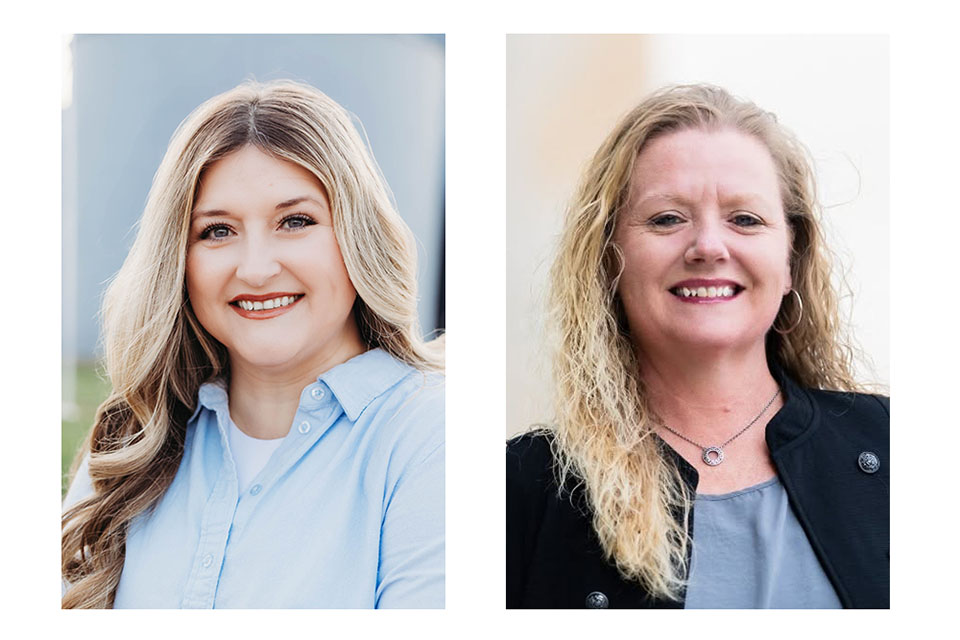
Voters in Indiana House District 63 will choose a new state representative this year. The seat is open: Republican Rep. Shane Lindauer, who has held it since 2017, did not seek reelection. Republican Amy Kippenbrock faces Democrat Tiffanie Arthur.
Kippenbrock, of Jasper, has served as Dubois County Clerk since 2019 and was appointed chair of the Dubois County Republican Party in 2025. She won a contested Republican primary in May. Here is a link to her campaign page. https://www.amyforindiana.com/
Arthur, a small business owner from Washington, Ind., won a three-way primary to become the Democratic candidate. Here is a link to her campaign page. https://www.tiffaniearthur.com
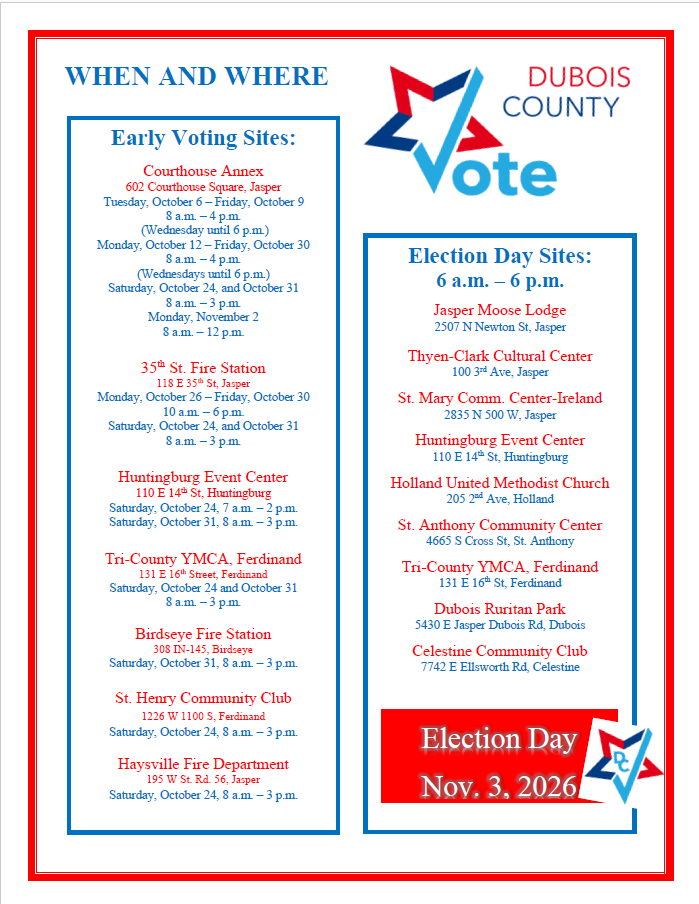
Voting information is included at the end of the article.
What a state representative does
The Indiana House has 100 members. Representatives serve two-year terms with no term limits, so every seat is on the ballot every two years. Together with the 50-member Senate, the House makes up the General Assembly, which writes state law. The legislature meets every year starting in January: about four months in odd-numbered years and about two and a half months in even-numbered years.
District 63 covers all of Martin County and parts of Dubois, Daviess and Pike counties. In Dubois County, that includes Bainbridge, Boone, Harbison, Madison and Marion townships, plus the western portions of Patoka and Cass townships.
The Free Press asked both candidates the same eight questions. Their answers appear below as submitted, in alphabetical order by last name.
Question 1
If elected, what is your single top priority for this district, and what specifically would you do in your first year to deliver on it?
Tiffanie Arthur
My top priority is making everyday life more affordable for families in District 63. Utilities, housing, childcare, and health care all come out of the same paycheck. We need to look at the whole household budget.
In my first year, I would focus on three practical steps: stronger utility protections so families aren’t paying infrastructure costs created by large industrial users; childcare assistance that helps working parents afford care, alongside support for childcare providers adding openings in our communities; and rural health care funding that helps keep essential services close to home.
I would work with local childcare providers, employers, and families to shape those proposals, seek bipartisan sponsors, and push for hearings and funding. I would also support first-time homebuyer assistance and property tax relief that protects the schools and emergency services our communities depend on.
The state budget is where we must back up those priorities. I would scrutinize tax breaks for wealthy corporations because those deals come at a cost. When corporations pay less, families end up carrying more of the burden or losing funding for schools, roads, and emergency services. My priority would be putting tax dollars toward things families depend on, affordable childcare, health care close to home, and strong public schools, rather than giving wealthy corporations tax breaks that leave our communities with less.
I won’t promise that one legislator can fix every cost in a year. I will commit to bringing forward specific proposals, building support to move them, and reporting back to this district on the results. Families deserve to know what I’m working on and how it would help them.
Amy Kippenbrock
My top priority for District 63 is affordability. Affordability means we continue to work on property tax reform, monthly utility bill costs, and childcare, all being at the center of this topic.
In my first year, I will focus on property tax reform, understanding utility regulation, exploring ways to improve childcare barriers. I will continue to work with local business owners, farmers, and community leaders to best understand the challenges they face and bring those concerns into legislative discussions.
I believe strong communities are built by hardworking people and thriving local businesses, not bigger government. My goal is to support policies that keep government efficient, protect taxpayer dollars, and create opportunities for families and small businesses to succeed.
Question 2
SEA 1 cut homeowners’ property taxes but has squeezed local governments and schools. What would you change in 2027 to protect police, fire, EMS and schools?
Tiffanie Arthur
Homeowners and farmers need real property tax relief. But in conversations with home and landowners across District 63, I’ve met very few who say their property tax bills actually went down. Many tell me increases in their assessed values outweighed the relief they expected. If local income taxes rise to fill funding gaps, families will end up paying more overall. We need to measure relief by what people actually pay.
We also need to protect dependable funding for essential services. Property taxes provide a stable source of revenue that allows communities to plan ahead, to retain police officers, staff ambulances, replace fire equipment, and maintain our schools.
In 2027, I would focus on three changes.
First, I would push for the state to help cover documented funding losses caused by SEA 1 so communities can keep police, fire, EMS, and schools adequately funded. We can responsibly use a portion of Indiana’s billions in reserves to prevent immediate cuts while we fix the long-term funding structure. Communities cannot build their budgets around temporary help alone.
Second, SEA 1 leaves a serious hole in school funding: it reduces property tax revenue and gives local governments more options to raise income taxes, but leaves public schools out of that replacement funding system. Some schools already receive local income tax dollars under older rules, and that funding needs protection, too.
I would push to update the law to allow public schools to receive local income tax revenue under the new system. Schools cannot be expected to absorb funding losses while being denied an option available to other local services. That update would give communities another way to support their schools, without letting the state off the hook for adequately funding public education.
Third, I would revisit corporate tax breaks and better target property tax relief toward homeowners and farmers who need it most, including seniors on fixed incomes and families struggling to keep their homes. Giving wealthy corporations a break while asking working people to fill the gap gets our priorities backward.
I’ve spoken with county, city, and town leaders who have serious concerns about the decisions ahead, and we haven’t yet felt SEA 1’s full effects. They need to help shape these changes alongside school leaders and first responders.
Families deserve meaningful tax relief while still knowing help will arrive when they call 911 and their children will attend strong public schools. That takes a lasting funding plan, not simply shifting the cost somewhere else.
Amy Kippenbrock
SEA 1 was a significant effort to provide property tax relief to homeowners in response to concerns expressed by Indiana taxpayers. As the legislation continues to be phased in over several years, local governments and schools are still evaluating its full financial impact. These changes are also creating a greater need for collaboration among local government entities as they plan.
I have worked hard to build relationships with local government officials throughout District 63, establishing a network of communication that will allow us to continue these important conversations as we navigate future needs together.
My priority in 2027 will be to review actual property tax bills from 2025 and 2026, rather than relying solely on statewide projections, and determine the revenue impacts on communities throughout District 63, particularly for police, fire, EMS, and schools.
We have the facts and reliable data to now understand the early results, identify unintended consequences, and will make necessary adjustments before the remaining provisions take effect. The 2027 legislative session provides an important opportunity to refine SEA 1 while preserving meaningful property tax relief for homeowners and protecting essential local services.
Question 3
A record 38 districts, including Southeast Dubois and Pike Central, are asking voters to raise property taxes to offset SEA 1. The state’s reserves are projected above $5 billion, per Gov. Braun’s office. Why should schools rely on local referendum votes to get funding?
(Editor’s note: We should have clarified in our question that Southeast Dubois is asking voters to continue its previously approved referendum, not asking voters to raise property taxes)
Tiffanie Arthur
Schools shouldn’t have to rely on referendums to fund the basics. The state has a responsibility to adequately and reliably fund public education. Local voters should not have to keep filling gaps created by decisions at the Statehouse.
Barr-Reeve also has a referendum on the ballot, alongside Southeast Dubois and Pike County schools. Families are being asked to pay more to protect their schools after being promised property tax relief. And the concern extends beyond those districts. I’ve spoken with school leaders whose corporations don’t have a referendum on the ballot this year. They’re taking a hard look at future funding, and they’re worried about maintaining staffing, transportation, and programs. Not having a referendum doesn’t mean a school corporation is financially secure.
Those concerns reach beyond the classroom. School corporations are major local employers. When they cut staff, families lose income and local businesses lose customers. In rural communities, protecting our schools also helps protect our local economies.
SEA 1 is only part of this conversation. Expanding universal vouchers commits public dollars to private school tuition, including for wealthy families who can already afford it. Those are dollars the legislature could instead invest in public schools. I support helping families who truly need assistance but subsidizing private tuition for high-income households while public schools struggle gets our priorities backward.
Then look at the tax incentives offered to data centers. Indiana has given up hundreds of millions of dollars in tax revenue through those exemptions alone. We should be asking why families are being asked to pay more for their schools while billion-dollar corporations receive special tax breaks. Ending those giveaways and requiring these companies to pay their fair share would be a practical place to start addressing school funding gaps.
A child’s education shouldn’t depend on how much additional tax their community can afford or whether a referendum passes.
I would push to revisit universal voucher eligibility, end special tax incentives for new data center projects, and prioritize dependable public-school funding in the state budget. A responsible portion of reserves can help address immediate shortfalls while we fix the long-term funding structure, but schools need reliable funding year after year.
Families shouldn’t have to choose between a higher tax bill and cuts to their children’s education. When schools must ask voters for more to keep the basics funded, the Statehouse is failing to do its job. I would fight for a budget that puts our children and communities first, so schools can plan for their future instead of repeatedly being asked to rescue it.
Amy Kippenbrock
The Southeast Dubois School Corporation referendum is a renewal of one approved by voters in 2020, well before SEA 1. At that time, declining enrollment resulted in reduced state funding. Rather than cutting staff, programs, or educational opportunities, the community overwhelmingly supported additional funding. The 2026 renewal seeks to maintain those services while addressing continued enrollment challenges, rising operating costs, and the financial needs of a smaller rural school corporation.
Pike County faces different challenges, including reduced property tax revenue, recurring operating shortfalls, declining enrollment, and financial pressures that extend beyond SEA 1. These two examples demonstrate that school funding challenges are not the same in every community.
Understanding school corporations operate much like businesses, balancing ever changing enrollment, rising costs, and financial obligations. I believe the legislature has a responsibility to evaluate how we fund education, recognizing the unique challenges of rural and metropolitan districts. We need to continue to work on this as it is still not quite right. Our goal should be a fair, sustainable funding formula that supports quality education without placing an unnecessary burden on local taxpayers. SEA 1 is one contributing factor, but not the only one. I will be a voice for rural school corporations and the challenges faced here.
The state’s projected $5.3 billion in reserves reflects higher-than-anticipated revenues and conservative spending. However, these are accumulated reserves, not a recurring annual surplus. As we approach the 2027 legislative session, we must carefully evaluate how these resources can be responsibly used to address education, public safety, infrastructure, and other essential services. That means understanding which revenues are sustainable, prioritizing demonstrated needs, and making fiscally responsible decisions that benefit Hoosiers today without creating financial burdens for future generations.
Question 4
Should the state regulate the development of data centers? Should the state limit data center tax breaks/abatements and ban nondisclosure agreements? What should state versus local government decide?
Tiffanie Arthur
Yes. I support strong state regulation of data center development, ending special tax breaks and abatements, and banning NDAs that keep these deals hidden from the public.
I’ve been clear about where I stand, and I’ve backed it up with action. I’ve researched these projects, listened to local residents, and worked alongside them to push for moratoriums and protect local control. When people raise serious concerns about their water, utility bills, land, and quality of life, they deserve a representative willing to ask hard questions and speak up. That’s what I’ve been doing, and that’s what I would continue doing at the Statehouse.
The size of these projects and the speed of their expansion are outpacing our ability to plan responsibly. These decisions could affect our water supplies, electric grid, utility bills, and communities for decades. We need to understand those long-term consequences before making commitments residents will have to live with.
That’s why I support a temporary statewide moratorium while we establish clear rules and enforceable guardrails for energy demand, water use, noise, environmental impacts, and cleanup when facilities close. We need to assess the combined demands of multiple projects, not evaluate each one as though it exists alone. Those protections must include ongoing monitoring, public reporting, and consequences for violations. Developers should provide financial guarantees, so taxpayers aren’t left to clean up abandoned facilities.
I oppose special tax breaks and abatements for wealthy data center companies. Indiana established these incentives in 2019, offering sales tax exemptions on qualifying equipment and electricity for up to 50 years. According to a column in the Indianapolis Business Journal, Indiana has already given up more than $825 million in tax revenue through data center sales tax exemptions. That’s a question of priorities. Families are being asked to pay more to protect their schools and essential services while wealthy companies receive decades of tax breaks.
I would push to end these incentives for new projects and immediately end the sales tax exemption on data center electricity purchases. Local families and small businesses pay sales tax on their electric bills. These companies should pay that tax just like the rest of us. They should also cover the infrastructure costs their projects create. Families should not help subsidize a data center and then get stuck paying higher utility bills because of it.
I support legislation banning elected officials from signing NDAs that keep data center deals secret from the public. Elected officials work for the people. Their loyalty belongs to the residents they represent, and those residents deserve answers before any deals are signed. A company should never get to silence the people elected to speak for us.
The state should set strong minimum protections for utility customers, water supplies, transparency, and decommissioning, and address impacts that cross county and municipal boundaries. Local governments should decide whether a project belongs in their community, where it can be built, and what additional restrictions are needed. Communities must retain the authority to adopt stronger protections, enact moratoriums, and say no. I would oppose state legislation that takes those choices away.
Our communities are our homes, and the people who live here deserve to decide their future. No company should get to buy its way around public opposition, leave families paying its bills, or demand secrecy from elected officials. I’ve stood with residents pushing back, and at the Statehouse, they will know exactly whose side I’m on: theirs.
Amy Kippenbrock
I believe decisions regarding data center development should remain primarily at the local level. Local officials and residents know their communities best and should have the authority to determine what development is appropriate for them.
The state legislature’s role should be to provide local governments with reliable facts, research, and data to help them make informed decisions. There is a great deal of conflicting and sometimes misleading information circulating about data centers. We need to ask the right questions and have credible information regarding energy demands, water usage, infrastructure needs, economic benefits, and long-term impacts.
We need to evaluate tax incentives carefully and ensure they provide measurable benefits to the communities involved. I do not support nondisclosure agreements that conceal decisions involving taxpayer dollars. NDAs should protect legitimate confidential business information, not prevent transparency in government decisions.
Transparency, accountability, and public trust must remain priorities. The state’s responsibility should be to establish reasonable safeguards, provide factual resources, and strengthen the ability of local governments to make decisions, rather than impose a one-size-fits-all approach across Indiana.
Question 5
Do you support the Mid-States Corridor as currently proposed, yes or no? Why?
Tiffanie Arthur
No. After researching the proposal and listening to people across the district, I do not support the Mid-States Corridor.
I’ve put time into understanding this project, reading the arguments and studies from both sides, attending Property Rights Alliance and local government meetings, and visiting properties that would be affected. I’ve met people who have called the same place home for more than 60 years and families farming ground passed down through generations. When you visit those places and hear their stories, you understand just how much they’re being asked to give up.
We’re a farm family, so this hits home for me. I know the work that goes into that ground and what it means to a family. Agriculture supports farms, businesses, and jobs throughout District 63. Once productive farmland is paved over, we don’t get it back. Before asking families to sacrifice their homes and livelihoods, we owe them a much stronger case for why it’s necessary. I haven’t seen that case made for this project.
I’m also concerned about our small towns. Living near the I-69 corridor, I’ve heard the promises of growth that come with a new highway. I’ve also watched small towns struggle when that growth doesn’t materialize and drivers pass by instead of stopping at local restaurants, stores, and gas stations. A faster route through our region does not automatically mean more business for our communities. We need to consider what this could mean for the businesses already keeping our towns going.
Local communities would be expected to pay 10% of the highway’s construction costs, with another 10% coming from the state and 80% from federal funding. Whatever level of government writes the check, taxpayers are paying the bill.
The state has also proposed transferring existing U.S. 231 to local governments. That could leave our communities paying toward a new highway while taking on decades of paving, repairs, snow removal, equipment, and staffing costs for the road we already have. How would our communities afford those obligations without raising taxes or putting other needs on hold?
Meanwhile, Indiana has canceled or postponed hundreds of road projects, citing funding shortages. If we cannot fund needed repairs and improvements to existing roads, committing to another highway and more maintenance obligations is not responsible budgeting. Our first obligation should be making the roads people use every day safe and reliable.
Polling reflects many of the concerns I’ve heard firsthand. In the Dubois County poll, 81% of respondents opposed the project. Statewide polling also showed support for prioritizing repairs and maintenance over the Mid-States Corridor. The people paying for these decisions and living with their consequences deserve to be heard.
The traffic concerns in Jasper and along U.S. 231 are real, and we can take them seriously while pursuing less disruptive, less expensive solutions. At the Statehouse, I would oppose funding the Mid-States Corridor and push for targeted improvements to U.S. 231 that improve safety and traffic flow while protecting homes, farmland, and local businesses.
I want our small towns to thrive. Growth should build on what makes them special, with respect for the families, farms, and local businesses already here. We don’t have to sacrifice productive farmland, uproot neighbors, or change the character of our communities to build a stronger future. The places we call home are worth investing in, and worth protecting.
Amy Kippenbrock
I do not support the Mid-States Corridor as currently proposed. However, I recognize that Jasper and the surrounding Dubois County area have real traffic congestion and infrastructure challenges that need to be addressed.
We have seen how bypasses around Ferdinand and Washington have provided efficiency and safer routes for those communities. I believe some form of bypass around Jasper is necessary to address our continued infrastructure needs. North of Dubois County, I favor improvements within the existing US Highway 231, rather than constructing an entirely new route.
We must continue working together to identify practical, common-sense solutions that address the needs of our communities while respecting the rights of landowners and the interests of taxpayers.
My interest in this project began long before I became a candidate. I have attended numerous meetings and made it a priority to listen to those who both support and oppose the current proposal. I believe every perspective deserves to be heard and considered.
As decisions are made, we must recognize the importance of both facts and the personal impact these decisions have on families, property owners, and our communities. Finding a responsible steps forward requires open communication, mutual respect, and a willingness to work together.
A major factor in any decision will be the financial cost of the project. We must carefully evaluate the costs, available funding, and long-term financial impacts of each proposed section before moving forward. My goal is to find a common-sense solution that improves safety, addresses traffic concerns, and makes responsible use of taxpayer dollars.
Question 6
If there is another push for congressional redistricting in 2027, would you vote for it, and why?
Tiffanie Arthur
No. I would not vote for another congressional redistricting effort in 2027. Hoosiers have already made their opposition to mid-cycle redistricting clear. Their voices deserve to be respected, not met with another attempt to push it through.
Our next regular redistricting cycle is in 2031, following the 2030 Census. That process should prioritize public input and fair representation. Neither party should redraw district lines simply because it sees an opportunity to gain more power.
Families are asking us to address rising costs, fund public schools, protect rural health care, and repair our roads. That’s where I will focus my work. I’m running to represent the people of District 63, and I will not support putting partisan demands ahead of their needs.
Amy Kippenbrock
Before deciding on any congressional redistricting legislation in 2027, I would need to carefully review the proposed bill, including the district maps and the details of any changes being considered. I believe it is important to understand the full impact of legislation before casting a vote. My decision would be based on the facts, the proposed changes, and how those changes would affect the people of Indiana.
Question 7
Should the state set statewide rules for license-plate-reader cameras like Flock, such as requiring a warrant to search stored data, limiting retention, and requiring audits?
Tiffanie Arthur
Yes, and my position goes further than stronger regulations: I oppose the use of Flock cameras and support removing them from our communities. I share the concerns residents have raised about privacy, access to their information, and the potential for abuse. Simply driving around your community should not create a searchable record of your daily life.
These systems may help with some investigations, but that does not settle whether collecting and storing information about everyone else is justified. We need to consider what this technology makes possible over time, who could gain access, and how information collected today could be used tomorrow.
As long as these cameras remain in use, Indiana needs enforceable statewide protections. Searches of stored location data should require a warrant, with an exception for immediate emergencies, such as locating an abducted child or someone in imminent danger. Officers should document why they couldn’t wait and promptly submit the search for review by a judge. Every search must have a specific, documented lawful purpose.
Records should be automatically deleted after a short, clearly defined period unless they must be preserved as evidence in a specific case. Agencies must not be allowed to get around those limits by copying records or sharing them elsewhere. Access by other agencies should be restricted, logged, and subject to the same privacy protections.
Every search must leave a record showing who accessed the information and why. Independent audits, public reporting, and enforceable penalties for misuse belong in state law. Residents’ privacy cannot depend entirely on a company’s promises or an agency policing itself.
Accuracy matters, too. Officers should verify the plate, vehicle, and underlying information before relying on a camera alert to justify a stop. An incorrect alert can have serious consequences for an innocent person.
Communities must have the right to reject these systems and discontinue their use. State law should protect that authority, including the ability to remove existing cameras. Residents deserve access to contracts, costs, data-sharing agreements, and policies, with a public hearing and a vote by elected local officials before installation or renewal. I would support communities choosing to end their participation and oppose efforts to take that choice away.
We cannot wait until someone’s privacy has been violated to act. Once personal information has been accessed or shared, the harm cannot always be undone. Protecting Hoosiers means putting limits on government surveillance now and giving communities a clear path to remove systems they do not want.
Amy Kippenbrock
I support establishing legislative guidelines for the use of Flock cameras and other automated license plate readers. As this technology has become more widely used across Indiana, I believe it is time to establish consistent minimum standards statewide.
These cameras are and can be valuable tools for law enforcement in protecting our communities and investigating crimes. However, their use must be balanced with individual privacy rights and accountability.
I would support reasonable statewide guidelines addressing authorized use, data retention, information sharing, and oversight to prevent misuse. Local law enforcement agencies should retain flexibility to establish additional safeguards that meet their communities’ needs.
My goal is not to limit effective law enforcement tools, but to ensure they are used responsibly, consistently, and with the public’s trust.
Question 8
Many voters say politicians don’t listen. What specifically will you do in Dubois County to change that?
Tiffanie Arthur
Across this district, I hear from people who feel ignored by their elected officials. Changing that means being available when people reach out and actively seeking their input before decisions are made.
Throughout this campaign, I’ve tried to show the kind of representative I will be. In Dubois County, that has meant knocking doors, attending community and local government meetings, and hosting town halls in places like Huntingburg, Dubois, Jasper, Ferdinand, and Ireland. Those conversations, including the difficult ones, have helped shape my priorities. Better policy comes from understanding what people are experiencing and how those decisions will affect them.
If elected, I will continue holding regular town halls in all four counties, including Dubois County, throughout my term. I will also offer local constituent hours so people can meet individually about concerns they may not want to discuss publicly. Dates, locations, and contact information will be easy to find.
I will be available in person, by phone, or by email, whatever makes it easiest for constituents to reach me. Work schedules, caregiving, transportation, or health shouldn’t prevent someone from being heard.
I will also actively reach out to educators, health care workers, first responders, farmers, business owners, and families. That means visiting workplaces, attending local meetings, asking questions, and seeking out people whose perspectives may be missing from the discussion. Before voting on legislation, I need to hear from the people who would live with its consequences. Afterward, they deserve to know what passed, how I voted, and why.
Listening cannot end when the conversation does. When someone brings me a concern, they deserve someone who asks questions, pursues answers, and keeps them informed about what’s being done. That includes helping constituents navigate state agencies when they’re struggling to get a response. That’s the follow-through I’m committed to providing.
I will work for the people of District 63. You deserve a representative who seeks your input, takes your concerns seriously, and stays connected long after Election Day. Listening and showing up are responsibilities of the office. If elected, they will remain at the center of how I serve.
Amy Kippenbrock
I will continue to be accessible and engaged with constituents after the election, just as I have been throughout this campaign. Proven leadership for the past eight years of showing up and participating means something to me. I will continue that as I move forward.
Additionally, I believe communication is a two-way street. Building trust and maintaining strong relationships between elected officials and the people they represent requires effort from both sides. I want constituents to reach out to me as well.
Being elected doesn’t end the conversation; it creates a responsibility to continue it. My commitment is to remain present, approachable, and accountable to all the people I serve.
How to vote
Polls are open 6 a.m. to 6 p.m. on Election Day. Dubois County uses vote centers, so any registered county voter can vote at any open location. Voters need a valid photo ID.
Early voting continues at the Courthouse Annex, 602 Courthouse Square in Jasper, weekdays from 8 a.m. to 4 p.m. See details in the flyers below.