
ICE operations impacting Dubois County; ALASI providing needed assistance
ICE operations targeting immigrants through minor traffic stops in Dubois County and surrounding Southern Indiana communities have sparked widespread fear, misinformation and community disruption — prompting a local nonprofit to mobilize resources and push for an organized rapid response network.
The enforcement actions, which began around 5 a.m. on Thursday, have been confirmed in Jasper, Evansville and Washington, Ind., according to Rossina Sandoval Monsivais, director of the Asociación Latinoamericana del Sur de Indiana (ALASI), a Dubois County nonprofit serving the Latino community.
While ICE operations have occurred in recent years, they have been more targeted, focusing on specific individuals.
“The difference this time was that people are being detained in the streets,” Sandoval Monsivais explained. “In the past, it has been ICE going to the detention center to people who already had ICE holds.”
In a public Facebook Post, Lilia Hernandez reported her husband, Angel Hernandez, had been pulled over for a minor traffic violation and then detained Thursday on his way back to work from lunch. Angel is a popular local soccer coach and has lived in the United States since he was two years old. He graduated from Jasper High School.
According to the Facebook post, he was going through the arduous process to become a citizen.
The family has established a GoFundMe to support them through the legal process thrust upon them. You can learn more here.
We reached out to the family for comment but have not received a response as of this story’s publication.
According to Sandoval Monsivais, she knew of two individuals who have been detained, with at least one detainee at an Indiana Correctional Facility. She did not identify the individuals and said it was difficult to confirm information.
The operations have triggered a wave of unverified reports and AI-generated images on social media, fueling panic across the Latino community.
According to Sandoval Monsivais, the group is working on a response network to assist individuals involved in the immigration process, counter these rumors and assuage some of the panic.
In response, ALASI is discussing how they can provide more help, with plans to meet next week and take action as a board. At this time, they are reaching out to other community resources in Southern Indiana, such as the Immigrant Resource Center and the Sisters of St. Benedict, to gather information for their next steps.
The Sisters are also planning a power-of-attorney workshop that helps parents designate a trusted U.S. citizen or permanent resident to care for their children if they are detained.
In the meantime, community disruptions are already emerging. ALASI canceled its folkloric dance performance scheduled for the near future, and at least two student volunteers withdrew from an upcoming baseball tournament in Huntingburg out of fear.
The operations have invoked a certain amount of fear among all immigrant communities.
“If we don’t have safety, how am I going to wake up, brush my teeth, get dressed, go to work?” Sandoval Monsivais said. “This will provoke trauma — not just in me that I’m living this situation, but in my kids who are learning this can happen in their soil, in their land.”
Sandoval Monsivais’s daughter, upon learning what was happening, put the broader impact into sharp relief with a single question.
“She said, ‘But why don’t they like Latinos? I am Latina. I hope nothing happens to us,'” Sandoval Monsivais shared.
Sandoval Monsivais and her daughter are citizens.
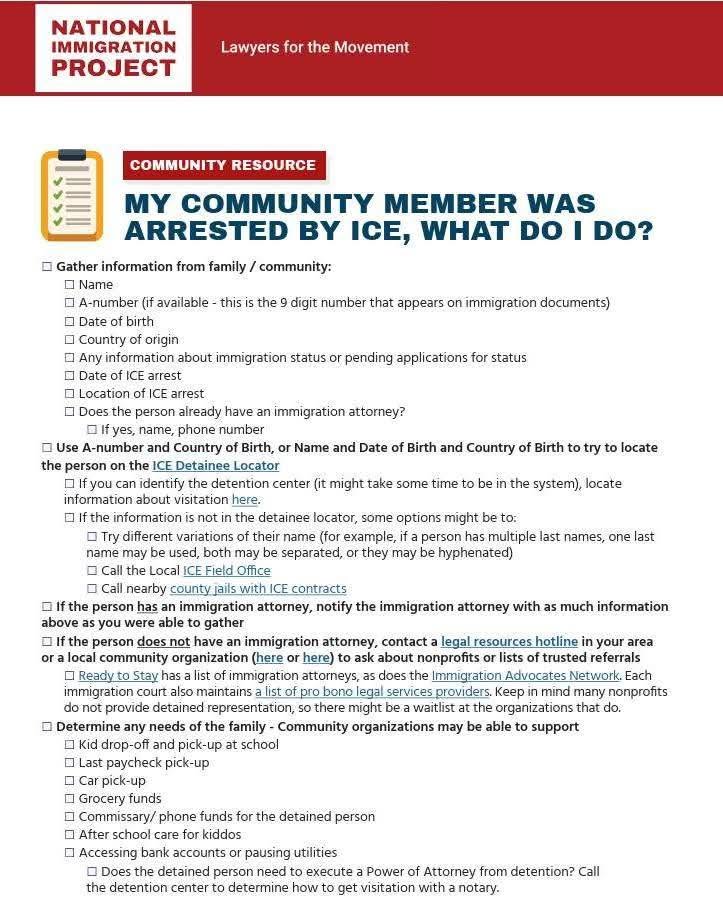
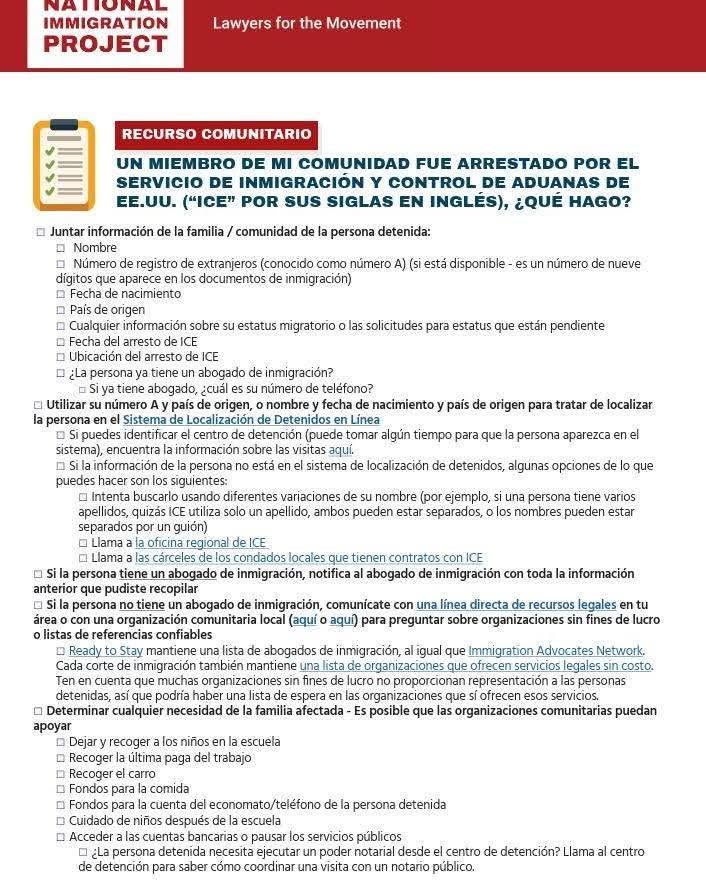
The group is telling immigrants to know and carry their A-number — an alien registration number assigned to individuals in the immigration system — and to share it with trusted adult family members and friends. The number can be used to locate a detained person through ICE’s online detainee locator, which ALASI has posted to its Facebook page.
“Having their A-number, having a friend, talking to their families — I think that’s very important,” Sandoval Monsivais said, adding that ALASI can help community members navigate the situation even though the organization does not employ immigration lawyers.
“We are doing the things the way that we are supposed to do things,” she said.
Community members seeking assistance can contact ALASI, which serves Dubois County and surrounding rural communities and can provide referrals to Department of Justice-accredited immigration representatives in the region.
ALASI provided this checklist for community members affected by the recent operations.
This story has been corrected to clarify how ALASI is working with other organizations in the area to formulate their next steps. We also removed a statement referencing the Jasper Police Chief and have a call in to him to confirm information he may have about the activities.
