Huntingburg Regional Airport breaks ground on new terminal building
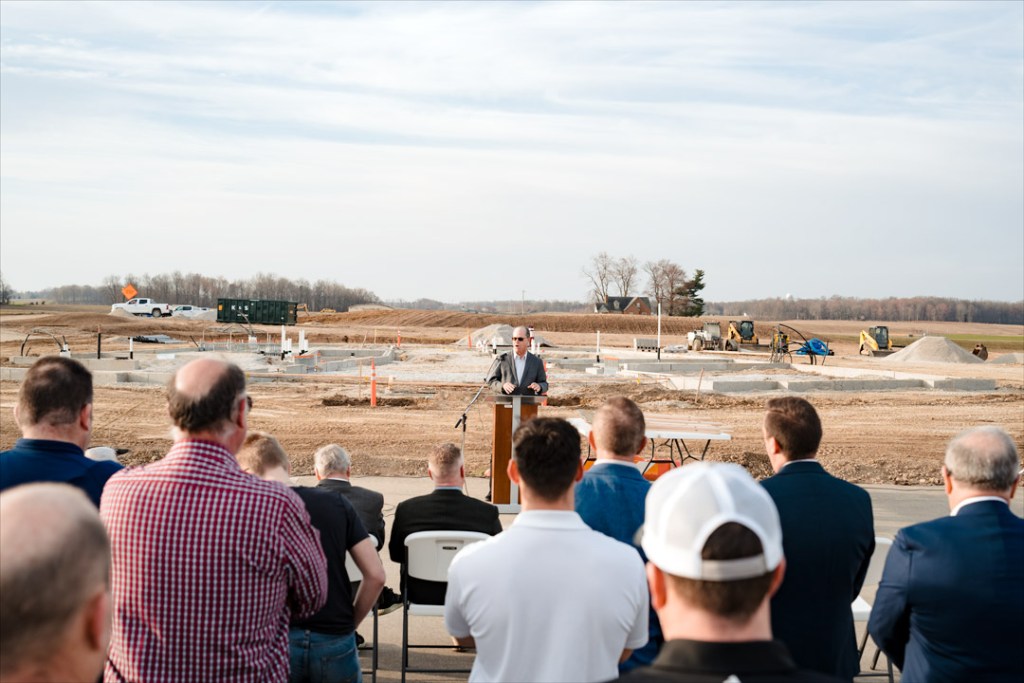
Friday, the Dubois County Airport Authority ceremoniously broke ground on its new terminal building at Huntingburg Regional Airport.
The terminal, named after aviation pioneer Forrest “Frosty” Jones, represents the first time Federal Aviation Administration (FAA) grant money has been approved for terminal construction at the airport.
Airport Board President James (Jim) Hunsicker highlighted the historical significance of the moment during the groundbreaking ceremony.
“This is a monumental day. I thought about back in the 30s, Frosty Jones plowed the first furrows out here for the first runway. So we’re looking at almost 90 years that this airport has been here in some type of fashion,” Hunsicker told the crowd gathered at the airport Friday morning.
The project replaces the existing 65-year-old terminal building and comes after several other major improvements to the airport, including a runway extension and enhancements to its taxiway and runway lights.
The terminal project represents a collaborative effort between local, state, and federal entities. Funding includes a $3.3 million FAA grant–the first of its kind for a terminal–supplemented by significant local support, including $500,000 from the county who also extended a $1 million loan for the project.
“Our path has been built on hard work, preservation, and valuable support of our community partners,” Hunsicker said. “This project represents more than just construction. It’s a vision for our community’s future.”
The new terminal is being constructed with strong local involvement, with Airport Manager Travis McQueen noting that 52% of the contractors working on the building are from Dubois County. Regional contractors from Bloomington, Evansville, and Princeton are also contributing to the project.
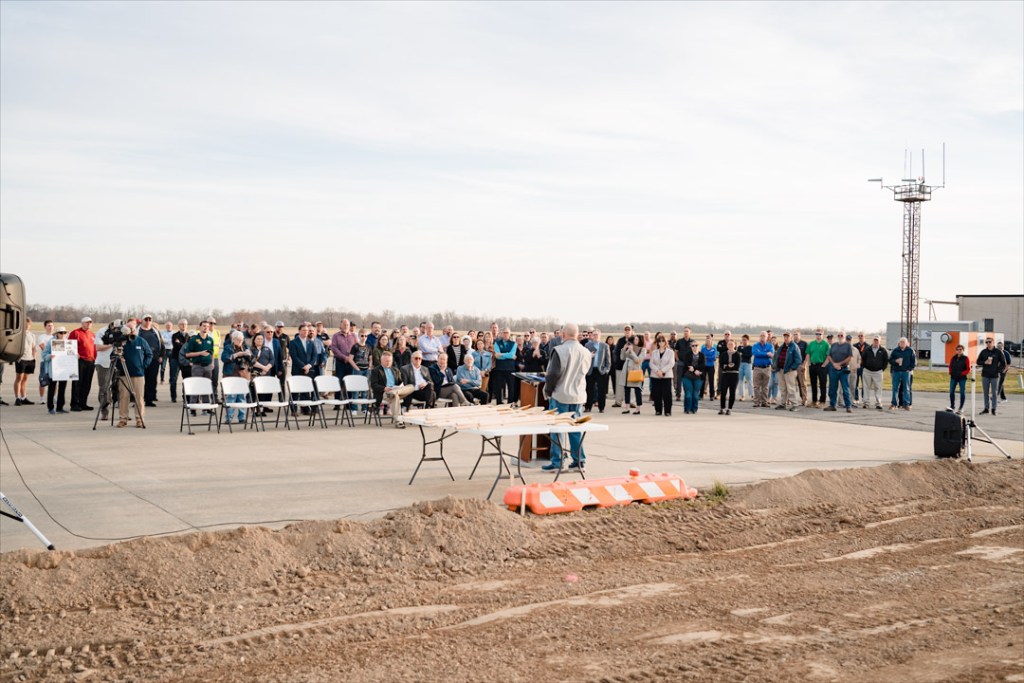
Congressman Mark Messmer took a few moments at Friday’s event to provide background on the terminal’s namesake.
“Forrest Mae Jones, better known as Frosty, was a fixture in our community. The Duff native fell in love with flying when he took his first flight in the third grade at the Boonville Fair in 1927,” Messmer said. “He earned his license to fly with just seven hours of instruction and then bought his first plane to become a stunt pilot.”
Messmer noted that Jones and Ed Schwartz purchased the land and equipment to found what would eventually become the Huntingburg Airport, securing help from local businesses, the Kiwanis Club, and a federal grant.
“Both in his work here and in our community, and his service to our country overseas, Frosty exemplified the talents and dedication that make Hoosiers so special,” Messmer said.

Marcus Dial, Director of the Indiana Department of Transportation’s Office of Aviation, praised the airport’s advocacy efforts.
“It takes a lot of vision, planning, hard work and follow up to make projects like this happen. And I say follow up because I relate that to advocacy,” Dial said. “These facilities, especially a new FBO like this, it’s a good doormat and a front door to the communities everywhere.”
Hank Menke, President and CEO of OFS Brands and a frequent user of the airport, emphasized the terminal’s importance to the community’s image.
“It is the image of our county and it’s a very important image when people come in,” Menke said. “I’ve been to Grand Rapids, I’ve been to Holland, Michigan, and you see really nice terminals. It really is a reflection of your community and how much pride they take in their communities.”

Indiana Governor Mike Braun, who also attended the ceremony, placed the project in the context of Indiana’s broader growth.
During his brief remarks, Braun acknowledged the area’s hard-working characteristics, noting that it is based on faith, family and community.
“It’s a pleasure to be here on a day like this, because infrastructure is not just roads and bridges, it’s air, waterways, much broader,” Braun said.
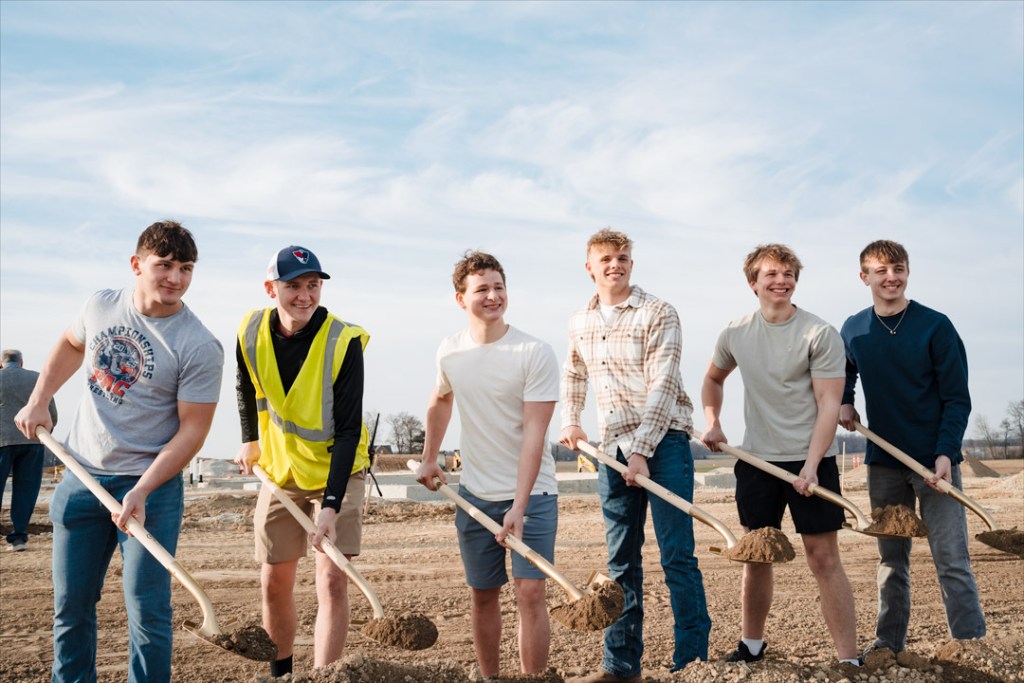
The groundbreaking ceremony concluded with officials and stakeholders using ceremonial shovels to turn dirt at the construction site, followed by refreshments in the 1962 terminal building that will soon be replaced.
The airport authority encouraged community involvement in the project through donations, naming rights, or underwriting partnerships to help transform the vision into reality.