
Dubois Lodge celebrates 150th Anniversary with rededication ceremony
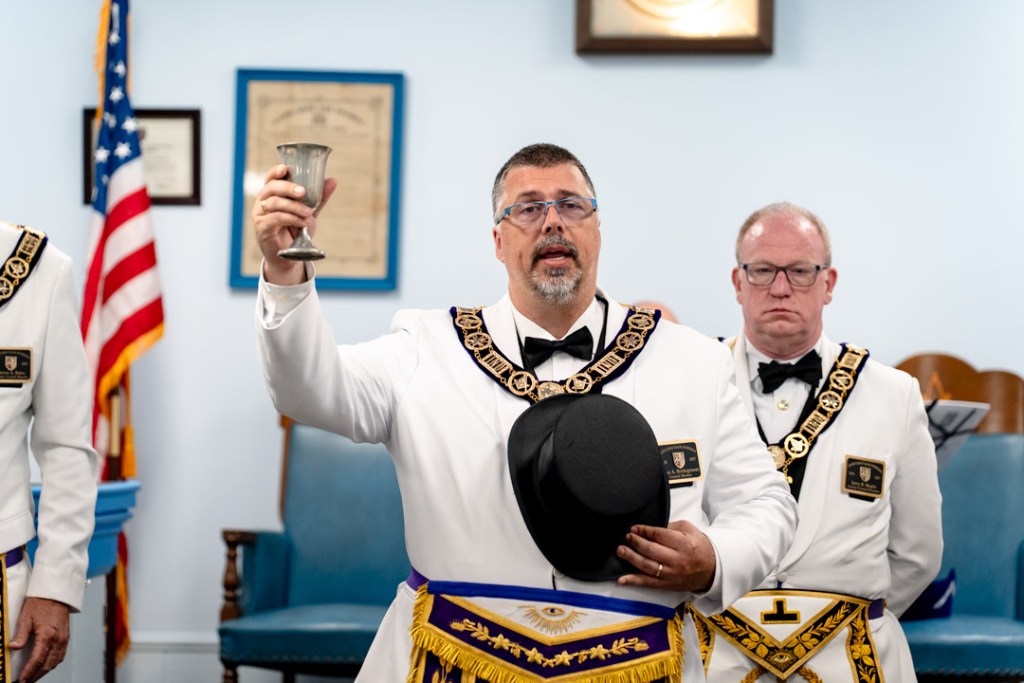
Dubois Lodge No. 520 marked its sesquicentennial with a solemn rededication ceremony conducted by the Grand Lodge of Indiana on Saturday.
The ceremony represents one of Freemasonry’s most ancient traditions, tracing its origins to the operative craftsmen of medieval Europe who erected the cathedrals and noble structures of the Middle Ages.
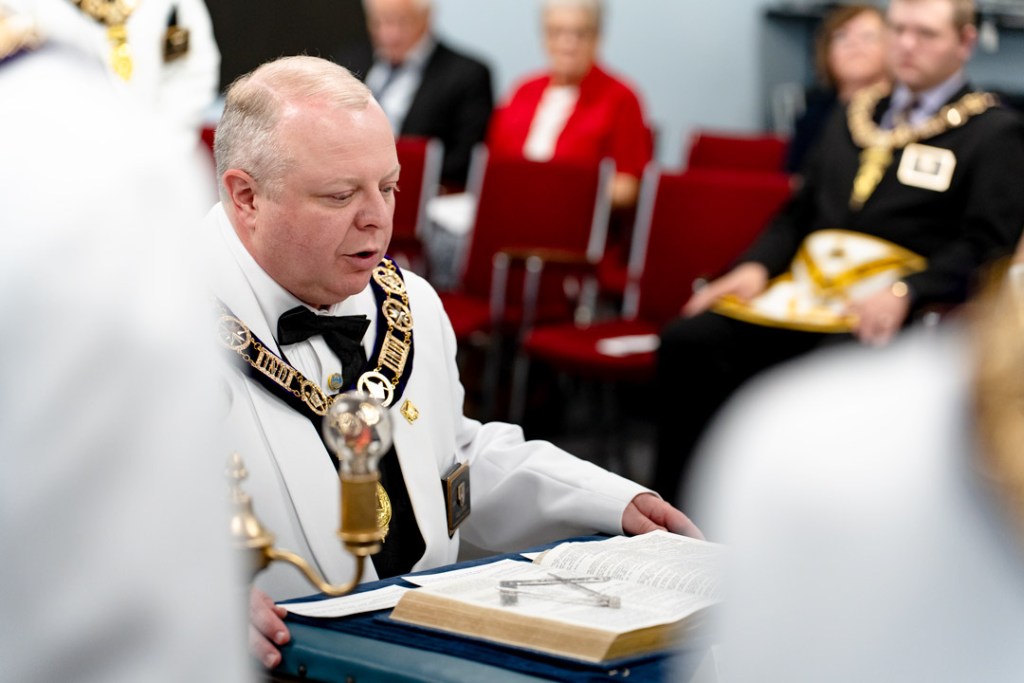
Dubois Lodge Worshipful Master Casey W. Nehmer opened the ceremony, introducing the entourage of Grand Lodge officers into the Huntingburg lodge room. He then turned the proceedings over to Grand Master John Bridegroom, who led the ceremony witnessed by lodge members, their families, and guests in what marks a significant moment for the oldest operating lodge in Dubois County.
“This is a very, very important time for Dubois Lodge. Likely, the ceremony you’re going to see today is the ceremony that was performed 150 years ago when this Lodge was consecrated, when it was dedicated,” Bridegroom explained during the ceremony’s opening. “It’s a very powerful moment for a lodge when you are consecrated and dedicated, and it’s equally powerful at its milestones to rededicate it to those crowns.”
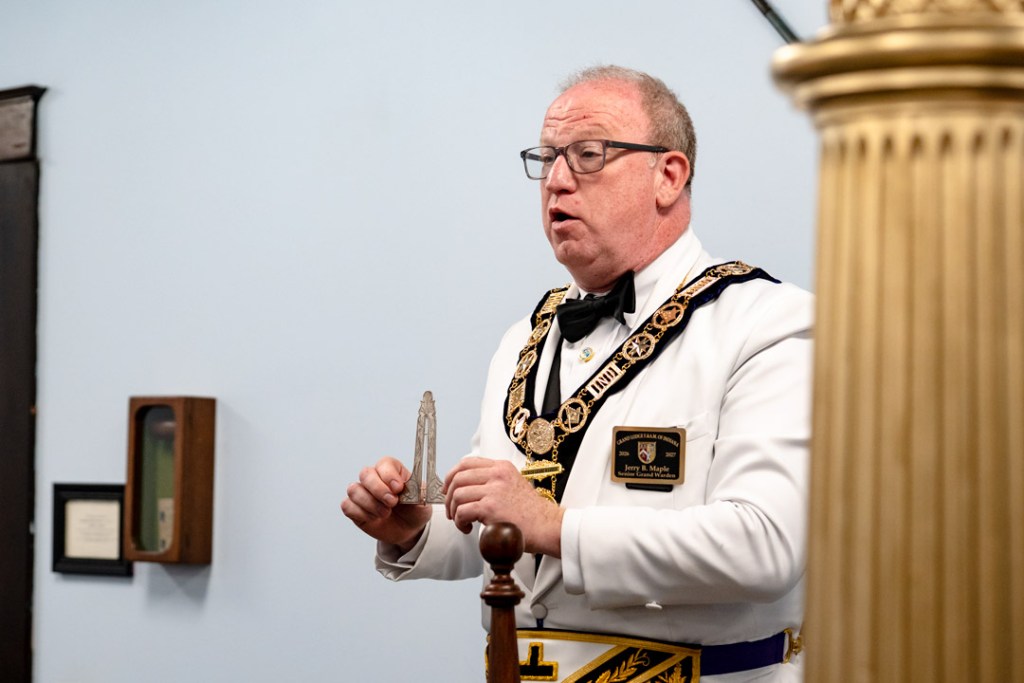
The rededication ceremony follows precise protocols handed down through generations of Freemasons, incorporating symbolic elements that predate modern Freemasonry itself. Assistant Grand Lecturer Fred Lucabaugh delivered the ceremony’s prologue, explaining the historical significance of each component.
“In the dedication of Masonic hall, we reenact certain ancient ceremonies that have been handed down to us as a part of our proud heritage from the days when the operative craftsmen of the Middle Ages erected the noble structures and soaring cathedrals of Europe in the British Isles,” Lucabaugh stated.
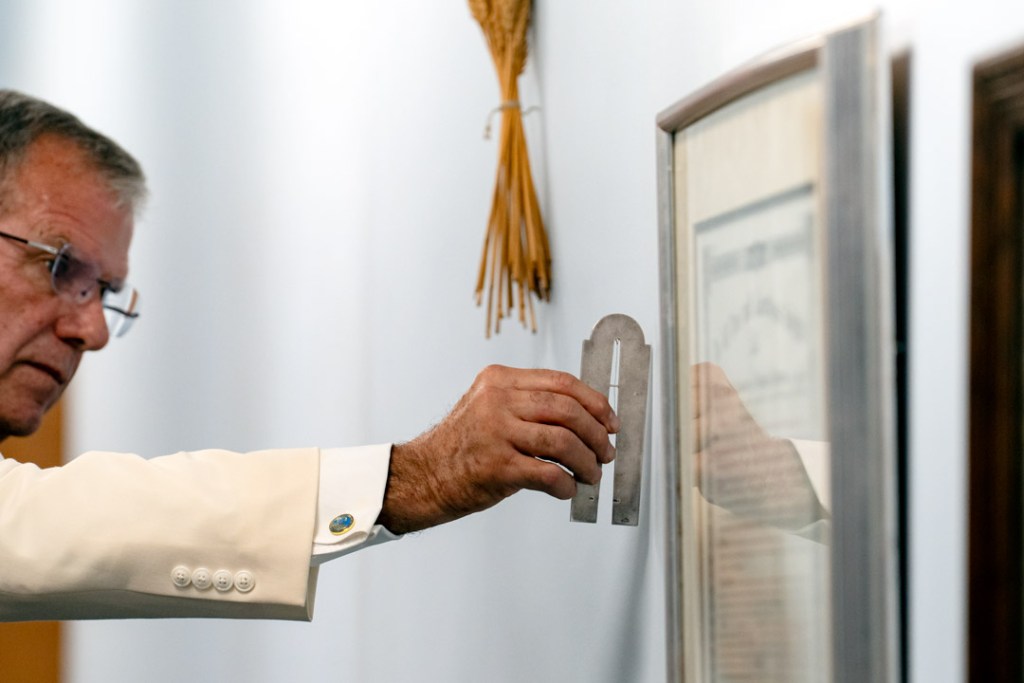
The ritual includes presenting operative masons’ tools to test the building’s construction. Deputy Grand Master Steve Bates used the square to test the hall’s corners, Senior Grand Warden Jerry Maple employed the level to prove the floor, and Junior Grand Warden David Westmeyer examined the walls with the plumb. These tools carry both practical and symbolic meaning within Masonic tradition.
“The level, reminding him that all men are brothers. A plum which marks the upright man and finally the test supreme that all his actions will compare with the divine. The unerring square that squares great virtues plan,” Frederick Lucabaugh explained during the prologue to the ceremony.
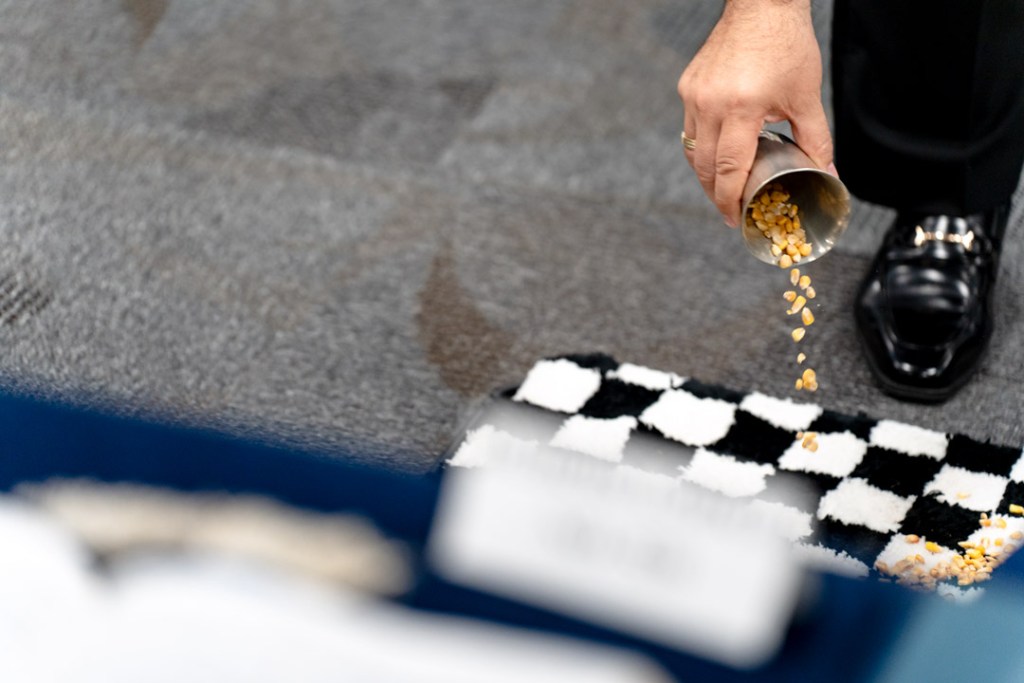
The ceremony’s centerpiece involves the Grand Master’s use of three ancient elements: corn, wine, and oil. These substances, which represented wealth and trade currency in biblical times, are used to rededicate the hall to three core Masonic principles.
“In ancient days, the grapes in the vineyard, the olives in the grove and the grain of the field were not only wealth, but the measure of trade. Thus, when the craft received wages in corn, wine and oil, they were paid in coin of the realm with the mystic symbols,” Lucabaugh noted.
Grand Master Bridegroom performed the triple dedication, first pouring corn while stating: “In the name of the great Jehovah, to whom be all honor and glory, I do solemnly rededicate this hall to Freemasonry.”
The wine dedication followed: “In the name of the holy saints John. I do hereby solemnly rededicate this hall to virtue.”
Finally, oil was used to complete the ceremony: “In the name of the whole fraternity, I do solemnly rededicate this hall to universal benevolence.”
Each dedication was accompanied by “grand honors” given three times three by the assembled brethren, following ancient custom.
Throughout the ceremony, passages from the Book of Kings were read, describing the construction of Solomon’s Temple. These biblical references connect modern Freemasonry to its legendary origins in the building of Solomon’s Temple.
Grand Master Bridegroom praised the execution of the ceremony following its conclusion. “I will tell you that those of you who have never seen the ceremony before, that was done absolutely perfectly,” he remarked before joking. “For those of you who have seen it, maybe there were some artistic liberties.”
The ceremony concluded with a benediction invoking blessings upon the lodge and its members: “And may the Lord, the giver of every good and perfect gift, bless the brethren here assembled and all their lawful undertakings, and grant to each of them in deepful supply the corn of nourishment, the wine of refreshment, in the oil of joy.”
The rededication serves not only as a celebration of Dubois Lodge’s 150-year history but as a renewal of commitment to Masonic principles. As Lucabaugh explained in his prologue: “Let this moment to each of us be a moment of solemn rededication. Let each craftsman examine himself by the standards of the square, the level and the plumb to the end that these rough ashlers may become perfect ashlers. In each body a living stone for that spiritual building, that house not made by hands eternal in the heavens.”
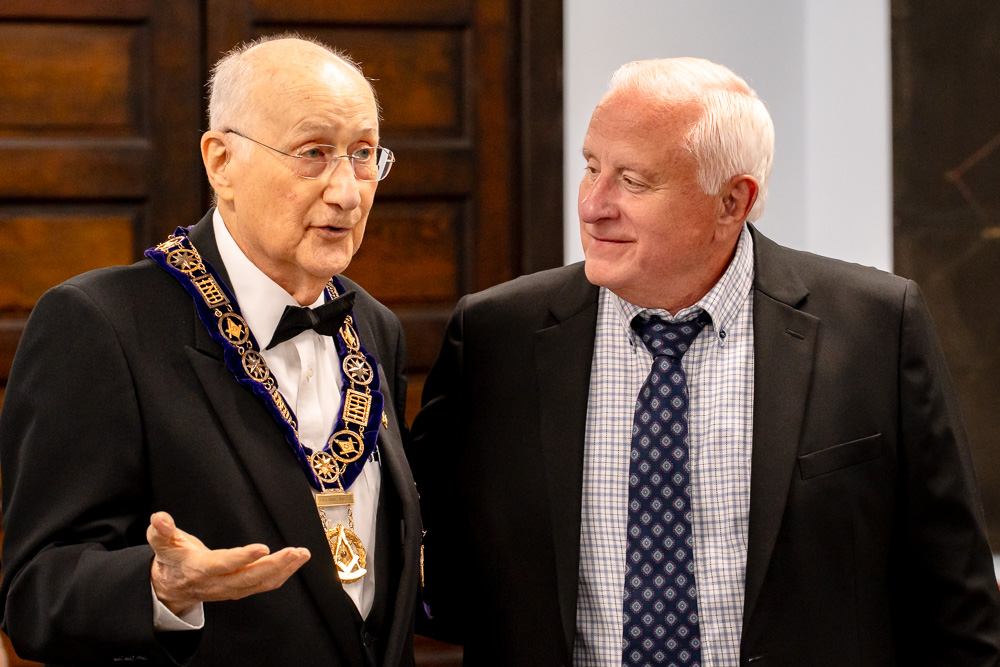
Dubois Lodge was established in March of 1877 in Huntingburg. In 1882, it moved to Jasper, where it remained until a fire destroyed the lodge in 1884, after which it returned to Huntingburg. The lodge’s charter, on display, is labeled a duplicate because the original was destroyed in the Jasper fire. Eventually, the Dubois Lodge was located on the third floor of the building that is now Old National Bank on Fourth Street. The lodge actually owned the third floor at the time. It is now located at 306 East 22nd Street, Huntingburg.
“I think the impact of this lodge on the community and the surrounding area is incalculable, because the men who come in here to better themselves and then go out and have an impact on the community over 150 years, that’s substantial,” Bridegroom said.
