
Curve and angle contribute to deadly intersection according to residents
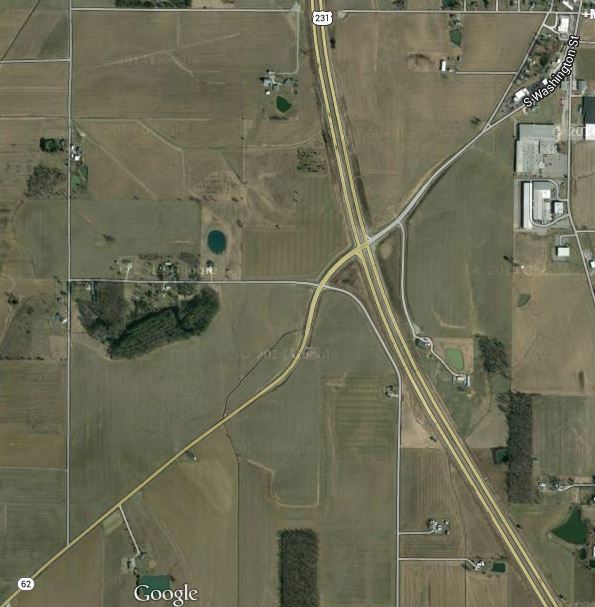 The angle of the intersection and curve of the road were issues brought to the conversation about a dangerous intersection near Dale.
A crowd of about 200 gathered at Heritage Hills High School auditorium Thursday night to voice concerns about the intersection of US 231 and State Road 62 and the number of fatalities that have occurred there since the road was opened.
Since opening in 2011, there have been five fatalities in accidents at the intersection.
The meeting was held for Indiana Department of Transportation Officials to hear public comments to assist in any potential remedy of the intersection.
The biggest complaint heard during the hour and half meeting had to do with the curve of approaching the intersection and how the two roads don’t meet in a perpendicular manner. According to those who mentioned the issue, this makes it difficult to see oncoming traffic due to having to look over your shoulder at extreme angles to see if the intersection is clear for you to cross or make a turn.
Another issue raised was the speed at which southbound traffic approaches the intersection. Drivers are going too fast because the majority of them have just come off of I-64 where they were going 70 mph. The speed limit on US 231 is 60 mph.
The six speakers who had the most impact included Father Jeremy King from St. Meinrad — who was in an accident at the intersection — and the four children and one nephew of Susan Grundhoefer, who lost her life at the intersection in December.
Father King said there might be too much signage which is itself a distraction. He said that prior to his accident, he had looked but didn’t see the car coming before he pulled out into its path.
Grundhoefer’s four children, Seth Grundhoefer, Denise Scott, Tara Thacker and Amber Wetzel, relayed the tragedy of their mother’s accident and how they were saddened that the small improvements at the intersection haven’t stopped the fatalities from occurring.
Grundhoefer’s house stands just a few hundred feet from the intersection.
They all implored the state to make changes to the intersection regardless of cost and rejected the INDOT official’s testament that they have gone beyond federal and state standards in attempting to make the intersection safe.
Steve Grunhoefer, Susan’s nephew from Ferdinand, stated he is a former road designer and is now an accident re-constructionist. He told officials he has reconstructed several accidents that occurred at that intersection.
His opinion is that the improvements INDOT has put in place — the added signage, rumble strips and warning lights — have helped some, but the biggest issue is the curvature of the road and the sight problems it creates.
“I think the primary problem I see out there is the curvature, because when you pull up there you have such a wide range of view,” Grundhoefer said. “You have to look far and near and you have to scan a really big area. Unlike a perpendicular one (intersection) you look one time and you can see way up the road. I think people are looking the far distance and may be skipping the near or their mirror is blocking it, like other people said and the don’t see it, they think it’s clear and they start going and they get hit.”
INDOT personnel didn’t offer any comments of their own but did pass out contact information that the public can use to supply comments during the commenting period which runs through February 13th. The comments will be added to the public record to help them with decisions about the intersection in the future.
Written comments may be submitted through Friday, Feb. 13 to INDOT’s Office of Public Involvement, 100 N. Senate Ave., Indianapolis, IN 46204. Written comments may also be emailed to INDOT Public Hearings Manager Rickie Clark at rclark@indot.in.gov.
