Community Corrections: Details matter in completing the mission

Wyatt Madden stepped into the Dubois County Community Corrections director role right as the county’s renovation plans for the building moved to the construction phase.
“My second day on the job we had a construction meeting, and I had no idea this was going to be under construction,” Madden admitted.
Less than a month after accepting the position, the staff and participants, as well as all of its programming, were moved into temporary lodging at the jail while the campus renovations progressed in the corrections building. They spent about nine months operating like this until being able to move back in July of last year.
“My first week here, I remember driving home thinking, ‘What did I get myself into?'” Madden said.
The entire program was uprooted and placed in a new building which was being forced to serve a dual role while the community corrections building was out of service.
“Now, you’ve got to figure out policies and procedures within that building,” Madden said. “So coming in as a new director, it wasn’t just learning my director job; it was kind of starting up a whole new facility for nine months.”
He wasn’t alone in sharing the difficulties during the transition.
“That whole process was burdensome for every staff member here,” Madden said. “And it was hard on the participants, too, because they weren’t in a rehabilitative environment.”
There was a single classroom, very little privacy for meetings with participants or sessions, and tight quarters created logistical issues as well as barriers to the evidence-based therapeutic processes provided by community corrections.
However, during that time, Madden and the staff were able to refine some of their operations and methodologies to better serve the participants and community. They expanded GPS monitoring for work release and adjusted the home detention model to a multiphase process that allows participants to progress slowly back into the community.
The work being done was necessary. A county-wide justice study completed in 2018-2019 revealed what many already knew about the nearly 20-year-old building.
Community corrections staff and the participants were tripping over each other in shared offices, cramped common areas, and crowded dormitories. Temporary fixes like converting a storage room into an expanded living space for the growing female participant population and turning classrooms into additional offices provided temporary relief while creating other issues.
That same study pointed out the design issues with the building as well. The main entry to the facility served the dual purpose of processing participants and welcoming visitors and guests. The dormitories weren’t set up to separate participants based on the types of offenses; violent offenders were in the same area as those with lesser crimes. The control room overseeing the operations in the facility was directly connected to the dorms–a glass window and door separating them.
This is in addition to the costly upkeep of a nearly two-decade-old building that operates 24 hours a day, every day of the year.
The new public entrance to Dubois County Community Corrections. 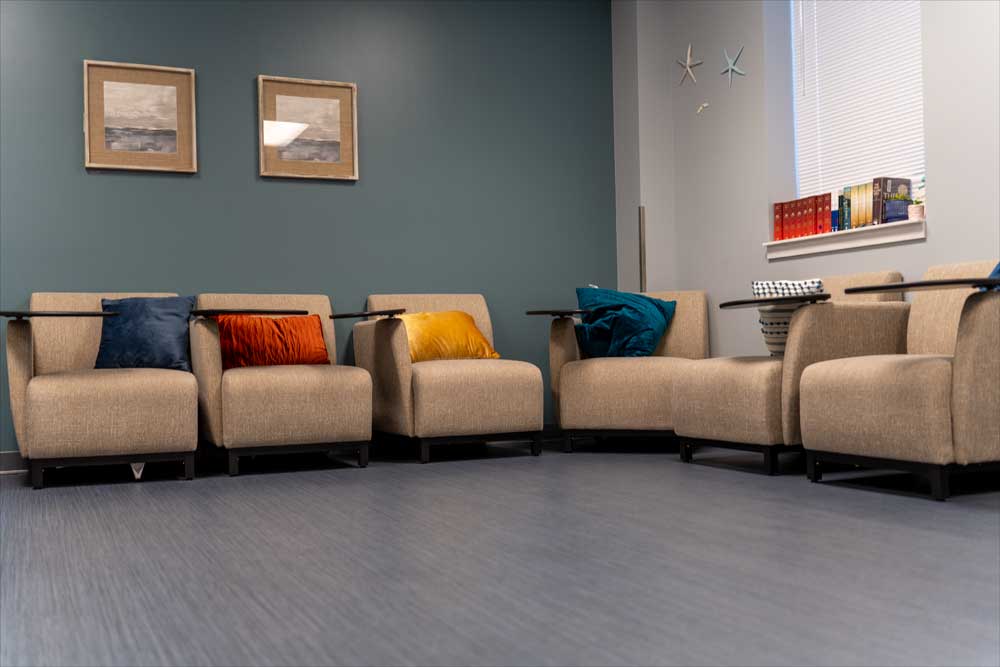
Another of the multiple classrooms now available at the facility. 
One of the new classrooms available for the evidence-based practices participants take part in at community corrections 
The new dorms are splt into pods with attached showers and bathrooms. 
Participants have access to common areas with a television, tables and vending machines as well as pay laundry facilities
Finally, when construction was complete in July 2023, the team walked into a greatly updated building ready to meet the county’s needs for the foreseeable future.
Improvements include added staff offices, updated and remodeled classrooms, a library and computer lab, and added storage. Visitors, guests, and individuals in home detention now enter the building at a separate entrance from those on work release, providing better security and safety.
They’ve added larger dorms for male and female participants to better serve their needs. And, the dorms are split into pods with separate common areas, bathrooms, and showers to better segregate the participants based on their risk level.
A hallway separates the control room from the pods, providing an extra level of security while still allowing the corrections officers to observe all the dorms. Additionally, the control room, with its cameras and controls, has been remodeled to provide much-needed space for the officers and staff working there.
Overall, it’s a much more functional building designed to meet the county’s needs for the foreseeable future.
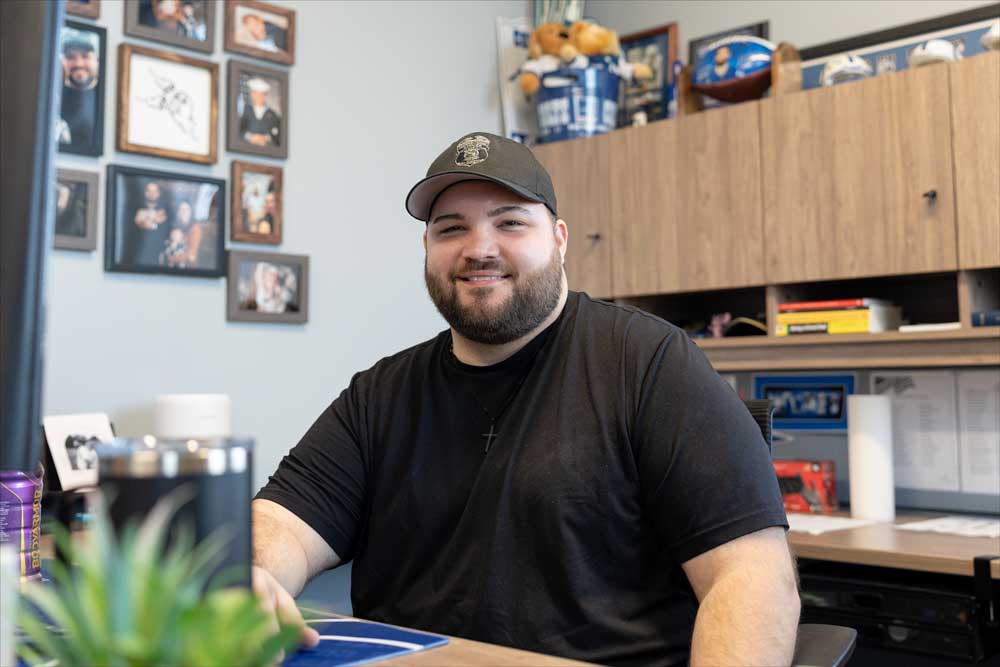
Madden, a Southridge grad, came into the program from a background that included aspirations to work in law enforcement. However, sports injuries curtailed those aspirations to a certain extent. During college, he remembers thinking he never wanted to go into corrections. However, with limited options and a degree in criminology, he applied for a corrections officer position at Putnamville Correctional Facility.
“I really enjoyed it,” Madden said about his seven and a half years there.
He was promoted to case manager in 2019 and soon became a case manager supervisor, leading a team of six case managers.
That experience changed his professional outlook. He found the experience rewarding and appreciated working with dedicated teams to help rehabilitate participants.
“It gave me a completely different outlook on rehabilitation and providing services to offenders,” Madden said.
In 2022, he and his wife, Shea, were looking to return to the area, so he applied for the directorship at Dubois County Community Corrections.
“I thought, ‘Why not serve the community where I am from?'” he said.
With a new building better suited to the community services it provides and the dedicated staff working there, Madden is optimistic about the future of corrections in Dubois County.
“It has been a morale booster,” he said about the renovated building and updates. “Everything’s new. Everything’s uniform and clean. I just think it makes it a better work environment and provides better services.”
The classrooms aren’t sterile rooms with seemingly second-hand furniture, and now, case managers can have private one-on-one conversations with their clients, leading to more meaningful counseling time.
This is important because time is a scarce resource in community corrections. The rehabilitative services provided to participants are over once they are released from the program.
To have the greatest rehabilitative impact, “Ideally, we would like to have them 180-plus days, but for most, it is less than that,” Madden said about the participants. “We just have to make do with what we have.”
The updated building, the renovations, the new furniture and equipment, it all matters. Accountability matters at every level when you expect accountability in return.
That’s why Madden knew the old bunk beds wouldn’t work when they began moving back into the building. They were rusty and covered in body oils from years of use.
“We were going to have this new facility, and then we’re going to put these old crusty bunks in here and expect them to take care of their surroundings, their personal hygiene, and their cleaning, but we’re going to provide them with trash,” he said. “That doesn’t send a good message.”
So, he and several staff members spent an exorbitant amount of time sanding down more than 50 metal bunk beds, cleaning them and then repainting them. Now, it would be hard for someone to point out one of the old beds among the new ones in the dorms.
It all matters.
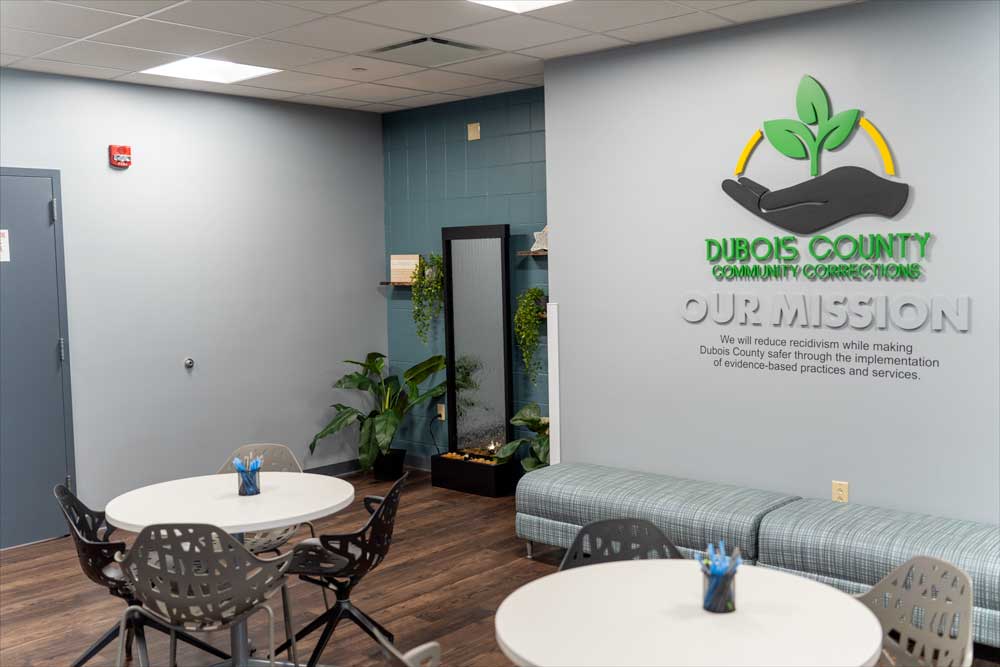
Whether it’s ensuring a participant has every opportunity available to meet their rehabilitative goals or simply policing the parking lot for trash each day, the cumulative effect hopefully impacts Community Correction’s mission to “reduce recidivism while making Dubois County safer through the implementation of evidence-based practices and services.”