
City’s volunteer group falls under scrutiny, Healthy Dubois County appeal granted
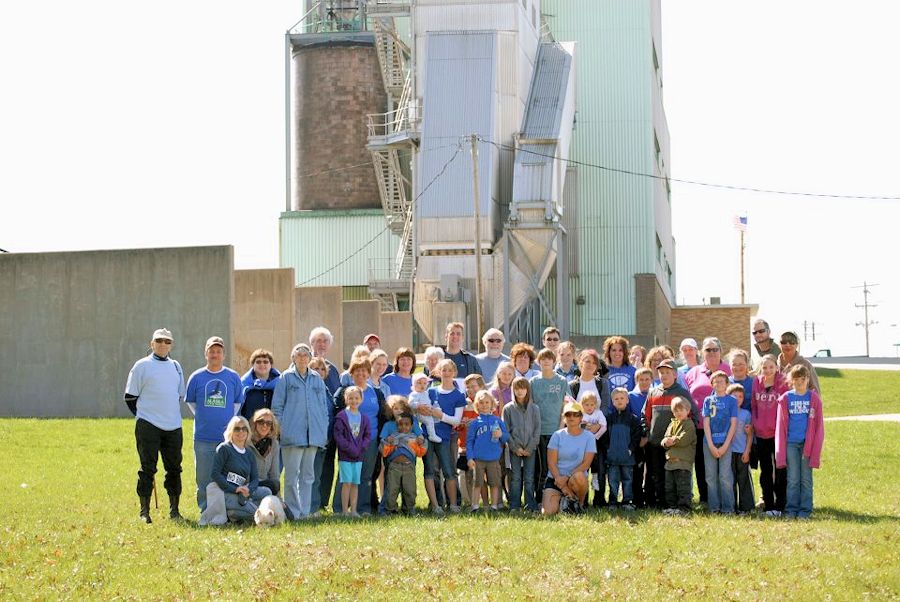
The Indiana Court of Appeals approved the appeal filed by Healthy Dubois County (HDC) and stated Special Judge Lucy Goffinet abused her discretion in the December trial and subsequent January decision.
Healthy Dubois County and members Dr. Norma Kreilein and Rock Emmert filed a complaint against the Jasper Common Council and the Utility Service Board for alleged violations of Indiana Open Door Law in August of last year. Goffinet ruled in favor of the City of Jasper after the two-day trial and final arguments.
Healthy Dubois County filed an appeal based on Goffinet denying their motion to amend their complaint based on discovery of a volunteer group that had met with Twisted Oak CEO Jay Catasein during the lease negotiations. The volunteer group was comprised of then-Mayor Bill Schmitt, then-Councilman John Schroeder, chairman of the Utility Service Board Wayne Schuetter, Power Plant Superintendent Wendel Toby, City Attorney Sandy Hemmerlein, Attorny Bill Kaiser and Bud Hauersperger, Utilities General Manager.
Healthy Dubois County contends they did not know of the volunteer group and only learned of the it on December 6 —13 days prior to the trial date of December 19— after the trial court ordered representatives of the city to complete depositions with HDC’s attorney in late November.
Jasper opposed the third amendment to the complaint based on the fact the new allegations were a departure from the original complaint regarding Indiana Open Door Law violations. They contended that HDC should have known about the volunteer group long before the depositions were taken and the granting of the third amendment to the original complaint would require a hasty defense on the part of the city or further delay the resolution of the trial.
However, during the court proceedings it became increasingly apparent to HDC the extent to which the volunteer group worked on the lease negotiations. It was revealed that the volunteer group had met with Twisted Oak CEO Jay Catasein 12 to 15 times compared to the six executive sessions that were publicly announced. None of those volunteer group meetings were publicly announced.
Jasper successfully argued during the trial the volunteer group did not constitute a quorum of members from either the Utility Service Board or the Common Council and therefore did not meet the definition of a “governing body” according to Indiana code. Judge Goffinet issued a decision stating the court did not feel the volunteer group was formed to evade Indiana’s Open Door Law and that Jasper did not violate Indiana’s Open Door Law during any executive meeting.
HDC subsequently appealed the decision based on the discovery of the volunteer group’s activities and the need for more time to investigate those activities further.

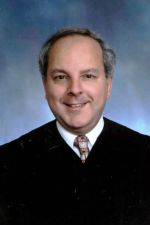

The three-judge panel assigned to the the appeal, comprised of Judges James S. Kirsch, Melissa S. May and Edward W. Najam, Jr., issued their conclusion that during their research into cases involving Open Door Law they did not find another case that had such a short period of time between the filing of the complaint and the trial. They stated that that the four-and-a-half months between the complaint and the trial date would not have been unreasonable except for “Jasper’s deliberate failure to agree to depositions until December, and then only after court intervention”.
The judges also agreed that further discovery is warranted to determine if the volunteer group was a governing body and in such violated Indiana’s Open Door Law.
Indiana Code Section 5-14-1.5-2(b) provides that a “governing body” means two or more individuals who are:
(1) a public agency that:
(A) is a board, a commission, an authority, a council, a committee, a body, or other entity; and
(B) takes official action on public business;
(2) the board, commission, council, or other body of a public agency which takes official action upon public business; or
4 The trial court erroneously found that the volunteer group meetings were open to the public.
11
(3) any committee appointed directly by the governing body or its presiding officer to which authority to take official action upon public business has been delegated. . . .
(Emphases added by the judges)
In their decision the judges stated,
The purpose of the Open Door Law is to ensure that the business of the State of Indiana and its political subdivisions be conducted openly so that the general public may be fully informed. City of Gary v. McCrady, 851 N.E.2d 359, 365 (Ind. Ct. App. 2006); see Ind. Code § 5-14-1.5-1. The provisions of this statute are to be liberally construed in order to give effect to the legislature’s intention. McCrady, 851 N.E.2d at 365. The Open Door Law requires that, except for those situations where an executive session is authorized, “all meetings of the governing bodies of public agencies must be open at all times for the purpose of permitting members of the public to observe and record them.” Ind. Code § 5-14-1.5-3. For purposes of the Open Door Law, a meeting is defined as “a gathering of a majority of the governing body of a public agency for the purpose of taking official action upon public business.” Ind. Code § 5-14-1.5-2(c). “Official action” means to (1) receive information; (2) deliberate; (3) make recommendations; (4) establish policy; (5) make decisions; or (6) take final action. Ind. Code § 5-14-1.5-2(d). Executive sessions may only be held in certain instances, public notice must be given of executive sessions, and the public must be provided with memoranda and minutes identifying the subject matter considered in executive sessions. Ind. Code § 5-14-1.5-6.1.
[quote style=”boxed”]”The trial court erroneously found that the volunteer group meetings were open to the public.” APPEAL FROM THE DUBOIS CIRCUIT COURT The Honorable M. Lucy Goffinet, Special Judge Cause No. 19C01-1108-MI-298 [/quote]
The judges further stated this issue was the heart of the appeal and since the trial court erred in thinking the volunteer group’s meetings were open to the public further discovery in defining the volunteer group was warranted.
Norma Kreilein, Rock Emmert and members of Healthy Dubois County aren’t commenting on the appeal decisions other than to say they are pleased with the outcome.
Attorney Bill Kaiser informed the Utility Service Board of the decision at Monday’s meeting. He simply told the board the court allowed HDC an additional 30 days for discovery and another 30 days to hold a trial, but he explained it may take longer than sixty days depending on the trial court’s schedule.
Mayor Seitz stated he has been advised to stay out of the case because it happened prior to his taking office.
https://duboiscountyfreepress.com/kalla-objects-to-jasper-air-quality-permit-for-jasper-power-plant/
