
City of Jasper ready to respond to deadly trench collapses
The City of Jasper was the highlight in the INDIANA LTAP Spring Newsletter magazine for their Spotlight on Innovation: Shoring Trenches, Saving Lives: Trench Safety in the City of Jasper.
The purpose of Indiana Local Technical Assistance Program (LTAP) is to translate the latest, state-of-the-art road, highway and bridge technologies into systems usable by local agencies.
The City of Jasper designed a Trench Recovery Assistance Program (TRAP) Team as a way to rescue an individual from one highly lethal trap – a collapsed trench.
These narrow, deeply-cut cavities are often used to work on underground pipes or perform other infrastructure maintenance. Their steep walls alone are hazardous, making it difficult for workers to climb in and out. If one of those walls collapses, the weight of the fallen dirt will pin them in the trench, creating a dangerous emergency with a very short timeline for rescue. “If there is not an immediate response,” says Raymie Eckerle, Street Commissioner for the City of Jasper, “chances of life are slim.”
[quote]One of the highlights of my career as Safety Director was to be informed that one of our employee’s lives had been saved from a deadly trench cave-in. The use of trenching and shoring safety equipment saved his life . . . from the tons of soil that caved into the trench that day. What an inspired feeling it was to know that the employee went home that work day, safe and sound.” Charlie Schneider, City of Jasper Safety Director[/quote]
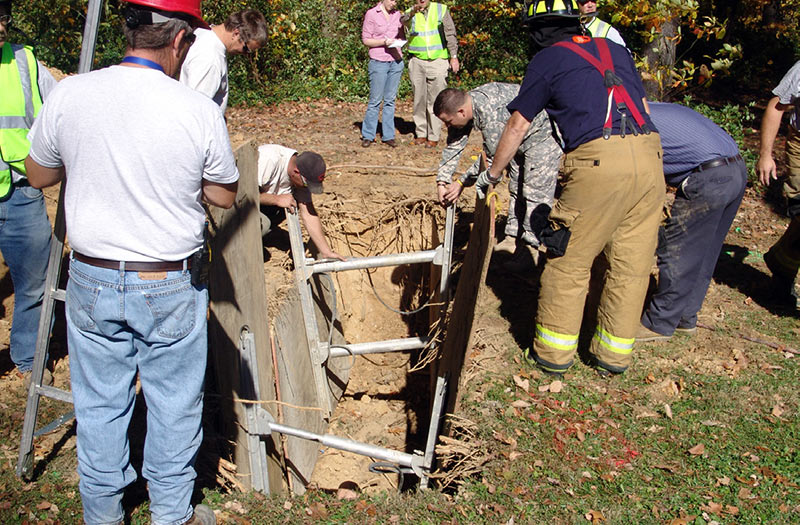
Charlie Schneider, the now-retired Safety Director for the City of Jasper, recognized the need for an organized program to help any victims of a trench cave-in. Furthermore, he recognized that the necessary equipment was available to make such a program happen.
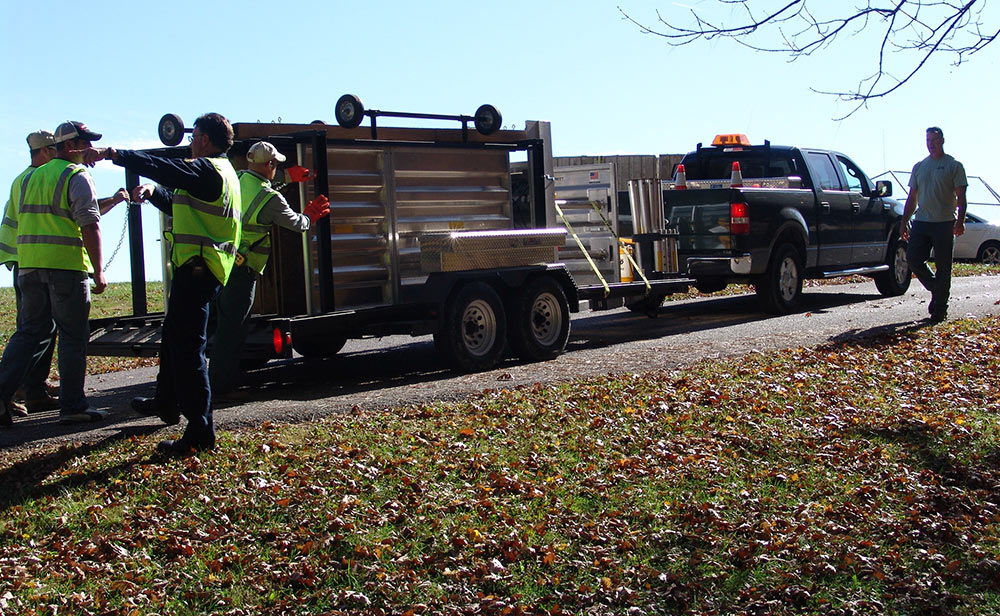
A number of the City’s public works departments, including Street, Natural Gas, Water, Wastewater, and Electric Distribution, all owned equipment that could be used during a trench rescue—such as shoring panels, backhoes, and sewer jets. The departments agreed to pool these resources, and with the Jasper Fire Department, Schneider and the City of Jasper Employee Safety Committee developed the Trench Recovery Assistance Program (TRAP).
Members of the program—the TRAP Support Team, or TST—are set to respond to a dispatch call-out by the Jasper Police Department. Transporting the rescue equipment is the primary responsibility of the TST; all of its members have been trained in the procedures for getting the items to the emergency site. If deemed necessary by the Jasper Fire Department Incident Commander, and if the TST members have had training in the use of the rescue equipment, they may also assist in the actual recovery itself.
 Responding to the Call
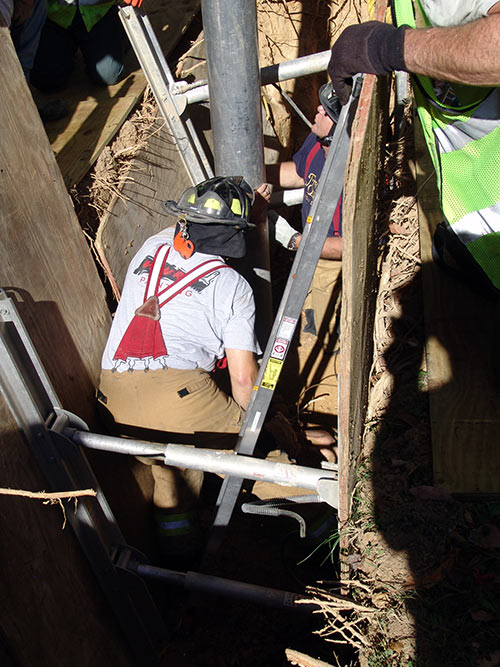
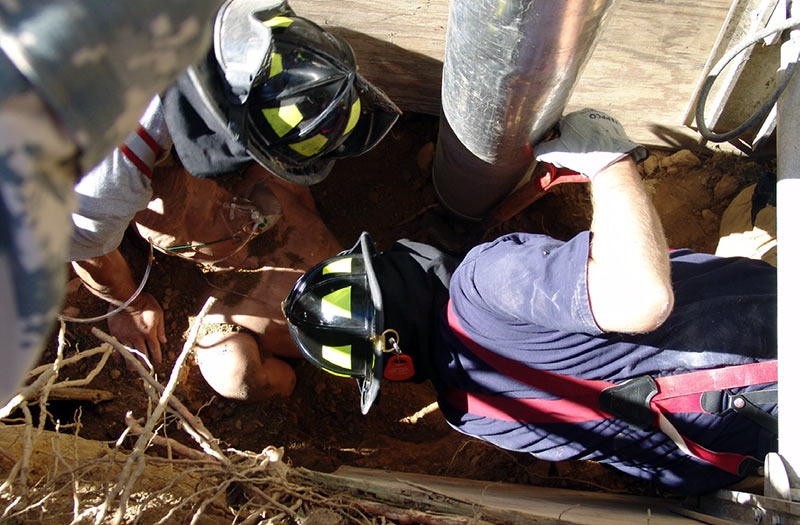
When the program was established in the summer of 2009, the TST practiced with a live drill, involving a life-sized dummy in a collapsed trench. Following the program’s established protocol, a dispatch call went from the Jasper Police Department to the Jasper Fire Department, who then summoned the TST to rush to the site with their shoring equipment and backhoes. The effort was an encouraging success; the team succeeded in retrieving the dummy, and what’s more, without any damage to its body.
Performing a rescue from a collapsed trench is a precarious matter. Suffocation is a very high risk for the individual trapped, whether the trench is large or small. “It doesn’t take much dirt to get enough weight where you can’t breathe,” Eckerle notes.
As the person breathes out, the dirt shifts around the body, and its weight can prevent the victim from breathing in again. The weight of the dirt also causes a high risk for compression injuries, especially to the individual’s lower body. Serious injury may also be incurred during the rescue process itself, from the digging equipment used to retrieve the victim quickly from the trap.
Even when confronted by a highly trained team with readily accessible equipment, when it comes to trench accidents, there is no way around two very sobering facts. “Time is not on your side,” Eckerle reports. “And there’s hardly any room for error.”
 First Priority: Prevention
The best remedy in this instance, then, truly is prevention. Above all, Eckerle urges caution and preparation when approaching trench work: “For anyone to go into a trench without shoring equipment is unnecessary and uncalled for. It’s not worth anyone’s life or limb to do so.”
And in fact, while the TST stands ready to answer an emergency call and TRAP has even been revised since its inception, the team has never had to respond to a call in the nearly four years of the program’s existence.
This is not because there have been no trench collapses; on the contrary, the City of Jasper has seen a number of collapsed walls during that time. None of those incidents escalated to an emergency, however, due to the consistent use of shoring equipment. According to Eckerle, “ We’ve had wall collapses where the shoring equipment saved someone’s life.”
Charlie Schneider likewise emphasizes the importance of protective shoring equipment over any reactive measures: “One of the highlights of my career as Safety Director was to be informed that one of our employee’s lives had been saved from a deadly trench cave-in. The use of trenching and shoring safety equipment saved his life . . . from the tons of soil that caved into the trench that day. What an inspired feeling it was to know that the employee went home that work day, safe and sound.”
As demonstrated, then, by TRAP’s very backseat role in trench safety, protecting the lives of workers begins long before they even enter the trench.
Published with permission from Indiana LTAP Purdue Technology Center.
