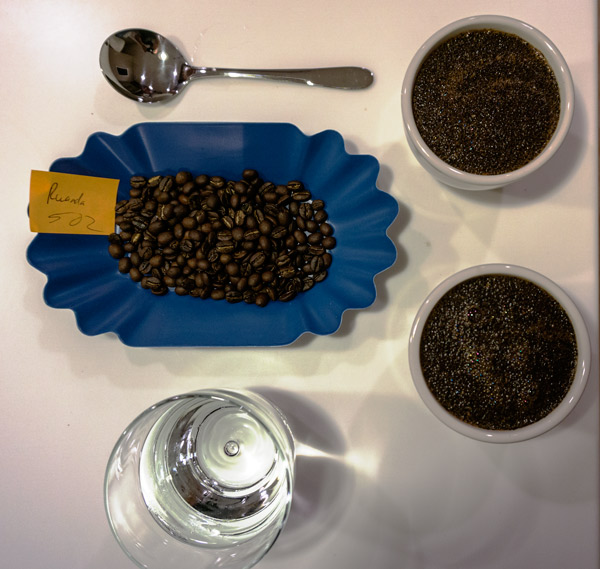
Bunna Bet; Love for coffee and family creates county’s first coffee roasting company

With a slight pop, the first crack begins.
The rhythmic swish of the beans tumbling in the drum is pockmarked with more pops as they crack open releasing the heated gasses inside. Not nearly as loud as popcorn, each coffee bean’s tiny pop brings a young Jasper couple closer to their dreams of adoption and a new business.
Epitomizing the DIY maker movement, Matthew Gehlhausen has built a small-batch coffee roaster using a gas grill, some special order parts and a laptop running a freeware — free software — coffee roasting program.
Two sensors monitor the temperature inside the gas grill while a roasting drum attached to an electrical motor mounted to the grill’s rotisserie turns. The sensors are attached to a laptop that monitors the beans’ progress. The freeware records the roasting as it occurs creating a map for Matthew to follow in the future if he is seeking a specific flavor from the beans.
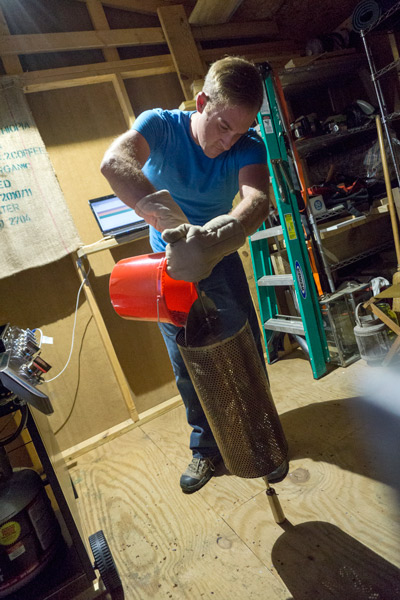
It’s a fast process that requires constant temperature monitoring. Six lbs of green coffee beans can be turned into medium roast coffee beans in about 15 to 20 minutes from beginning to end.
For this DIY method of roasting, it begins with the preheating of the grill and drum. When the temperature is right (over 500 degrees Fahrenheit), using oven mitts, Matthew pulls the drum from the grill and quickly pours the green, unroasted beans into it.
Once the drum is back in the grill and turning, the freeware reports the beans’ roasting progress and temperature. Matthew regulates the temperature by fanning the grill lid and adjusting the flame level with the grill controls.
On cue, the first tiny pops can be heard just after the freeware reports the first crack is about to begin. It’s over in about a minute and a half.
If he is seeking a light or medium roast, the beans will be pulled within a few moments of the end of the first crack. For a darker roast like an espresso, Matthew waits for the second crack; a less pronounced pop that signifies the beans are opening a bit more and releasing that final amount of moisture.
Once he hits the roast he wants, he immediately pulls the beans and pours them over a makeshift cooling system comprised of a screen sitting on top of a fan. The chaff flies up, and the dry beans float on top of the screen cooling almost instantly.
Seconds later, Matthew can pop a roasted bean into his mouth. The full flavor won’t mature until the next day, but the now-crisp bean provides a satisfying crack and wonderful coffee flavor when chewed.
“There is a whole niche community that roasts like this,” Matthew explained while cleaning up in the small shed that houses his new coffee roasting operation.

Matthew and his wife Allison both love coffee and the culture it represents. “I have always wanted my own coffee shop,” Matthew said.
His phone is full of plans and notes for a coffee shop created as a place for people to gather, drink coffee and exchange ideas – one that would include a commercial roaster visible to the customers.
But with his involvement with the family business, M&M Exhaust, he hasn’t been able to chase that dream as quickly as he would like. “I just figured since I can’t open a coffee shop at this time, at least I can roast,” he said.
For small batch roasting or micro-roasting, roasters are available for $500 or more and companies specifically supply coffee beans for that growing group of hobbyists. But, instead of jumping in with that expense, Matthew’s first batch was roasted in a Whirley-Pop popcorn maker. “Surprisingly, they turned out great,” Matthew laughed.
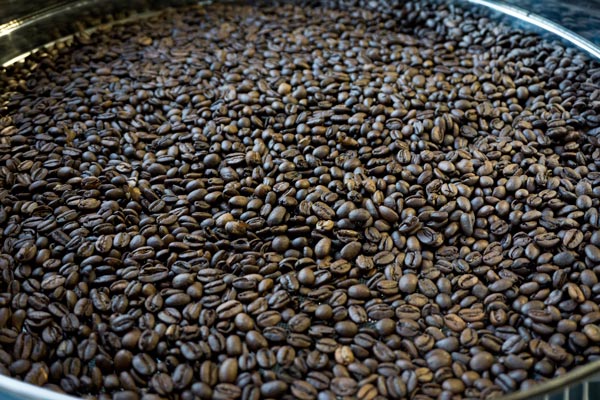
Coffee beans are grown around the world within a few latitudinal degrees of the equator. Besides the roasting process, each region’s soil and weather contribute to the distinct flavors of the coffee bean. The characteristics of the coffee are dependent upon these conditions and can change annually.
Ethiopia is Matthew’s favorite source for coffee because of its historical significance in the coffee world. According to the coffee mythology, around 800 AD an Ethiopian shepherd named Kaldi had some trouble with his goats. They didn’t come home as expected. He went out in the late night and found them frolicking around while eating a certain red cherry from some bushes.
Kaldi, seeing the goats energy, decided to try some of the berries, and he experienced his own resurgence of energy. He took the berries to some monks who tried to boil them into a concoction. But the boiled brew tasted bad and the monks threw the remaining berries into a fire.
A short time later a wonderful aroma began to emanate from the fire drawing the monks back. They took the now fire-roasted beans, ground them up and boiled them creating the first coffee drink.
The legend continues that the monks would drink the brew so they could stay awake and pray all night. It quickly spread from monastery to monastery.
“They have a coffee ceremony that begins with them roasting the beans,” Matthew explained. “During the long ceremony, they brew coffee at least three times and if you leave before the ceremony is over, it is considered rude.”
The Ethiopian ceremonial coffee pot known as jebena is the image Matthew and Allison chose for their logo.
According to Matthew, the country’s coffee culture consumes over half of the beans it produces.

For the couple wishing to adopt from Ethiopia, the country’s culture is important for them. “We want to incorporate as much of their culture into our lives as possible,” Matthew said. “We don’t want to bring a child from Ethiopia and be like ‘well you are American now and this is how it is.’ That’s not how it is. They are Ethiopian and we want their culture integrated into our home.”
They see adoption as just another option for expanding their family. “A lot of people see adoption as Plan B,” Allison explained. “We just see it as an option. And really, it is the Gospel of adoption. We know this is the calling placed on our life.”
“Right,” Matthew adds. “We are adopted into Christ and Christ was adopted by Joseph. It just falls down from there.”
Ethiopia wasn’t their first choice, though. In 2010, they were seeking to adopt from China but the young couple — both around 25 at the time — learned that China restricts adoptions to couples over the age of 30. “But at the adoption agency we were working with, we met a couple who had just adopted from Ethiopia,” Allison explained.
The lower age restrictions and relatively quick adoption process caused the couple to apply to the country as adoptive parents. Nearly immediately, the process of adoption slowed to a crawl.
That was in 2012, but they haven’t given up.
Each year, they recertify through the adoption agency by completing the required home studies and background checks. During a mission trip this summer, Matthew and Allison made it to Ethiopia. It was a brief stop in the airport on the way to Zimbabwe and it did nothing but further their resolve to seek an adoption of a sibling group from the poverty-stricken country.
So with hopes to build the business and pay for the adoption, he moved forward with plans to open Bunna Bet Coffee Roasters. After perfecting his roasting technique and receiving many positive reviews of his beans including critiques from a professional cupper — professionally tasting coffee is called cupping, Matthew opened on International Coffee Day.
Through their home-based coffee roasting business, the couple can sell beans directly to retail customers with hopes to build the business and fund their adoption.
They dream of roasting coffee and operating a community-oriented coffee shop while raising their family.
“Coffee is a connector,” Allison explained. “It is a community more than anything. Providing people around here with good, quality home-roasted coffee is so important to help create that culture.”
So for now, while Matthew roasts and perfects the beans, Allison handles all the company’s marketing and sales and they wait for their family to expand.

Bunna Bet roasts on Tuesdays, Thursdays, and sometimes Saturdays to ensure the freshest coffee possible. Matthew or Allison will deliver for free in the Jasper and Ireland area, otherwise pickup or shipping is available.
All beans are single origin, meaning they are grown in a single geographic region. Bunna Bet’s beans are actually from specific farms or coffee grower co-ops and are named as such.
They offer three coffees — Ethiopian/ Yirgacheffe, Costa Rican and Guatemalan — and sell them in three quantities: 8 ounces for $10; 12 ounces for $12; and 16 ounces for $14.
Coffee can be ordered from Bunna Bet Coffee Roasters through their Facebook Page or by calling 812-518-8724.